Why Israel’s fight against the Houthis could reshape the Middle East


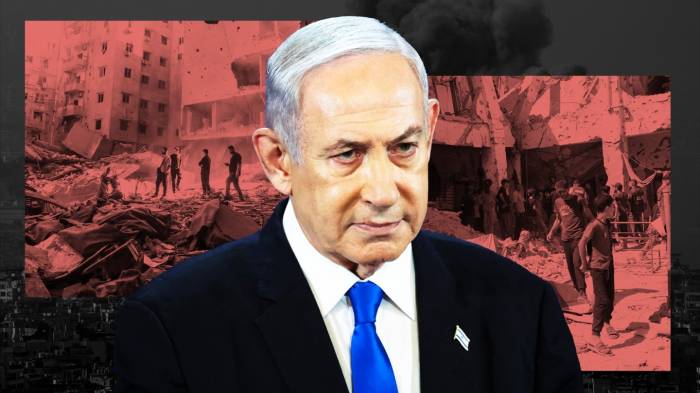
© FT montage/Getty Images/Reuters
The escalating attacks by Yemen's Houthi rebels, known as Ansar Allah, are not just a challenge for Israel but a growing threat to regional stability. Recent drone strikes on Israeli cities such as Tel Aviv and Ashkelon have caused significant damage, including disruptions at Ben Gurion International Airport. These attacks highlight a pressing reality: the Houthis are no longer a local militia confined to Yemen’s borders—they are now a critical player in Iran’s strategy to destabilize the Middle East.
In an exclusive interview with News.az, Israeli political scientist, honorary ambassador of the World Jewish Agency Sohnut in Azerbaijan Roman Gurevic painted a sobering picture of the current situation. “The Houthis fire shells at Israel nearly every night,” he noted. While the missiles are often intercepted by Israel’s advanced air defense systems, the cost of vigilance is immense. Millions of Israelis are forced to rush to bomb shelters nightly, enduring an intolerable routine of fear and disruption. “No country can come to terms with such a situation,” Gurevic emphasized, pointing to the psychological toll on Israel’s civilian population.Iran’s proxy strategy
The Houthi attacks are not an isolated phenomenon but rather a direct result of Iran’s calculated expansionism. For years, Tehran has worked to achieve three primary objectives: the development of its nuclear program, the enhancement of its missile capabilities, and the creation of a network of well-armed proxy groups across the Middle East.
According to Gurevic, Iran has invested billions of dollars in supporting its proxies, including the Houthis in Yemen, Hezbollah in Lebanon, and various militias in Iraq and Syria. This network forms what Gurevic describes as a “noose” around Israel, with armed groups capable of striking from multiple fronts. Iran’s strategy is clear: to encircle Israel and erode its security through persistent, low-cost aggression.
“October 7, 2023, changed everything,” Gurevic said, referencing the shift in Israel’s response strategy. “Israel began to do what was necessary.” In recent months, Israel has delivered decisive blows to Iran’s network. Hamas’s military power has been decimated, Hezbollah has suffered significant setbacks, and Iran’s infrastructure in Syria has been largely dismantled. Yet, the Houthis remain an active and dangerous threat, largely due to their geographic distance and unconventional tactics.
The cost of defense
The financial and logistical burden of countering Houthi attacks is immense. Each missile launched by the Houthis forces Israel to deploy costly interceptor missiles, sometimes worth millions of dollars each. While Israel’s air defense systems, including Iron Dome and David’s Sling, are highly effective, they are not foolproof. Debris from intercepted missiles poses a risk to civilians, and the sheer volume of attacks places constant strain on Israel’s resources.
“The Houthis are 1,000 kilometers away from us,” Gurevic explained, highlighting the challenges of launching retaliatory strikes. “Every attack against them is an expensive operation.” In recent retaliatory actions, Israel targeted key infrastructure in Yemen, including airports, seaports, and power facilities. These measures aim to disrupt the flow of Iranian arms to the Houthis, particularly via air and sea routes.
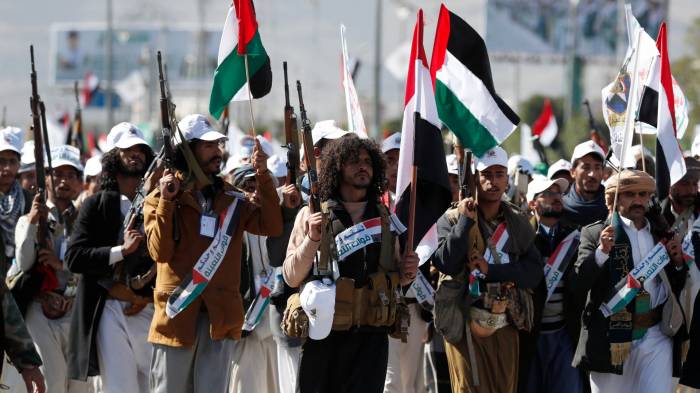
Newly recruited members of the Houthis' army march during a parade in Sanaa, Yemen [File: Yahya Arhab/EPA-EFE]
However, military action alone cannot fully neutralize the Houthi threat. Effective intelligence is crucial to identify and eliminate terrorist leaders and vital infrastructure. Gurevic emphasized that Israeli intelligence agencies are intensifying their efforts to address these challenges, even as they contend with the logistical difficulties of operating over such long distances.
The need for a coalition
While Israel has demonstrated its resilience and military strength, Gurevic argues that a sustainable solution to the Houthi threat requires international collaboration. The Houthis are not just an Israeli problem; their activities threaten Saudi Arabia, Egypt, and other regional players. Saudi Arabia faces missile strikes from the Houthis, while Egypt grapples with disruptions to shipping in the Red Sea.
Despite the shared threat, a cohesive anti-Houthi coalition has yet to materialize. Gurevic attributes this to the current U.S. administration’s reluctance to lead such an initiative. “The political leadership of Israel has not yet been able to create a coalition of countries in the region that will act together with us against the Houthis under the leadership of the United States,” he said. However, he expressed hope that a future U.S. administration, potentially under Donald Trump, could provide the necessary leadership.
Such a coalition, Gurevic argued, would not only enhance regional security but also distribute the financial and logistical burden of countering the Houthis. “This terror is a nuisance not only to Israel but to all countries in the region,” he noted.
Targeting the source
Ultimately, Gurevic believes that the root of the problem lies in Tehran. “The head of Mossad recently said that we should hit not the Houthis, but Iran,” he revealed. While the Houthis are the immediate threat, they are merely an extension of Iran’s broader strategy. Striking at Iran’s capabilities could disrupt its support for proxies across the region.
That said, Gurevic cautioned against underestimating the Houthis’ resilience. “They run barefoot in the desert, hide in caves. This weakness is their strength,” he explained. Even if Iran were neutralized, the Houthis might continue their attacks independently. This underscores the need for accurate intelligence and a coordinated international effort to dismantle their infrastructure and leadership.
The Houthi threat is a complex and multifaceted challenge that requires more than just military might. While Israel has taken significant steps to protect its citizens and counter the Houthis, a long-term solution lies in building a united coalition of regional and international actors. Such a coalition, led by the United States, could pool resources and intelligence to neutralize the Houthis and address the broader threat posed by Iran.
As Gurevic aptly concluded, “Order will certainly be restored. History shows what happens to those who raise the sword against Israel.” But achieving lasting peace will require not just Israel’s determination but the collective will of the region and its allies.


Similar news