Armenia-European Union: Projects and realities


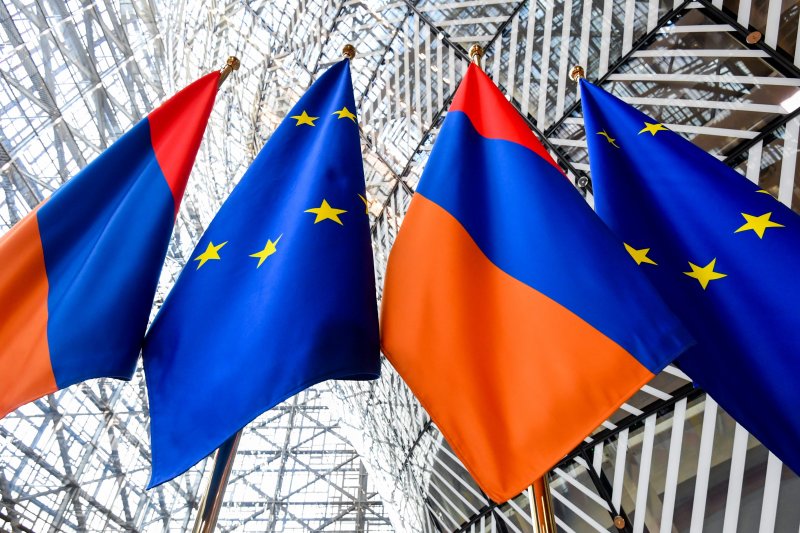
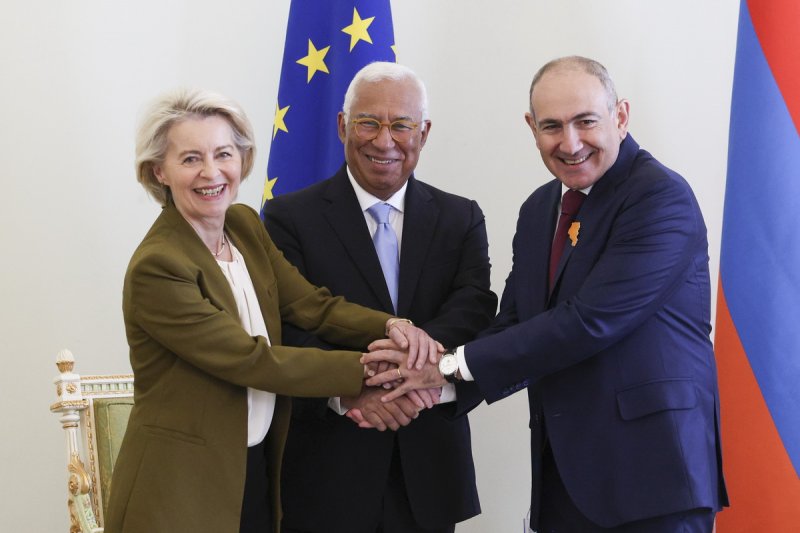
European Commission President Ursula von der Leyen, European Council President António Costa, and Armenian Prime Minister Nikol Pashinyan attended the signing of the EU–Armenia Partnership Agreement on transport infrastructure. The document was signed during the European Political Community summit held in Yerevan.
Let us say from the outset: we are by no means opposed to Armenia’s partnership with the EU in the transport sector. What we do support, however, is the EU spending money on realistic objectives — projects that will not remain on paper but will, in practice, benefit both Armenia and the wider region. One can speak endlessly about integrating Armenia’s transport networks into the European logistics system, but in reality such discussions change nothing.
How exactly can Armenia’s transport networks be integrated into the European logistics system? Yes, it sounds impressive, but what lies behind this phrase beyond pleasing rhetoric? In practical terms, nothing. For Armenia to be connected to European transport networks, infrastructure must be created that the country has never had. This means thousands of kilometres of railways and highways, and billions of euros in investment. The European Union does not appear particularly eager to assist Yerevan with all of this.
RECOMMENDED STORIES
For those who may object by saying that the EU has undertaken to finance the Nakhchivan route, let us clarify: in that case, we are talking only about partial financing, while everything else is being done by Azerbaijan itself. In Armenia’s case, the picture is very bleak — and highly contradictory. The scale of today’s freight transportation simply cannot function without a railway. Yet Armenia does not have a railway suitable for these purposes. Even with the strongest desire, the existing lines cannot support international cargo transit. They are generally unsuitable for heavy trains, no matter how much they are modernised. For example, on one of the sections towards the Gapan district, the line passes through a dangerous landslide zone. Several years ago, a landslide occurred there, and the route was not restored afterward because it was deemed beyond repair. Now Yerevan is raising the issue of restoring this section with Russian concessionaires, hoping to use the route before TRIPP is implemented. But South Caucasus Railway is in no hurry.
Perhaps the EU wants to take on this senseless task? And how do Costa and von der Leyen propose to connect all of this with the European network?
Let us take the liberty of offering some advice.
The advice is not new — it will soon be six years old. We are talking about the Zangezur Corridor, which Europe has spent all these years criticising, calling it a threat to Armenian sovereignty and discrediting in every possible way, despite the fact that the idea is important for Armenia itself. Instead of the Zangezur Corridor, EU officials have seized upon the unrealistic “Crossroads of Peace,” consistently promoting it in joint statements with Yerevan.
It is hard not to recall President Ilham Aliyev’s pointed remark in response to a question from an Armenian journalist at the most recent Munich Conference: “As for your so-called ‘Crossroads of Peace,’ you know, when President Trump returned to power, he launched TRIPP. When President Biden returns, he will relaunch your ‘Crossroads of Peace,’” Aliyev said.
It was a sharp and sarcastic response; it would have been difficult to answer the provocateur’s question more effectively.
We do not know whether the “Crossroads of Peace” is mentioned in the agreement signed the previous day in Yerevan. It would be better for Armenia if it is not. If these projects are built around this idealistic idea of Nikol Pashinyan, nothing will come of it. The only way to productively integrate Armenia into international transit is the Zangezur Corridor, now referred to as TRIPP. This is the only route capable of ensuring large-scale and efficient logistics. Most importantly, the EU would not need to do much here. It would only need to provide financial support for the restoration of the Nakhchivan railway. All other projects can be left for later, once the country has actually become a transit state.
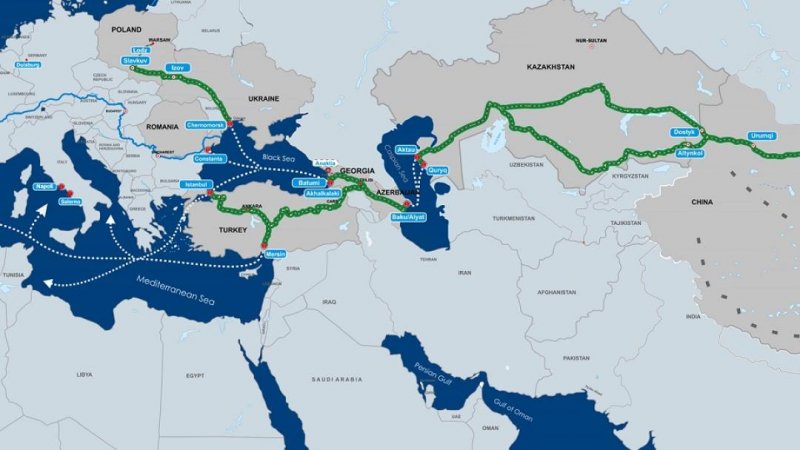
As we have already said, other routes are not suitable for the scale of today’s logistics. Even if funding is available, one cannot go against nature. The mountainous terrain will not allow it. Why spend billions digging tunnels through mountains and building bridges over ravines when a reliable option already exists?
Let us repeat once again: Azerbaijan is not opposed to the development of Armenian transit or to Yerevan’s cooperation with the EU for this purpose. We are simply surprised by how easily valuable time is being wasted — time that the region badly needs, especially now that the peace agenda has opened up significant opportunities. Had the EU supported Azerbaijan’s project at the appropriate time instead of opposing it in resolutions, Armenia could already have been benefiting from its geography. In the new geopolitical environment, the South Caucasus has become a “road of life” linking East and West, as well as North and South. Yet six years have been lost to political rhetoric.
Certain agreements in the energy sector were also reached in Yerevan.
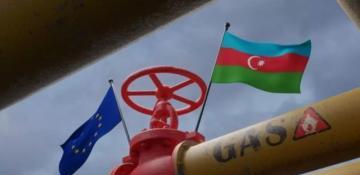
European Commission President Ursula von der Leyen, speaking at the opening of the Armenia–EU summit, said the EU was ready to invest directly in the development of Armenia’s energy sector, expand energy links through the Black Sea, and support infrastructure projects. Under the Global Gateway initiative, €2.5 billion has already been earmarked for Armenia.
At meetings held by Nikol Pashinyan in Spain three years ago, he was promised European Commission support for Armenia’s participation in regional projects such as the Black Sea submarine electricity cable.
It is worth recalling that on 17 December 2022, Azerbaijan, Georgia, Romania, and Hungary signed an agreement in Bucharest on a strategic partnership to build an energy bridge from the Caucasus to Europe. Later, Central Asia also expressed interest in exporting energy to Europe, leading to the launch of the Trans-Caspian energy cable project.
The Black Sea Energy project forms part of energy agreements between the EU and Azerbaijan and is also a flagship project for Georgia under the Global Gateway initiative. It has received full support from the EU and major financial institutions. After the Bucharest agreement was signed, Armenian experts acknowledged that Armenia had effectively fallen behind in regional electricity competition.
In what capacity, and with what resources, can Armenia participate in this project? It could join as an exporter via Georgia’s electricity grid. However, the problem is that construction of the Armenia–Georgia transmission line has still not begun. Armenian experts warn that at this pace it may never be completed. The country’s ageing energy infrastructure is not suited to the expected volumes. And yet there was a time when Armenia aspired to become a regional electricity hub.
In 2016, a roadmap was signed to create a North–South energy corridor between Armenia, Georgia, Russia, and Iran. Since then, no progress has been made, while the Iran–Azerbaijan–Russia energy bridge has already become operational. Armenia, meanwhile, has yet to complete its transmission line to Iran.
EU Commissioner for Enlargement Marta Kos has said the EU would invest €500 million to strengthen Armenia’s energy security and diversify its supply, including connecting its system with Georgia’s. Work is also under way on linking Armenia’s grid with Türkiye as part of the “Caucasus Electricity Transmission Network,” with the aim of reducing dependence on Russian energy.
Notably, Armenia signed an agreement to join this network back in 2015. Today’s EU leadership is making the same promises to Armenia’s current leadership. What has been achieved over the past 11 years remains unclear.
Electricity issues are far easier to resolve than those related to other energy resources. In the past, European officials have called on Armenia to abandon Russian gas while promising to ensure energy security. How this would be achieved remains unclear. Such promises have been made since the days of the Karabakh clan.


Similar news