Why Trump’s Peace Council alarms Europe



Moses Becker is a special political commentator for News.Az. He holds a PhD in political science and specializes in interethnic and interreligious relations. The views expressed in this article are the author’s own and do not necessarily reflect the position of News.Az.
During Israel’s war in Gaza against Hamas and the destruction of the enclave, U.S. President Donald Trump put forward the idea of creating a Peace Council for the postwar reorganization of the entire region. At the initial stage, representatives of leading Muslim countries were invited to join. The stated objectives included the reconstruction of Gaza, the development of infrastructure, the establishment of lasting peace, the disarmament of Hamas, and the allocation of funds to implement large-scale projects capable of fundamentally transforming the Middle East. Over time, however, the idea expanded, and according to Trump’s plan, it is intended to take on a global character.
The Peace Council is to be chaired by the occupant of the White House himself. In this context, the question arises as to whether this organization will be temporary or become permanent, potentially rendering the United Nations ineffective. The issue is that the United States has recently been increasingly curtailing cooperation with the structures of this international organization. For Trump, the Peace Council has one indisputable advantage: it does not include a Security Council of five permanent UN members with veto power.

Source: DW
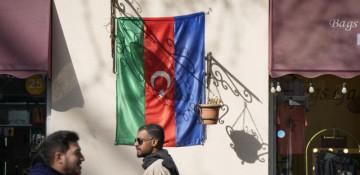
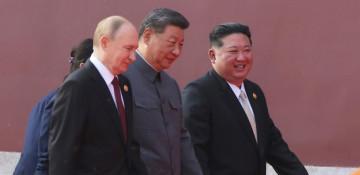
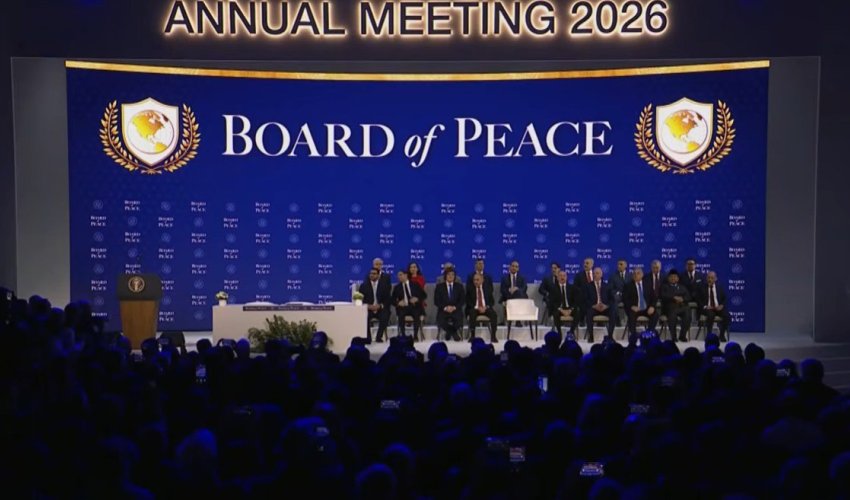
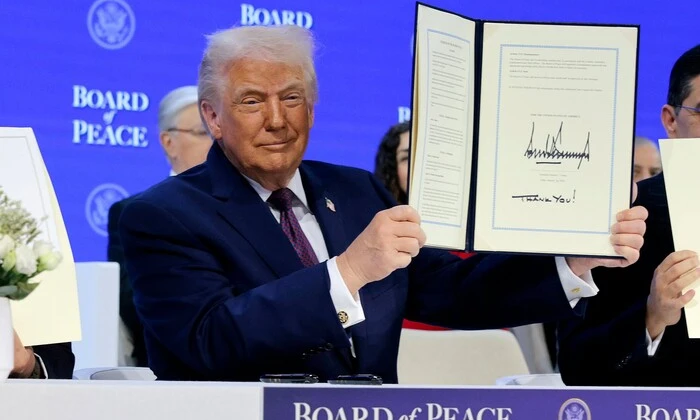
It is clear that much in the world has become outdated. Suffice it to say that of the five great powers, only three truly remain today: the United States, China, and the Russian Federation as the legal successor to the USSR. Only these countries currently possess the necessary military power to maintain global order. Donald Trump announced the creation of the Peace Council on January 16, 2026. On January 21 in Davos, the U.S. president signed the charter of the Peace Council. Leaders of 18 other countries did the same, having agreed to join the organization. The founding assembly took place at the World Economic Forum in Davos. The ceremony was attended by Azerbaijani President Ilham Aliyev and the prime ministers of Hungary and Armenia, Viktor Orbán and Nikol Pashinyan.
As Trump stated earlier, the Peace Council could replace the UN. However, this goal has not yet been formally set. As the U.S. president emphasized, “We will cooperate with many organizations, including the UN. The Peace Council has a chance to become one of the most influential bodies ever created. And it is a great honor for me to be its chairman. I was very flattered when I was asked to do this.”
Russia was also invited to join the Peace Council. On January 21, President Vladimir Putin stated that Moscow would soon give a final response to the invitation. Russia’s potential accession to the Peace Council, alongside progress on a Ukrainian settlement, fits into the broader trajectory of restoring diplomatic ties with the United States. Participation in an organization dealing with the Middle East is important for Moscow, as it has a long-standing interest in the region. Moreover, the Peace Council offers Russia an opportunity to build new relations with the United States.

Source: The Independent
Some experts believe that international law is being commercialized. According to the charter of the Peace Council, permanent members are required to pay a mandatory contribution of one billion U.S. dollars. This amount, it is claimed, must be paid within one year of accession. Otherwise, a country will be able to participate in the organization’s work only on a temporary basis for up to three years. This implies that poorer states will be excluded, and that the organization itself is unlikely to invest in unprofitable projects. It is assumed that all collected funds will be directed toward the reconstruction of the Gaza Strip.
According to Vladimir Putin, Russia is ready to transfer the required amount to Donald Trump’s organization. The president proposed allocating funds from assets frozen in Western countries, while directing the remaining blocked funds toward the “reconstruction of territories” in the combat zone.
As Steve Witkoff noted, the Peace Council will operate not only in the Gaza Strip but also in other regions. In other words, a kind of construction corporation is being created, initially on a temporary basis and possibly later on a permanent one, which will engage in construction projects worldwide. The composition of the initiative’s executive council has already been published on the official White House website. It includes: U.S. President Donald Trump (chair); U.S. Secretary of State Marco Rubio; U.S. President’s Special Envoy for the Middle East Steven Witkoff; Donald Trump’s son-in-law, businessman Jared Kushner; former UK Prime Minister Tony Blair; American entrepreneur and head of the investment company Apollo Global Management, Marc Rowan; World Bank President Ajay Banga; and U.S. Deputy National Security Advisor Robert Gabriel.
Source: DW
It later became known that Donald Trump sent invitations to 58 world leaders. Among them are Russian President Vladimir Putin; French President Emmanuel Macron; German Chancellor Friedrich Merz; UK Prime Minister Keir Starmer; Belarusian President Alexander Lukashenko; Kazakh President Kassym-Jomart Tokayev; Ukrainian President Volodymyr Zelensky; Hungarian Prime Minister Viktor Orbán; Polish President Karol Nawrocki; Israeli Prime Minister Benjamin Netanyahu; Turkish President Recep Tayyip Erdogan; Chinese President Xi Jinping; Indian Prime Minister Narendra Modi; Argentine President Javier Milei; and President of the European Commission Ursula von der Leyen.
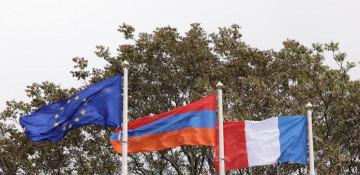
According to the adopted charter, each country in the Peace Council will have one vote, and decisions are expected to be adopted by a majority vote, meaning no one will have veto power. At the same time, all decisions must be approved by the chairman, Donald Trump. Membership in the Council will depend on Trump’s decision, and the chairman himself will receive broad powers, including the right to block any decisions and to form the organization’s internal structures. This is precisely what causes concern within the European Union. European officials told The Financial Times that they do not fully understand whether the Peace Council is an alliance, a mediation mechanism, or an alternative center of power.
As Politico writes, Brussels is deterred by the Council’s unclear mandate, whose charter does not directly mention the Gaza Strip, and by fears that the Peace Council could become an alternative to the UN.
Source: DW
European allies were particularly alarmed by the invitation extended to Russian President Vladimir Putin to participate in the Council’s work. According to The Financial Times, there are fears in Germany that the new council will undermine international law. UK Prime Minister Keir Starmer also declined to join the Peace Council due to the potential financial contributions and Russia’s participation. Italy and Poland have so far expressed doubts, while Norway has already refused to take part.
A real scandal erupted following a statement by French President Emmanuel Macron. It was previously reported that Paris intended to decline Trump’s invitation due to concerns about diminishing UN influence. In response, Trump said he would force the French president to join the Peace Council and threatened to impose 200 percent tariffs on French wine and champagne. It is clear that European leaders would play a secondary role in this framework, given their military capabilities and their continuing dependence on American power. This does not suit traditionally key powers such as the United Kingdom and France, which continue to live with an imperial legacy.
There are serious concerns that the Peace Council could become an instrument of unchecked American dominance. However, as the saying goes, everything flows and everything changes, and at present the balance of power on the global stage largely depends on the position of the United States, which still dominates in the fields of advanced technologies and innovation.
(If you possess specialized knowledge and wish to contribute, please reach out to us at opinions@news.az).


Similar news