Why Ukraine and Russia aren’t ready for peace talks - INTERVIEW


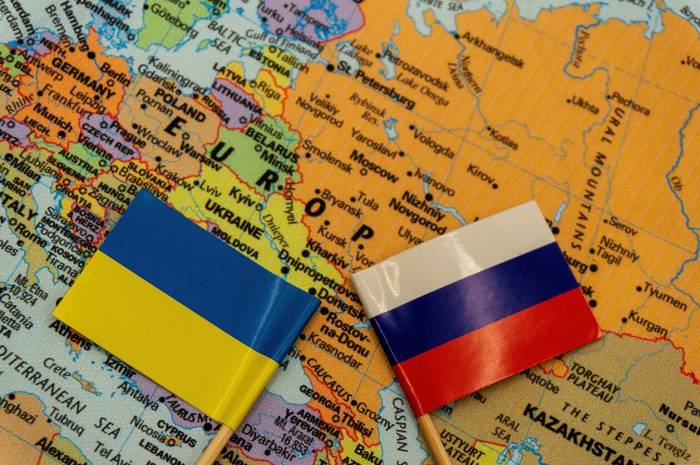
Photo: Shutterstock
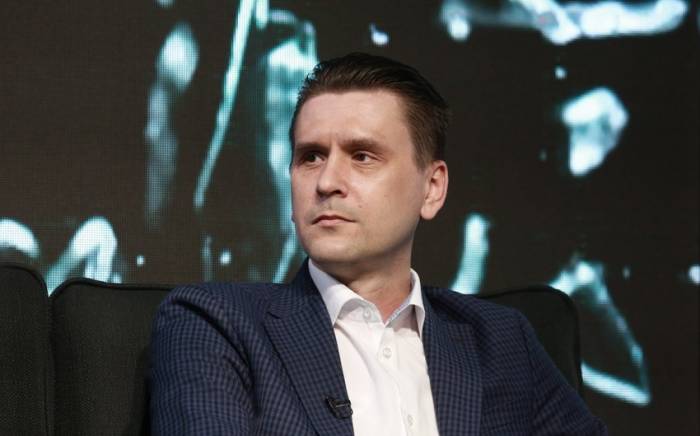
News.Az presents an interview with Alexander Kovalenko, Ukrainian military-political analyst from the "Information resistance" Group.
- How might Ukraine's refusal to extend the agreement on the transit of Russian gas to Europe, expiring at the end of 2024, affect Western support?
- I don't think this will seriously impact ongoing Western support, particularly from Europe. While it might provoke discontent from countries like Hungary or Slovakia, this would primarily stem from internal politics. For example, Hungary’s political regime under Viktor Orbán is entirely dependent on Russia regarding energy issues, and Slovak Prime Minister Robert Fico similarly seeks to appease Russian President Vladimir Putin. This does not concern us much; we prioritize our own interests. Once the contract and our transit obligations expire, it is our right to decide whether to extend or not. The interests of Hungary, which is not a key partner for us, and Slovakia under its current leadership, are of no interest to Ukraine's leadership. Military-technical assistance to Ukraine comes from countries like France, the United Kingdom, Germany, Italy, Spain, Poland, Denmark, and others. Hungary and Slovakia are not involved in this support. Hungary, from the beginning of the Russian invasion, distanced itself from military-technical cooperation with us, primarily because Orbán and his Fidesz party are aligned with Putin. Therefore, I see no basis for deteriorating relations with Europe over this matter. The transit of Russian energy resources through Ukraine is not critical to European support for Ukraine.
- How do you assess the outcomes of the recent informal meeting of European leaders in Brussels, attended by Ukrainian President Volodymyr Zelensky?
- Such meetings are no longer extraordinary. President Zelensky spends considerable time engaging in dialogue with European partners. Informal or formal meetings alike benefit Ukraine. Even at this level, foundational agreements are reached, which later become officially documented. Every such meeting eventually yields tangible results.
- In your opinion, does Ukraine currently have strong enough positions to begin negotiations with Russia? Should Kyiv consider negotiations?
- I see no prerequisites for Ukraine to enter negotiations with Russia. Officially, Kyiv’s position remains unchanged: there are no grounds for initiating dialogue. There might be some basic-level interactions in informal settings, but not officially. After Donald Trump’s inauguration, we’ll see what the White House proposes, but as of now, Trump himself seems unclear about his peace plan. The White House’s plan is chaotic, often discussed but undefined. Trump’s claim that he could end the war in 24 hours is populist rhetoric aimed at domestic audiences, not international ones. I believe 2025 will see combat as intense as in the first half of 2024. Populist claims about quick resolutions are irrelevant outside the U.S. and meaningless to Ukraine. Currently, the White House has nothing substantial to offer Ukraine. Any potential proposals remain superficial and detached from reality. Neither Ukraine nor Russia is ready for negotiations. Ukraine’s current goal is not to wait for Russia’s reaction but to force it into a response.
- Recently, former U.S. President Donald Trump appointed Keith Kellogg as a special envoy for Ukraine and Russia. Kellogg previously proposed a plan for a ceasefire along the current line of contact between Kyiv and Moscow. How do you assess this initiative?
- Proposals from Keith Kellogg and others are far removed from reality. For instance, consider Trump’s suggestions: ceasefire along current contact lines. Suppose Kyiv agrees to halt military actions; what about Russia? Russia has constitutionalized Ukrainian regions like Kherson, Zaporizhzhia, Donetsk, and Luhansk as 'new territories.' None of these regions are fully under Russian administrative control. How could Russia halt combat under such circumstances? Ceasing the war while parts of these 'Russian territories' remain under Ukrainian control is inconceivable. Moreover, the current contact line includes areas in Russia, such as parts of the Kursk region, over 600 square kilometers. How would the Kremlin react to such a ceasefire? This condition is inherently flawed, as neither side would agree to it. It underscores that Trump’s peace plan lacks realism. His proposals are populist and aimed at pleasing domestic audiences, not providing actionable solutions acceptable to all parties.


Similar news