Why Washington is quietly preparing for direct confrontation with China


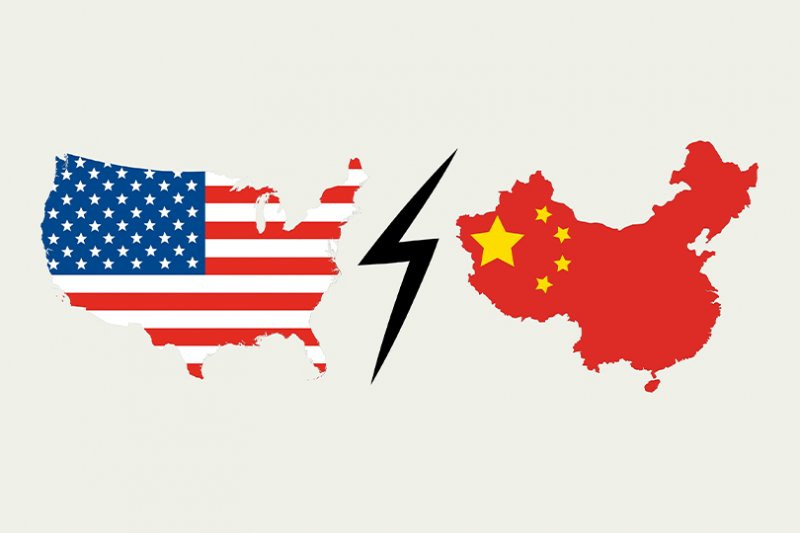
Officially, Washington continues to speak the language of “strategic competition,” “responsible rivalry,” and the need to maintain dialogue with Beijing. U.S. officials regularly stress that America does not seek war with China and prefers stable, predictable relations. Yet behind this restrained diplomatic vocabulary lies a far more sobering reality: the United States is systematically preparing for the possibility of direct confrontation with the People’s Republic of China.
This shift is not driven by any single crisis — whether Taiwan, the South China Sea, or trade disputes — but by a deeper strategic conclusion within the American establishment: China is no longer a rising power. It has become a fully-fledged systemic rival capable of challenging U.S. dominance across multiple domains, including advanced manufacturing, artificial intelligence, semiconductors, space, finance, and military power. Many U.S. strategic assessments now describe China as the only country with both the intent and the capacity to reshape the global order.
That perception is codified in Washington’s core security documents. The U.S. National Defense Strategy identifies China as America’s “pacing challenge” and prioritizes preparing U.S. forces for high-intensity conflict against a peer competitor. While Taiwan is often not explicitly named, the entire Indo-Pacific force posture and operational planning architecture is built around scenarios involving a potential clash over the island.
Budgets tell the same story. From 2021 to 2024, Congress allocated more than $40 billion to the Pacific Deterrence Initiative (PDI), a Pentagon program designed specifically to strengthen U.S. military power in the Indo-Pacific theater. These funds are directed toward hardening bases, expanding missile defenses, pre-positioning weapons stockpiles, improving logistics networks, and deploying long-range strike capabilities across the “first island chain,” stretching from Japan to the Philippines.

Source: defense.gov
At the same time, Washington is constructing a dense web of military partnerships around China. The AUKUS pact with Australia and the United Kingdom, expanded defense cooperation with Japan and South Korea, new basing arrangements with the Philippines, and deepening ties with India through the Quad all serve a single strategic purpose: to surround China with an integrated security architecture capable of constraining its freedom of action in a crisis.
Taiwan remains the most sensitive flashpoint. Although the United States formally adheres to the “One China” policy, in practice it has steadily expanded military cooperation with Taipei. In late 2025 alone, Washington approved arms packages exceeding $11 billion, including air defense systems, missiles, and advanced surveillance equipment. China responded with large-scale military drills encircling Taiwan, rehearsing blockade operations and joint air-sea strikes—exercises that increasingly resemble dress rehearsals for real conflict.
U.S. defense analysts are also becoming more candid about the shifting balance of power. China’s official defense budget has risen nearly 60 percent since 2015, reaching roughly $230 billion annually, with many experts believing actual spending is substantially higher. The People’s Liberation Army has undergone rapid modernization, building the world’s largest navy by number of vessels, expanding its arsenal of precision-guided missiles, and developing anti-access/area-denial capabilities specifically designed to push U.S. forces farther from China’s coastline.

Source: euronews
For Washington, these trends reinforce a stark conclusion: delaying preparation only makes future confrontation more dangerous. The logic of deterrence is therefore increasingly fused with the logic of readiness for war.
The economic domain has become a second battlefield. What began as a trade dispute has evolved into a full-scale campaign of technological containment. The United States has imposed sweeping export controls on advanced semiconductors, restricted Chinese access to critical manufacturing equipment, sanctioned major Chinese tech firms, and pressured allies to adopt similar measures.
The U.S. trade deficit with China remains enormous — around $295 billion annually — but Washington has largely abandoned the idea that traditional trade negotiations can resolve structural tensions. Instead, industrial policy, massive subsidies for domestic chip production, and efforts to relocate supply chains away from China have become central pillars of U.S. strategy. This represents a fundamental break with the globalization model that once underpinned American economic policy.
Politically, China is now portrayed in U.S. discourse not merely as a competitor but as an ideological and civilizational challenger. This framing makes confrontation easier to justify domestically and helps sustain bipartisan consensus. In today’s polarized Washington, few issues unite Democrats and Republicans as strongly as the conviction that China must be contained.
Another important dimension shaping U.S. calculations is what is happening inside China itself. Over the past two years, President Xi Jinping has launched sweeping purges within the People’s Liberation Army, removing dozens of senior officers, including top commanders of the Rocket Force and other strategic units.
Particularly striking were reports about an investigation involving General Zhang Youxia, vice chairman of the Central Military Commission and one of China’s most powerful military figures. While Chinese authorities cite “serious disciplinary violations,” Western media have reported that internal briefings alleged Zhang was suspected of leaking highly sensitive information related to China’s nuclear and strategic programs to the United States. Beijing has not publicly confirmed these claims, but their circulation underscores the depth of mistrust and paranoia surrounding national security on both sides.
For U.S. intelligence and defense planners, such internal turbulence inside China’s military leadership suggests both potential vulnerabilities and heightened unpredictability — factors that further encourage Washington to hedge against worst-case scenarios.

Source: reuters
The experience of the war in Ukraine also looms large in American strategic thinking. Many policymakers view Western support for Kyiv as a real-world test of how effectively the U.S. can mobilize allies, impose sanctions, and sustain a prolonged proxy confrontation against a major power. Lessons learned there are increasingly being applied to planning for a possible future crisis involving China.
The central paradox is that the very act of preparing for confrontation increases the likelihood of confrontation. As both sides expand military deployments, harden alliances, and rehearse war scenarios, the margin for error shrinks. A naval collision, a misinterpreted missile test, or an incident around Taiwan could spiral rapidly.
Washington continues to speak of peace and stability. But its actions — massive defense spending, alliance building, economic decoupling, and contingency planning — tell a different story. The United States may not want war with China, but it is quietly building the infrastructure for one.
In today’s world, that contradiction has become one of the defining features of global politics. And as Washington and Beijing move further down this path, the question is no longer whether confrontation is possible, but how catastrophic it could become if deterrence fails.
By Faig Mahmudov


Similar news