A smart calf, or the servant of two masters: the dilemma of Armenian diplomacy


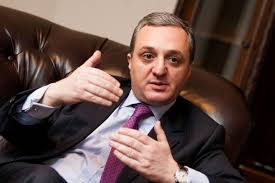
On July 2, the EU Observer magazine acquainted readers with the latest "revelations" of the recently appointed Armenian Foreign Minister Zohrab Mnatsakanyan.
On the same day, the Sputnik-Armenia news agency shared a "deep analysis" of how official Yerevan conducts a simultaneous chess game with the West and Russia, leaving the course for itself. In principle, these articles report nothing dramatically new either for the English-language or Russian-speaking audience. These are the same lamentations in the spirit of democracy inherent in the Armenian people, but the need to take into account the geopolitical factor, which Mnatsakanyan called the "Armenian security architecture".
The Armenian minister does not tire of lamenting, like all his predecessors, the blockade by Azerbaijan and Turkey. He also takes the opportunity to once again chide the West for failing to provide the proper shield for those countries that unequivocally embark on the path of Euro-Atlantic integration, but are forced to wait ten years. Expressing thoughts in this way, the Armenian side throws the test ball into the field of the political game of the Western powers: provide us with the same shield as we now have from the military-political alliance with Moscow, and Yerevan can become more disposed towards your proposals to turn away from Russia.
According to Mnatsakanyan, Armenia can not afford even ten minutes without external power support. Such a statement by the minister is an occasion to reflect on by the whole Armenian society and the world community over what kind of country it is, claiming to hold an independent line and making grandmaster combinations in maneuvering between Russia and the West, but at the same time unable to provide its own "architecture security" even for ten minutes. In fact, there is a statement by the head of the Armenian diplomacy that the Republic of Armenia is a blatantly illustrative example of a failed state.
Nevertheless, despite the "peaceful-revolutionary" change of the power scenery in Yerevan, they still do not want to analyze the true reasons that gave rise to the current deadlock. The same old-fashioned barrel organ is spinning about the fact that all around should treat "security considerations" of Armenia with special piety. When officials from Yerevan travel to Moscow (take Mnatsakanyan's visit at least three weeks ago), they continue to pedal the topic of the outpost, which in no way can be turned down. Coming to the West, they also urge to understand of a special Armenian path, following which could be likened to a clever calf from a folk wisdom.
In general, the tendency to get financial preferences from the West, effective economic support, while remaining under the Russian security umbrella, is not the know-how of the current "revolutionary" authorities, in fact the same, albeit not in such an explicit form, was observed in the days of Serzh Sargsyan. Take the epic of 2013, with its accession to the Eurasian Economic Union, against the background of the associative agreement prepared at that time for signing with the EU. However, no matter how hard the former president and the concurrent head of the Armenian Chess Federation tried, all his efforts to deceive his people and the world around him were in vain, and he was ousted.
Perhaps the new figures who occupied the high posts in Yerevan are in the delusion of the fact that the mere declaration of high democratic values and the rule of law will become the generator of the relentless sympathy of the West, which will allow Armenia not to collapse into the abyss of economic crisis. However, the fact that the two months of Prime Minister Nikol Pashinyan’s power were remembered by fussy attempts to plug the most gaping holes, hiking around the shops and pursuing the oligarchs, does not inspire confidence in the implementation of such a benevolent scenario. Just like the very restrained position of Russia, who looks closely and critically evaluates the policy of the new authorities in Yerevan, does not allow speaking about unconditional support of all the aspirations of the outpost, which now creates more problems for Moscow than helps to solve.
Thus, there is an indisputable fact: Yerevan can continue playing the old music in the performance of a new orchestra for a while. However, in the West and in Russia they will mainly not look at the conductors’ and performers' faces, but listen to their performance. And if the music does not change, Pashinyan’s team will get the same applauses like Sargsyan did. It may be bitterly realized in Yerevan, but to continue exporting the maxim that the whole world should treat with understanding the security considerations of Armenia, concentrated on the occupied territories of Azerbaijan is an absurd and hopeless matter. The authorities of the country, which does not know how to best present themselves to two masters at once in the hope of a double reward, and is not able to hold out without assistance for ten minutes (thanks again to the Armenian minister for recognition), should seriously think not to be caught in the position of that serf who will be lashed not by a single, but by two master's whips at once.
News.Az


Similar news