Adapting to a warming planet: the next phase of climate survival


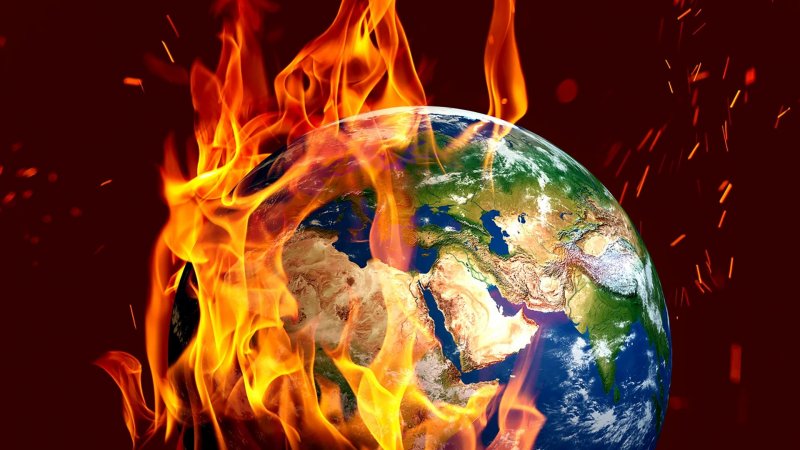
For decades, the global climate movement has focused on prevention – cutting emissions, limiting temperature rise, and striving to keep global warming below 1.5°C, News.az reports.
But as extreme weather intensifies and sea levels creep higher, the world is entering a new phase: adaptation. From megacities to remote villages, nations are beginning to accept that some climate impacts are now unavoidable, and survival depends on learning to live with a changed planet.
Heatwaves that were once rare now scorch continents every summer. Floods, droughts, and wildfires have become annual events, costing the global economy hundreds of billions of dollars. In this new reality, the goal is not only to fight climate change – but to endure it.
Cities and nations under pressure
Urban centers sit on the front lines of climate stress. Rising sea levels threaten coastal capitals like Jakarta, Lagos, and Miami. In response, countries are building sea walls, redesigning drainage systems, and moving entire communities inland. The Netherlands is experimenting with floating neighborhoods; Singapore has introduced elevated walkways and “sponge city” technology to absorb rainfall.
In rural regions, adaptation takes different forms – shifting crops, managing water scarcity, and rethinking food systems. In Africa and South Asia, farmers are turning to drought-resistant seeds and digital weather forecasting tools. Meanwhile, Arctic communities are confronting melting permafrost that undermines roads and homes. The cost of adaptation is vast – estimated by the United Nations to exceed $300 billion annually by 2030 – yet the cost of inaction will be far higher.
Technology, resilience, and the green transition
Technology is becoming the backbone of adaptation. Artificial intelligence helps predict floods and optimize irrigation; satellite mapping tracks forest loss and desertification in real time. Renewable-energy systems not only cut emissions but also make communities more resilient by decentralizing power supply. Countries like Morocco, Chile, and Australia are investing in solar and wind farms designed to withstand extreme weather.
But adaptation is not just about infrastructure – it’s about governance and equity. Wealthy nations have pledged billions to help developing countries adapt, but much of that money has yet to arrive. Without fair financing, the world risks a “resilience divide,” where rich nations harden themselves against climate impacts while poorer ones are left exposed.
Living with the inevitable
The next era of climate action is about realism and resilience. Global temperatures have already risen by around 1.3°C since pre-industrial times, and the effects are locked in for decades. That means adaptation must move from the margins of policy to its center. It is no longer a backup plan – it is the plan.
Communities around the world are proving that adaptation can coexist with hope. From urban cooling forests in Paris to mangrove restoration in Bangladesh, local innovation is rewriting what climate survival looks like. Humanity may not be able to stop all the damage, but it can still shape how we live through it.
The age of adaptation has begun – not as an admission of defeat, but as an evolution of purpose: learning to endure, rebuild, and thrive on a warming planet.


Similar news