"Lieutenant Colonel Don Antonio Tejero Molina has passed away. A man of honour, unwavering faith, and great love for Spain. May God grant him the peace that men denied him," Luis Felipe Utrera Molina wrote on X, News.Az reports, citing Reuters.
The announcement of his death came on the same day that Spain's leftist government released classified documents related to the February 23, 1981 coup attempt, a key moment in modern Spanish history.
The failed putsch came six years after the death of General Francisco Franco and was orchestrated by military officers nostalgic for the privileges they enjoyed during more than four decades of his dictatorship.
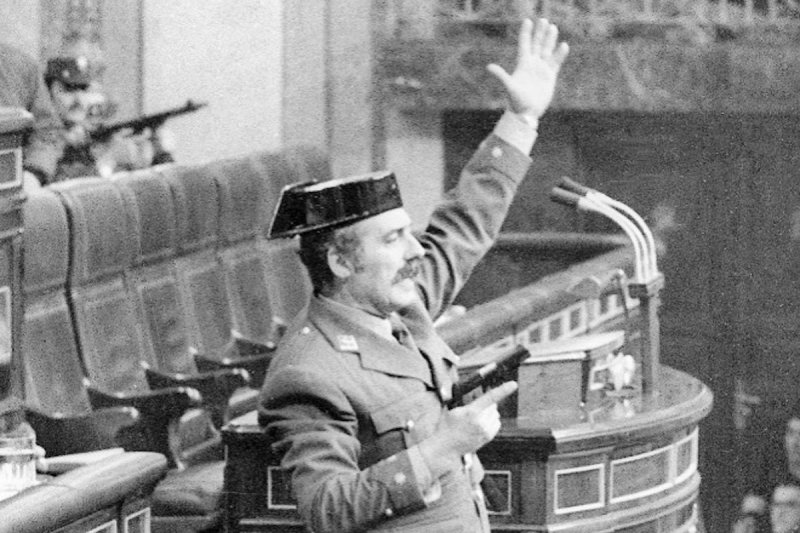
Spain's budding democracy came to a shuddering halt that day when rebellious civil guards, led by Tejero Molina, stormed parliament and held lawmakers at gunpoint for almost 24 hours.
Bellowing "Silence, everyone!" to terrified parliamentarians, the man with a bushy moustache and shiny tricorn quickly caught the public's attention in an image engraved on the nation's collective memory.
The siege only ended when it became clear that King Juan Carlos, Franco's designated successor, would not support the uprising.
Born on April 30, 1932 in Alhaurin el Grande, a town near the southern city of Malaga, Tejero saw his early childhood marked by the 1936-1939 civil war which led to 36 years of authoritarian rule under Franco.
At the time of the coup, Tejero was 48 and had spent his entire adult working life in the Civil Guard, Spain's military police.
In November 1978, Tejero had been linked to another failed bid to overthrow the government, known as Operation Galaxy, for which he was sentenced to seven months behind bars.
But it was the later coup, led by senior military commanders, that turned into "the founding myth of Spanish democracy", said Javier Cercas, whose book "Anatomy of an Instant" details the events of February 1981.
"On 23 February 1981, 200 years of military interventionism in Spain came to an end," he wrote in El Pais newspaper, saying that was the moment that democracy "truly began in Spain".
During his trial, Tejero justified his actions, saying: "At the start of 1981, the situation in Spain... was worse than in 1936," when rebel troops rose up and overthrew the elected republican government.