Asian markets rise as Wall Street rebounds; Alibaba shares surge


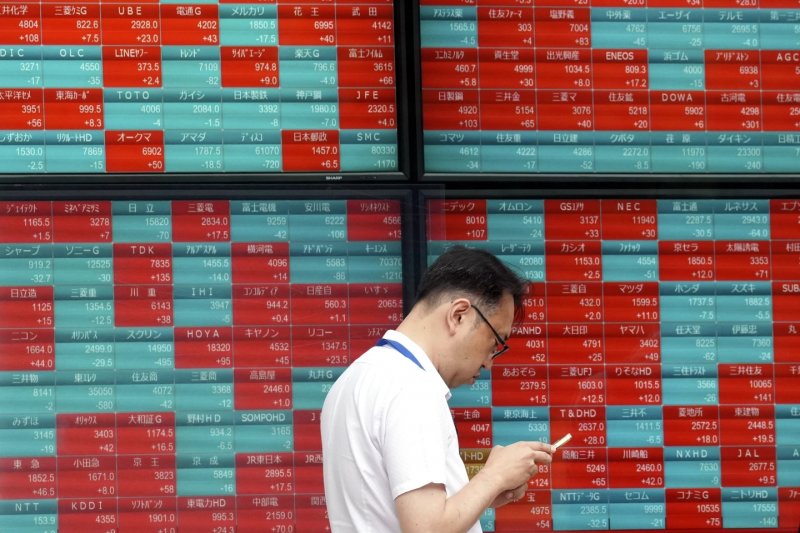
Asian stocks opened the week on a positive note Monday, with most major indexes advancing after Wall Street capped a turbulent week with solid gains.
Trading in Japan was paused due to a national holiday, but other regional markets moved higher, News.Az reports, citing AP.
Hong Kong’s Hang Seng Index climbed 1.3% to 25,550.89, supported by a strong rally in tech shares. E-commerce leader Alibaba jumped 4.7% after reporting robust demand for its new Qwen AI app, ahead of its earnings release scheduled for Tuesday.
The Shanghai Composite index, one of the few regional markets to decline, fell 0.3% to 3,821.68.
Australia's S&P/ASX 200 gained 1.1% to 8,507.60
In South Korea, the Kospi climbed as technology shares settled after a rough few days of volatility spurred by worries over the craze for artificial intelligence will be sustained.
Taiwan's Taiex added 0.4% and the Sensex in India edged 0.1% higher.
The future for the S&P 500 rose 0.6% while that for the Dow Jones Industrial Average was up 0.3%.
This week, U.S. markets will be closed Thursday for the Thanksgiving holiday, which will be followed by the Black Friday and Cyber Monday retail rushes.
After last week's ups and downs over AI and Nvidia, traders will focus more on “the backbone of U.S. growth, the consumer, whose spending still drives two-thirds of GDP,” Stephen Innes of SPI Asset Management said in a commentary.
Data on the U.S. economy was scarce during the 6-week U.S. government shutdown, leaving investors struggling to parse trends in the economy.
“This makes any sniff of holiday activity — foot traffic, discount depth, card authorizations — disproportionately important. In a data desert, even a puddle looks like a lake,” he said.
On Friday, the S&P 500 gained 1% to 6,602.99 and the Dow climbed 1.1% to 46,245.41. The Nasdaq composite rose 0.9% to 22,273.08. Nearly 90% of stocks in the S&P 500 advanced.
It was a fitting finish for a week that left the S&P 500 just 4.2% below its record but also forced investors to stomach the sharpest hour-to-hour swings since a sell-off in April. The jarring moves are testing investors following a monthslong and remarkably smooth surge for stocks, and they come down to two basic as-yet unanswered questions.
In the bond market, Treasury yields eased Friday on hopes for cuts from the Fed. Traders are now betting on a nearly 72% probability of a December cut, up sharply from 39% a day before, according to data from CME Group. That helped send the yield on the 10-year Treasury to 4.06% from 4.10% late Thursday.
In other dealings early Monday, U.S. benchmark crude oil lost 6 cents to $58.00 a barrel. Brent crude, the international standard, gave up 4 cents to $61.90 a barrel.
The U.S. dollar rose to 156.65 Japanese yen from 156.47 yen. The euro edged to $1.1519 from $1.1516.
Bitcoin was up 3.2% at $87,350. On Friday, it briefly plunged below $81,000 before pulling back toward $85,000. That’s down from nearly $125,000 last month and brought it back to where it was in April, when markets were shaking because of President Donald Trump’s higher tariffs.


Similar news