Yandex metrika counter
Cities under pressure: How urban centers are learning to survive war, climate disasters and permanent crisis
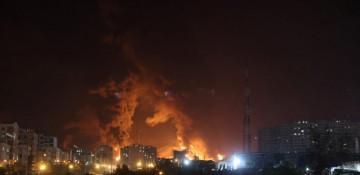
Source: Xinhua

The modern city was once designed around growth, mobility and economic opportunity. Today, however, many cities across the world are increasingly being designed around survival.

From missile strikes in Ukraine and earthquakes in Türkiye to floods in Pakistan, wildfires in Southern Europe, heatwaves in the Gulf region and blackouts affecting critical infrastructure worldwide, urban resilience has become one of the defining global issues of the 21st century.

The conversation is now no longer limited to how cities grow, but whether they can continue functioning during continuous shocks and emergencies.

This issue has become one of the most discussed themes at World Urban Forum 13, where global leaders, urban planners, architects, policymakers and humanitarian organizations are debating how cities can withstand wars, climate disasters, migration crises and infrastructure collapse.

Urban resilience is no longer viewed as a theoretical concept for future planning. It has become an urgent necessity affecting billions of people.

Why are cities becoming more vulnerable?

More than half of the world’s population currently lives in urban areas, and according to United Nations projections, nearly 70 percent of humanity could live in cities by 2050. This rapid urbanization has created enormous pressure on infrastructure, housing systems, transportation networks and public services.

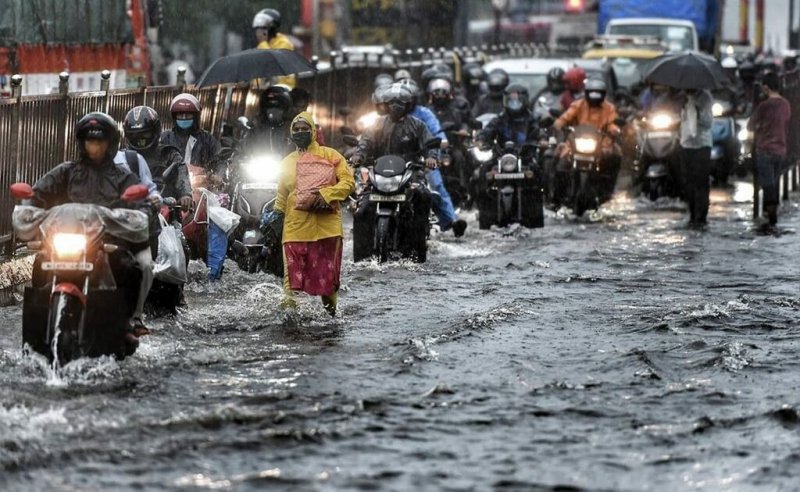
At the same time, climate change is intensifying natural disasters. Floods are becoming more frequent, temperatures are rising, droughts are affecting water supplies and coastal cities are facing growing risks from sea level rise.

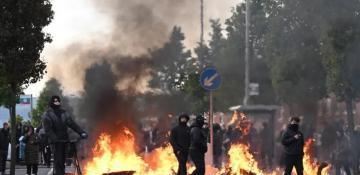
Geopolitical instability has added another dimension to the crisis. Wars and conflicts increasingly target urban infrastructure directly. Electricity stations, water pipelines, hospitals, roads and communication systems have become strategic targets in modern warfare.

The result is that many cities now face multiple crises simultaneously.

A city may experience climate related flooding while also struggling with energy shortages, economic instability, housing pressures and migration inflows. This overlapping pressure has fundamentally changed how governments think about urban development.

Traditional urban planning models focused on expansion, economic productivity and transportation efficiency. Modern urban resilience planning focuses on continuity of life under stress.

What does an “urban resilient city” actually mean?

Urban resilience refers to a city’s ability to continue functioning during crises while recovering quickly afterward.

This includes maintaining essential services such as:

  • Electricity
  • Water supply
  • Transportation
  • Emergency healthcare
  • Communications
  • Food distribution
  • Shelter systems
  • Public security

A resilient city is not necessarily one that avoids disasters completely. Instead, it is a city capable of adapting, absorbing shocks and restoring daily life even under extreme conditions.

This concept has expanded significantly in recent years.

Previously, resilience discussions mainly focused on earthquakes, floods or storms. Today, the definition includes cyberattacks, armed conflicts, disinformation campaigns, migration crises, pandemics and energy warfare.

Urban resilience therefore combines security policy, climate adaptation, engineering, governance, social policy and technology into one framework.

How did the war in Ukraine change urban planning debates?

The war in Ukraine dramatically transformed global discussions on urban resilience.

Cities such as Kyiv, Kharkiv and Odesa demonstrated that urban life can continue even under missile attacks and infrastructure destruction. Despite constant threats, millions of people remained in cities, forcing governments and municipalities to rethink how urban systems operate during wartime.

The conflict highlighted several critical lessons.

First, energy infrastructure became one of the most vulnerable urban systems. Repeated attacks on power grids showed how dependent modern cities are on centralized electricity systems.

Second, underground infrastructure gained renewed importance. Metro stations, underground parking facilities and shelters became essential components of urban survival.

Third, decentralized systems proved more resilient than centralized ones. Smaller local energy sources, distributed water systems and localized emergency response mechanisms often recovered faster after attacks.

Finally, digital governance became essential. Mobile applications warning citizens about air raids, digital public services and emergency communication platforms became critical tools for urban continuity.

Urban planners around the world are now studying Ukraine’s experience closely because it represents one of the clearest modern examples of how cities function during prolonged conflict.

Why is energy independence becoming central to city survival?

Energy resilience has emerged as one of the most important topics in modern urban planning.

Cities depend on electricity for nearly every essential service. Hospitals, traffic systems, water pumps, telecommunications, internet infrastructure, public transportation and emergency response systems all require stable power supplies.

When electricity networks fail, entire urban systems can collapse rapidly.

This is why many governments are now investing in decentralized energy infrastructure.

Instead of relying entirely on one centralized grid, cities are increasingly developing:

  • Solar microgrids
  • Local battery storage systems
  • Backup generators
  • Smart grids
  • Renewable energy networks
  • Distributed energy hubs

The goal is to ensure that even if one part of the system fails, critical infrastructure can continue functioning.

Several countries are also redesigning public buildings to operate independently during emergencies. Schools, stadiums and municipal centers are increasingly being equipped with emergency energy systems capable of functioning as temporary shelters during crises.

This shift reflects a broader transformation in urban thinking. Energy is no longer viewed only as an economic issue. It is increasingly considered a matter of national security and urban survival.

How are climate disasters reshaping cities?

Climate change is affecting cities faster than many experts initially predicted.

Extreme heat has become one of the deadliest urban threats globally. Dense urban environments trap heat through concrete, asphalt and limited green spaces, creating what experts call “urban heat islands.”

In many cities, temperatures can be several degrees higher than surrounding rural areas.

This has major consequences for:

  • Public health
  • Electricity demand
  • Water usage
  • Transportation systems
  • Worker productivity

Flooding presents another major challenge. Poor drainage systems, uncontrolled urban expansion and rising sea levels are increasing flood risks worldwide.

Cities in Asia, Europe, Africa and the Americas are all experiencing increasingly costly climate related disasters.

As a result, urban planners are now integrating climate adaptation directly into city design.

Examples include:

  • Expanding green zones
  • Creating flood resistant infrastructure
  • Building water retention systems
  • Increasing tree coverage
  • Using heat resistant construction materials
  • Designing climate adaptive public transport systems

The idea is no longer simply to protect cities from climate threats. Instead, cities themselves must become adaptive systems capable of operating under changing environmental conditions.

What role does technology play in resilient cities?

Technology is becoming one of the most powerful tools in modern urban resilience planning.

Smart sensors, artificial intelligence and predictive analytics are now helping cities monitor infrastructure in real time.

For example:

  • Flood sensors can warn authorities before drainage systems fail.
  • Smart electricity grids can reroute power during outages.
  • AI systems can optimize evacuation routes during emergencies.
  • Satellite monitoring can track wildfire risks and infrastructure damage.
  • Digital mapping can identify vulnerable neighborhoods.

Communication technology is equally important.

During emergencies, access to accurate information can save lives. Governments increasingly rely on mobile alerts, emergency applications and digital coordination systems to communicate with residents during crises.

However, technology also creates new vulnerabilities.

Cyberattacks against infrastructure systems are becoming more frequent globally. Water systems, electricity grids and public transport networks are increasingly exposed to digital threats.

This means urban resilience now includes cybersecurity alongside physical infrastructure protection.

Cities must therefore protect not only roads and buildings, but also data systems and communication networks.

Why are shelters and underground infrastructure returning to urban planning?

For decades, many countries reduced investments in civil defense infrastructure after the Cold War ended.

Today, however, shelters and underground systems are returning to the center of urban planning discussions.

The war in Ukraine, tensions in different regions and increasing climate disasters have reminded governments that cities need protected emergency spaces.

Modern shelters are no longer viewed simply as wartime bunkers.

Instead, they are increasingly designed as multifunctional resilience spaces capable of serving during:

  • Missile attacks
  • Hurricanes
  • Heatwaves
  • Floods
  • Blackouts
  • Industrial accidents

Some cities are redesigning underground transportation systems to double as emergency shelters. Others are integrating protected spaces directly into residential and commercial developments.

Nordic countries have become particularly notable examples. Several European governments maintain extensive shelter systems and emergency preparedness programs designed for large scale crises.

The broader lesson is that resilience requires redundancy. Cities cannot rely on only one system, one supply chain or one infrastructure model.

Backup systems are increasingly becoming a core principle of urban survival.

How does migration affect urban resilience?

Mass migration has become another major challenge for cities worldwide.

Wars, climate disasters and economic instability are forcing millions of people to relocate, often toward urban areas. Cities frequently become the first destination for displaced populations seeking safety and employment.

This creates enormous pressure on:

  • Housing markets
  • Public transportation
  • Healthcare systems
  • Schools
  • Water supplies
  • Employment opportunities

However, migration can also strengthen cities economically and socially if managed effectively.

Urban resilience experts increasingly argue that inclusion is critical for stability. Marginalized communities living without proper housing, healthcare or infrastructure are often the most vulnerable during crises.

Therefore, resilient cities require social resilience alongside physical infrastructure.

This includes:

  • Affordable housing
  • Accessible healthcare
  • Inclusive urban planning
  • Equal access to services
  • Community participation
  • Strong local governance

Cities that fail to integrate vulnerable populations often face deeper instability during emergencies.

Why are local governments becoming more important globally?

One of the major shifts in recent years is the growing influence of mayors and local authorities.

In many crises, municipal governments respond faster than national institutions because they operate directly at the community level.

Local authorities manage:

  • Emergency response
  • Public transport
  • Water systems
  • Local policing
  • Housing
  • Waste management
  • Community services

As a result, cities are increasingly cooperating directly with each other internationally.

Urban diplomacy has become a growing phenomenon. Cities now share expertise on climate adaptation, emergency preparedness and digital governance through international networks.

Forums such as WUF13 provide platforms where municipalities exchange practical experiences rather than abstract policy discussions.

This reflects a larger reality: many global crises are ultimately experienced locally.

Climate change, migration, blackouts and disasters directly affect neighborhoods, streets and households. Therefore, local governance capacity has become one of the most important factors determining urban resilience.

Can architecture itself improve resilience?

Architects and engineers are increasingly designing buildings capable of functioning during emergencies.

Modern resilient architecture focuses on:

  • Energy efficiency
  • Heat resistance
  • Flood protection
  • Emergency accessibility
  • Flexible public spaces
  • Sustainable materials

Some buildings are designed to operate independently for several days during infrastructure failures.

Hospitals, data centers and emergency response facilities now often include advanced backup systems and reinforced structural protections.

Urban design itself is also changing.

Wide green corridors can reduce heat and improve evacuation routes. Mixed use neighborhoods reduce transportation dependency. Decentralized service distribution lowers the risk of complete system collapse during emergencies.

This represents a major philosophical shift in architecture.

The question is no longer only whether a building looks modern or economically profitable. Increasingly, planners ask whether it can continue functioning during extreme disruption.

Why are resilience discussions especially relevant for developing countries?

Developing countries often face the greatest urban vulnerabilities while having fewer financial resources to respond.

Rapid urbanization, informal settlements, weak infrastructure and limited emergency systems create significant risks.

At the same time, many developing states are among the most exposed to climate impacts.

This creates a difficult challenge:
cities must expand rapidly while simultaneously becoming more resilient.

International organizations increasingly emphasize that resilience investments are not optional future expenses. They are essential economic protections.

Every dollar invested in prevention and adaptation can reduce future disaster costs significantly.

This is why global urban forums increasingly focus on financing mechanisms, international cooperation and technology transfer for vulnerable cities.

What is the significance of WUF13 being held in Baku?

Hosting World Urban Forum 13 reflects the growing international focus on urban transformation beyond traditional Western centers.

Baku itself represents an example of rapid urban transformation shaped by energy development, infrastructure modernization and strategic regional positioning.

The forum also highlights the increasing role of the South Caucasus in global connectivity and urban diplomacy discussions.

For Azerbaijan, the event provides an opportunity to present its urban development strategies, infrastructure projects and post conflict reconstruction initiatives to a global audience.

The discussions held during the forum demonstrate that urban resilience is no longer a niche technical issue. It has become one of the defining political, economic and security questions of the modern era.

What will the cities of the future look like?

Experts increasingly believe that future cities will be designed around flexibility and adaptability rather than permanence.

Key characteristics may include:

  • Decentralized infrastructure
  • Renewable energy systems
  • Smart digital management
  • Climate adaptive construction
  • Multifunctional public spaces
  • Integrated emergency systems
  • Strong local governance
  • Mixed use urban districts

Future cities may also rely more heavily on predictive technologies capable of identifying risks before disasters occur.

At the same time, urban planners warn that resilience should not create overly militarized or surveillance driven environments. Maintaining democratic freedoms, social inclusion and quality of life remains essential.

The challenge is to create cities that are both secure and livable.

Why does this issue matter to everyone?

Urban resilience is no longer a topic affecting only governments, architects or security experts.

For ordinary citizens, it influences:

  • Whether electricity remains available during emergencies
  • Whether homes can withstand extreme weather
  • Whether transportation systems continue operating
  • Whether healthcare remains accessible
  • Whether food and water supplies are stable
  • Whether communities can recover after disasters

In many ways, the future of global stability depends heavily on how cities adapt to growing uncertainty.

The modern city is increasingly becoming the frontline where climate change, geopolitics, technology and human security intersect.

As crises become more interconnected, the ability of cities to survive and recover may determine not only economic growth, but social stability itself.

This is why the debates taking place at WUF13 are attracting global attention.

The central question facing urban planners today is no longer simply how to build bigger cities.

It is how to build cities capable of enduring a world defined by constant disruption.


News.Az 

By Faig Mahmudov

Similar news

Archive

Prev Next
Su Mo Tu We Th Fr Sa
  1 2 3 4 5 6
7 8 9 10 11 12 13
14 15 16 17 18 19 20
21 22 23 24 25 26 27
28 29 30 31