This comes after a series of high-level talks between U.S. President Donald Trump and Chinese President Xi Jinping in late October.
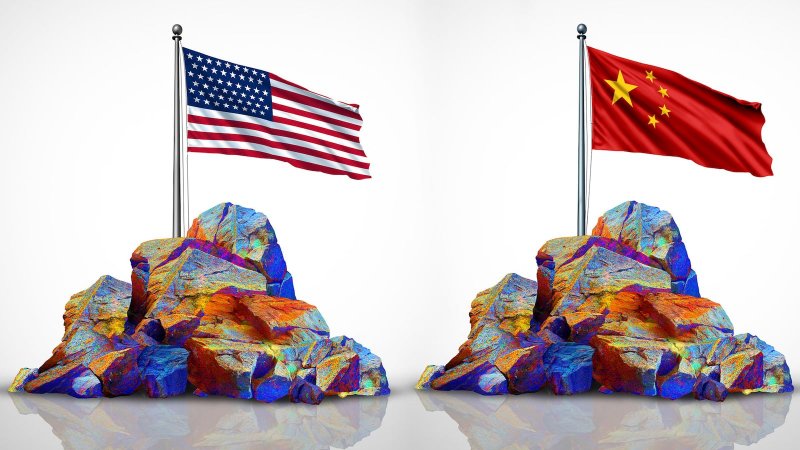
China’s Ministry of Commerce announced on Friday that it would suspend certain export controls on critical minerals, including rare earth elements, lithium battery materials, and processing technologies, for a period of one year. These minerals are vital to industries such as semiconductors, military hardware, and other high-tech sectors.
The suspension affects measures that were first introduced on October 9, which had targeted materials crucial for both civilian and military applications. In addition, Beijing reversed retaliatory curbs on exports of gallium, germanium, antimony, and other "super-hard" materials like synthetic diamonds, which had been imposed in December 2024. These measures were initially seen as retaliation for U.S. semiconductor export restrictions.
China, a dominant force in the global production of rare earths and critical minerals, had previously used these export controls as leverage in the ongoing trade dispute. The latest relaxation of restrictions is part of a broader trade agreement between the two nations, with the U.S. agreeing to lower tariffs on Chinese imports and suspend heightened “reciprocal tariffs” until 2026.
The trade truce also includes a postponement of a U.S. rule that would have blacklisted subsidiaries of Chinese companies, signaling a potential shift toward de-escalation in the long-running trade war between the world’s two largest economies.