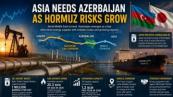
Asia needs Azerbaijan as Hormuz risks grow


Editor’s note: Seymur Mammadov is a special commentator for News.Az and the director of the international expert club EurAsiaAz. The article reflects the author’s personal opinion and does not necessarily represent the views of News.Az.
The escalating crisis in the Middle East and severe disruptions to energy transportation through the Strait of Hormuz have once again demonstrated how vulnerable the global oil and gas market remains to instability in a single strategically important region. The risks have been particularly acute for Asian economies that have relied for decades on crude oil and liquefied natural gas supplies from the Persian Gulf.
Against this backdrop, Azerbaijan has an opportunity to strengthen its position as an alternative energy supplier. The country cannot replace the largest Middle Eastern producers in terms of output. However, it can provide the international market with additional volumes of oil and natural gas transported through routes that are not dependent on the Strait of Hormuz.
RECOMMENDED STORIES
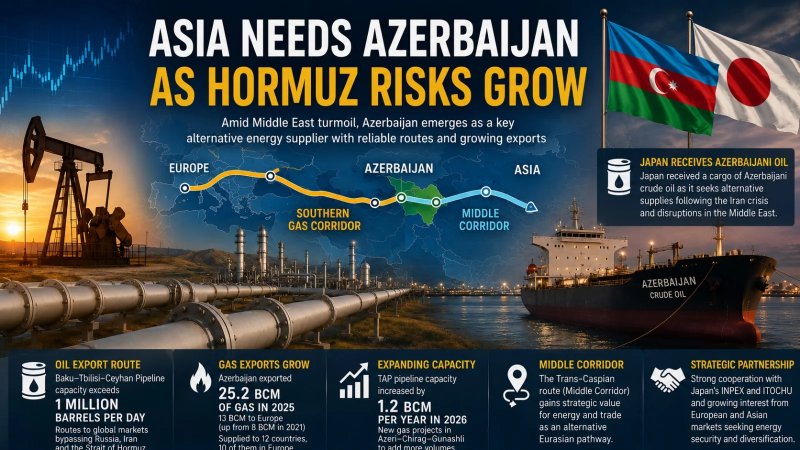
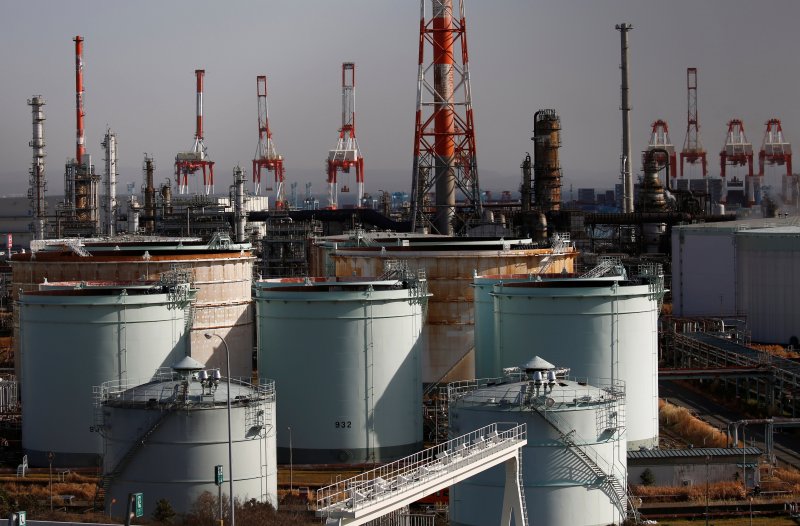
Japan’s growing interest in Azerbaijani crude has acquired particular significance. On May 12, 2026, a tanker carrying approximately 45,000 kilolitres of Azerbaijani oil arrived at an ENEOS refinery in Yokohama. The shipment, equivalent to roughly 283,000 barrels, was the first Azerbaijani cargo delivered to Japan since the outbreak of the war involving Iran in late February. It was also described by Japan’s Ministry of Economy, Trade and Industry as the first Central Asian crude cargo received by the country since the conflict began.
A single cargo cannot fundamentally change the structure of Japan’s energy imports. Nevertheless, the shipment carried considerable strategic and symbolic significance. It demonstrated that Tokyo was intensifying its search for suppliers beyond its traditional Middle Eastern network.
Japan is one of the world’s largest energy importers and has almost no commercially significant domestic oil and gas reserves. Before the current crisis, approximately 95% of its crude oil imports came from the Middle East. Saudi Arabia and the United Arab Emirates were its two largest suppliers, while Kuwait and Qatar also played important roles.
For many years, this concentration of supply was considered manageable because of Japan’s stable relationships with the leading Gulf exporters. However, the war involving Iran and the severe restrictions on tanker movements through the Strait of Hormuz transformed Japan’s geographical dependence into a direct threat to its energy and economic security.
In April 2026, Japanese crude oil imports fell by nearly 66% compared with the same month of the previous year. Imports declined to approximately 850,000 barrels per day, or 4.07 million kilolitres for the month, their lowest level since November 1962. Deliveries from the Middle East dropped by 68%, while shipments from Saudi Arabia and the UAE fell by more than 60%.
For one of the world’s largest economies, this was an alarming signal. A stable oil supply is essential for Japan’s refineries, transport system, petrochemical sector, manufacturing industry and power generation.
The Japanese government was consequently forced to begin an unprecedented release of emergency petroleum reserves. In March, Tokyo announced that approximately 80 million barrels would be made available, equivalent to 45 days of domestic consumption. The package consisted of 15 days’ worth of privately held reserves and approximately 30 days of state-owned stocks.
In April, the government approved a second release of national reserves equivalent to approximately 20 additional days of supply, beginning in early May. Japan also maintained the 15-day reduction in the mandatory private-sector stockholding requirement. These measures formed part of a broader effort to preserve fuel availability while alternative crude supplies were being secured.
At the same time, Japanese refiners began searching for alternative feedstock in the United States, Latin America, the Caspian region and other parts of the world. In this context, Japan’s interest in Azerbaijani crude extends far beyond a single commercial transaction.
Azerbaijan can offer Japan and other Asian consumers oil whose transportation is geographically independent of the Persian Gulf. Most Azerbaijani crude reaches the international market through the Baku–Tbilisi–Ceyhan, or BTC, pipeline.
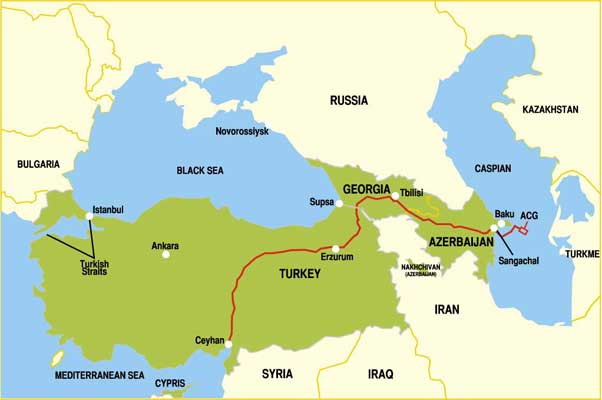
The BTC pipeline is approximately 1,768 kilometres long and has the capacity to transport more than one million barrels of oil per day. It begins in Azerbaijan, crosses Georgia and terminates at the Mediterranean port of Ceyhan in Türkiye.
From Ceyhan, crude can be shipped to refineries in Europe, Asia and other regions. The route’s principal strategic advantage is that it bypasses Russia, Iran and the Strait of Hormuz.
During a major geopolitical crisis, such infrastructure becomes almost as valuable as the hydrocarbon reserves themselves. Buyers gain not only access to additional crude volumes but also to an export corridor that is largely independent of the principal geopolitical flashpoints affecting Gulf supplies.
A major operational change is also approaching. BP has confirmed that it is on track to transfer operatorship of the BTC pipeline to the State Oil Company of the Azerbaijan Republic, SOCAR, on July 1, 2026, in accordance with existing contractual obligations. BP has stressed that the transfer does not represent a withdrawal from the project and that the company will retain its ownership interest.
SOCAR owns 32.97% of the pipeline through its AzBTC subsidiary, while BP holds a 30.1% stake. The remaining shares are held by eight other project participants. The transfer of operatorship highlights Azerbaijan’s expanding role in managing its own strategic energy infrastructure.
Energy cooperation between Azerbaijan and Japan is not entirely new. Japanese companies have participated in major oil and gas projects in the Azerbaijani sector of the Caspian Sea for many years.
INPEX is one of the participants in the Azeri–Chirag–Gunashli oilfield development, while ITOCHU has extensive experience in Azerbaijan’s energy sector. Japanese companies therefore possess both technical knowledge of the country’s energy industry and established institutional relationships with Azerbaijani partners.
The latest shipment to Japan was consequently supported not only by an emergency in the global market but also by an existing foundation of bilateral energy cooperation.
For Baku, the principal opportunity is to transform occasional crisis-driven purchases into more stable commercial relationships. Achieving this will require competitive transportation costs, dependable cargo scheduling, suitable crude specifications and, where commercially viable, longer-term supply agreements with Japanese refiners.
At the same time, Azerbaijan’s capabilities in the oil market should not be overstated. The country cannot fully replace Saudi Arabia, Iraq, the UAE or Kuwait, each of which exports millions of barrels per day.
In 2025, Azerbaijan’s average daily production of crude oil and condensate stood at approximately 571,000 barrels. This included around 460,000 barrels per day of crude oil and 111,000 barrels per day of condensate. Declining production from mature sections of the Azeri–Chirag–Gunashli complex continues to limit the country’s ability to increase output rapidly.
Azerbaijan should therefore be viewed not as a complete alternative to the Gulf producers but as an important supplementary source of supply.
Such supplementary volumes become particularly valuable during periods of crisis. When the global market loses millions of barrels because of disruptions along a major transportation route, refiners are compelled to search for suitable crude in almost every available producing region.
Even comparatively modest shipments can help individual refineries maintain operations, limit withdrawals from strategic stocks and reduce the risk of production interruptions.
Azerbaijan also benefits from the quality of its principal export grade. Azeri Light is a light, low-sulphur crude that is highly valued on the international market.
Its characteristics enable refiners to produce relatively high yields of valuable light petroleum products, including petrol, diesel and aviation fuel. This makes Azeri Light attractive to many refineries, although the suitability of each cargo ultimately depends on the technological configuration and feedstock requirements of the receiving facility.
Azerbaijan’s longer-term strategic potential may be even greater in the natural gas sector. In 2025, the country exported approximately 25.2 billion cubic metres of gas. Around 12.8 billion cubic metres were delivered to European markets.
By comparison, Azerbaijani gas supplies to Europe amounted to approximately 8 billion cubic metres in 2021. Baku has therefore substantially strengthened its contribution to the diversification of European gas supplies, even though further expansion will require considerable investment in production and transportation infrastructure.
Azerbaijan’s gas market has continued to widen. Following the beginning of deliveries to Germany and Austria in January 2026, Azerbaijani gas was reaching 16 countries. SOCAR also signed a ten-year agreement with Germany’s SEFE for annual deliveries of 1.5 billion cubic metres.
The Trans Adriatic Pipeline has meanwhile completed the first stage of its capacity expansion. From January 1, 2026, the system gained an additional 1.2 billion cubic metres of long-term annual capacity for deliveries to Europe. The construction work was completed ahead of schedule and without interrupting existing gas flows.
The principal source of Azerbaijan’s export gas remains the Shah Deniz field. Its reserves have traditionally been estimated at around one trillion cubic metres of gas and approximately 240 million tonnes of condensate.
Gas from Shah Deniz is transported through the South Caucasus Pipeline, the Trans-Anatolian Natural Gas Pipeline, or TANAP, and the Trans Adriatic Pipeline, or TAP. Together, these systems form the Southern Gas Corridor, which carries Azerbaijani gas through Türkiye and into Southern and South-Eastern Europe.
The development of non-associated gas from the deep reservoirs of the Azeri–Chirag–Gunashli block represents another important step. In June 2026, BP announced the beginning of commercial production of non-associated gas from ACG. Unlike associated gas, this resource is produced independently rather than as a by-product of oil extraction.
BP estimates that the development contains approximately four trillion cubic feet of recoverable non-associated gas resources, equivalent to about 113 billion cubic metres. The broader potential could reach six trillion cubic feet, or roughly 170 billion cubic metres. The initial production well was drilled from the existing West Chirag platform.
The first wells will provide BP and its partners with important information on reservoir behaviour and production performance. This data will help determine the scale and structure of any subsequent development.
Further opportunities are associated with the second phase of the Absheron gas field, the continued development of Shah Deniz and other prospective structures in the Azerbaijani sector of the Caspian Sea.
TotalEnergies has said that the second phase of Absheron is expected to begin production on September 1, 2029, subject to a final investment decision. The expansion is projected to increase output to approximately 12.7 million cubic metres of gas per day and around 35,000 barrels of condensate.
Direct gas cooperation between Azerbaijan and Japan nevertheless faces clear geographical and infrastructural limitations. The two countries are not connected by pipeline, while Azerbaijan does not currently possess a large-scale liquefied natural gas export terminal.
Direct deliveries of Azerbaijani LNG to Japanese terminals are therefore unlikely in the near term. Oil remains a much more mobile and commercially accessible commodity for direct trade between Baku and Tokyo.
However, the expansion of Azerbaijani gas production may still serve Japan’s interests indirectly. The more pipeline gas Azerbaijan supplies to Europe, the more LNG cargoes from the United States, Qatar and other exporters may potentially become available to Asian buyers.
In this way, Azerbaijan’s growing gas exports can influence not only the European market but also the wider global energy balance.
Japanese companies could also participate in financing gas developments, modernising infrastructure, improving energy efficiency, reducing methane emissions and supplying advanced technology for offshore production.
Over the longer term, bilateral energy cooperation could move far beyond conventional oil and gas. Azerbaijan has significant offshore wind potential in the Caspian Sea and is developing plans to export renewable electricity to European markets.
Japanese companies possess advanced expertise in hydrogen, ammonia, battery storage, carbon capture and offshore wind power. These sectors could form the basis of a new phase in economic and technological cooperation between the two countries.
Azerbaijan’s central advantage lies in the combination of several factors: domestic oil and gas resources, access to export corridors independent of the Strait of Hormuz, decades of cooperation with international energy companies and a favourable geographical position between the Caspian Sea, the South Caucasus, Türkiye and Europe.
The Middle Eastern crisis will not transform Azerbaijan into a full-scale replacement for the largest Gulf producers. Its production capacity is too limited for such a role.
However, the crisis can significantly enhance Baku’s importance as a reliable supplementary supplier capable of delivering oil and gas through routes that do not depend on the Strait of Hormuz.
For Japan, the arrival of Azerbaijani crude provided a practical example of energy diversification. For Azerbaijan, it created an opportunity to consolidate its position in one of Asia’s largest and most financially attractive energy markets.
Should Baku succeed in stabilising oil production, expanding gas developments, modernising export infrastructure and deepening cooperation with Japanese corporations, temporary crisis-driven demand could gradually evolve into a durable energy partnership.
This is Azerbaijan’s principal strategic advantage. The country does not need to become one of the world’s largest suppliers in order to increase its geopolitical and commercial significance. During periods of global instability, particular value is attached to suppliers capable of offering reliability, predictability and an alternative transportation route.
Today, Azerbaijan possesses all three advantages.
(If you possess specialized knowledge and wish to contribute, please reach out to us at opinions@news.az).


Similar news