London rallies European allies against Putin


Editor’s note: Seymur Mammadov is a special commentator for News.Az and the director of the international expert club EurAsiaAz. The article reflects the author’s personal opinion and does not necessarily represent the views of News.Az.
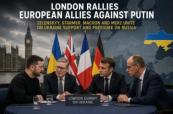
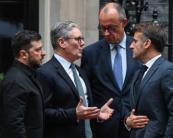
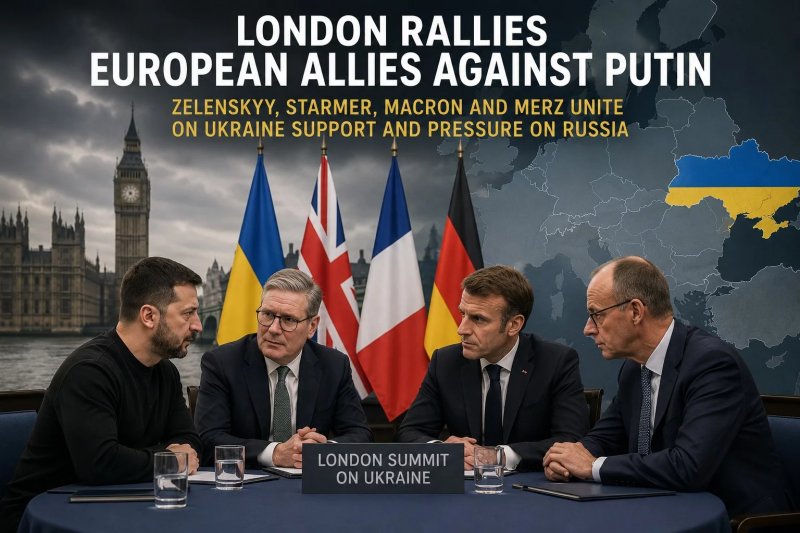
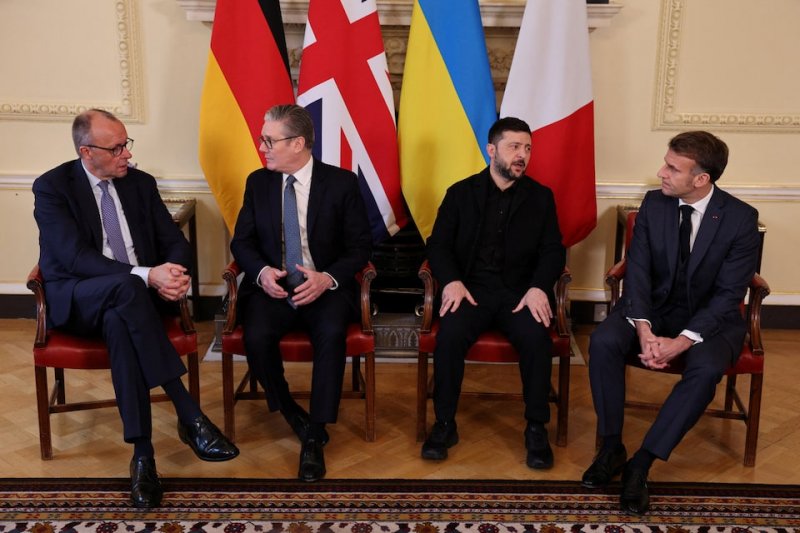
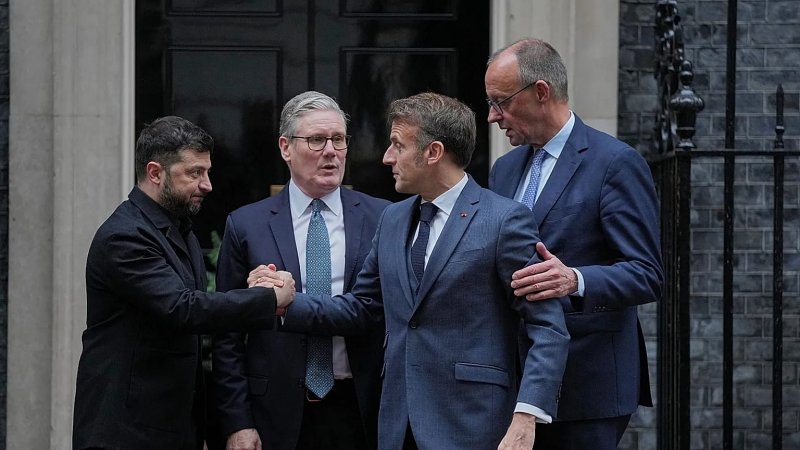
Ukrainian President Volodymyr Zelenskyy is meeting in London today, June 7, with British Prime Minister Keir Starmer, French President Emmanuel Macron and German Chancellor Friedrich Merz. The talks are expected to become another major attempt by Kyiv’s leading European allies to coordinate a common strategy on supporting Ukraine, increasing pressure on Russia and advancing a possible peace process.
According to the agenda announced by the Élysée Palace, the meeting is intended to strengthen coordination between France, the United Kingdom, Germany and Ukraine. The discussions will focus on further military and financial assistance for Kyiv, the prospects for negotiations with Moscow, possible security guarantees for Ukraine and additional measures aimed at increasing pressure on Russia.
RECOMMENDED STORIES
London’s selection as the venue is far from accidental. The United Kingdom remains one of Ukraine’s most consistent European supporters, while Starmer and Macron have played leading roles in the so-called coalition of the willing. Within this framework, participating countries have been discussing long-term security guarantees for Kyiv and the possible involvement of European states in ensuring the implementation of any future ceasefire agreement.
The meeting is taking place at a time when the intensity of the fighting remains high and the positions of Moscow and Kyiv on the key terms of a settlement remain deeply divided. Ukraine is seeking renewed assurances that European support will not weaken and that any negotiations with Russia will not be conducted without Kyiv’s full participation.
For the Ukrainian leadership, it is particularly important to understand whether the major European powers are prepared not only to continue supplying weapons, but also to undertake long-term financial and political commitments. Kyiv continues to require air defence systems, missiles, artillery ammunition, unmanned systems and investment in the joint production of weapons.
At the same time, European governments face the difficult task of replenishing their own military stockpiles. Support for Ukraine requires increasingly substantial expenditure, while national governments must also take into account domestic economic difficulties, budgetary constraints and growing fatigue within parts of European society over the prolonged conflict.
Nevertheless, Britain, France and Germany are seeking to demonstrate that Europe remains capable of shaping an independent policy towards Ukraine. The London meeting is especially significant as Washington’s attention is increasingly drawn towards other international crises. This places additional pressure on European capitals, which are being forced to assume greater responsibility for the security of the continent.
One of the central questions at the talks will be how to influence Moscow’s calculations. European leaders believe Russia must be confronted with a choice between entering serious negotiations and facing further military, political and economic pressure.
Moscow, however, is signalling that it does not regard its battlefield position as critical and expects Russian forces to continue advancing. President Vladimir Putin outlined this position on June 4 during a meeting with the heads of leading international news agencies at the Konstantinovsky Palace in St Petersburg.
The Russian president claimed that the Ukrainian army was facing a serious reduction in manpower. According to him, the strength of the Armed Forces of Ukraine had recently declined by approximately 100,000 personnel, while Ukraine’s monthly losses amounted to around 40,000 servicemen.
Putin argued that compulsory mobilisation allowed the Ukrainian authorities to recruit approximately 15,000 to 16,000 people each month, while a further 14,000 servicemen returned to duty after receiving treatment in hospitals. Based on these calculations, he claimed that the Ukrainian army was shrinking by approximately 10,000 personnel every month.
In addition, Putin alleged that around 20,000 servicemen deserted Ukrainian units each month and that the number of deserters had reached approximately 60,000 since the beginning of the year. He also claimed that roughly 200,000 criminal cases related to desertion had been opened in Ukraine.
“People there, as you know, are being caught in the streets like stray dogs and forcibly pushed into the army,” Putin said while describing Ukraine’s mobilisation campaign.
The Russian leader argued that forcibly mobilised soldiers lacked motivation and that this, combined with casualties and desertion, was weakening Ukraine’s defences and contributing to the loss of territory.
It should be stressed that the figures cited by Putin represent the Russian side’s assessment and have not been independently verified. Ukraine regularly disputes Moscow’s claims regarding Ukrainian losses and troop strength, accusing the Russian leadership of exaggerating the numbers for political and information purposes.
Putin also claimed that the Russian army had recently taken control of approximately 2,440 square kilometres of territory. This is the figure contained in the official Kremlin transcript of his remarks. According to him, Russian forces continue to advance daily along various sections of the front line.
Speaking about the situation in Donbas and southern Ukraine, the Russian president asserted that Russian forces fully controlled the territory of the Luhansk region, more than 85 per cent of the Donetsk region and approximately 80 per cent of the Zaporizhzhia region. Moscow officially regards these territories as part of the Russian Federation, while Ukraine and most countries around the world reject their annexation and continue to recognise them as part of Ukraine’s internationally recognised territory.
According to Putin’s assessment, Ukrainian forces had until recently controlled around a quarter of the Donetsk region, but Kyiv now allegedly held less than 15 per cent. Independent verification of such figures is difficult because the front line is constantly changing and Russian, Ukrainian and independent sources publish differing assessments.
These statements by the Russian president are directly relevant to the agenda of the London meeting. They indicate that Moscow intends to use the battlefield situation as one of its main arguments in any future negotiations. The Russian leadership appears to believe that time may be working in its favour and that continued military pressure could force Kyiv to accept conditions it previously regarded as unacceptable.
This creates a serious dilemma for Zelenskyy, Starmer, Macron and Merz. On the one hand, European leaders continue to speak about the need for a diplomatic settlement and an end to the fighting. On the other, they fear that negotiations held while Russian forces continue advancing could consolidate Ukraine’s territorial losses and allow Moscow to dictate the main terms of a future agreement.
For this reason, the participants in the London meeting are likely to discuss not only the possibility of launching a peace process, but also ways to strengthen Ukraine’s position before substantive negotiations begin. This could include additional weapons supplies, further development of Ukraine’s defence industry, stronger air defence capabilities and long-term financial guarantees for Kyiv.
Sanctions policy will be another major area of discussion. London, Paris and Berlin may consider new measures targeting Russia’s energy, financial and military-industrial sectors, as well as companies and intermediaries that help Moscow circumvent existing restrictions.
The effectiveness of further sanctions, however, will depend on the unity of European governments. Some EU countries remain concerned about the consequences of the toughest restrictions for their own economies, energy security and trade. Russia has also significantly redirected its commercial flows towards China, India, Middle Eastern states and other countries across the Global South.
This means that European leaders must combine economic pressure with a realistic diplomatic strategy. Sanctions and weapons supplies alone may not be sufficient to break the current deadlock.
The main disagreements between Moscow and Kyiv concern territory, Ukraine’s future status, security guarantees and the sequence of steps within any potential peace process.
Russia demands recognition of what it describes as the new territorial realities, restrictions on Ukraine’s military capabilities and Kyiv’s renunciation of NATO membership. The Ukrainian leadership rejects conditions that could be interpreted as a surrender of sovereignty or legal recognition of territorial losses.
Kyiv also insists on reliable international security guarantees. Ukrainian officials fear that a ceasefire without such guarantees would merely become a temporary pause, after which hostilities could resume.
Moscow, for its part, argues that a ceasefire reached without agreement on the fundamental terms of a settlement could be used by Ukraine to rearm, mobilise additional forces and strengthen its defensive positions.
The participants in the London talks must therefore determine whether an interim formula exists that could stop the fighting without turning a ceasefire into little more than a pause before a new phase of the conflict.
Possible security guarantees for Ukraine remain among the most difficult issues. Britain and France have previously discussed the creation of a European mission that could operate after a ceasefire agreement is concluded. Such a mission could theoretically be tasked with training Ukrainian forces, providing logistical support, protecting certain facilities or monitoring compliance with the agreement.
Moscow has repeatedly opposed the deployment of troops from NATO countries on Ukrainian territory. From Russia’s perspective, such a presence would amount to the effective expansion of NATO infrastructure even if Ukraine did not formally become a member of the alliance.
European leaders will therefore have to search for a mechanism that offers Kyiv meaningful security guarantees without becoming an insurmountable obstacle to negotiations with Moscow.
Each participant in the London meeting also has distinct political objectives. For Zelenskyy, the priority is to preserve unity among Ukraine’s European allies and secure new, concrete commitments. The Ukrainian president must demonstrate domestically that Kyiv is not isolated and continues to enjoy the backing of Europe’s leading powers.
For Starmer, the meeting is an opportunity to reinforce Britain’s role as one of the principal architects of European policy towards Ukraine. Following the United Kingdom’s departure from the European Union, London has sought to maintain a leading position in matters of continental defence and security.
For Macron, the talks continue France’s broader policy of strengthening European strategic autonomy. Paris believes European countries must possess their own instruments of influence and should not remain entirely dependent on decisions taken in Washington.
For Merz, the meeting is a test of Germany’s ability to combine large-scale support for Ukraine with the search for a diplomatic solution. Berlin has Europe’s largest economy, and without its financial and political participation, establishing a long-term support system for Kyiv would be extremely difficult.
The London meeting is taking place against the backdrop of two opposing narratives. Russia argues that the battlefield initiative lies with its forces and that Ukraine’s military position is continuing to deteriorate. Kyiv and its European partners are trying to demonstrate that sustained assistance can halt Russian advances and prevent Moscow from unilaterally determining the terms of a settlement.
Zelenskyy, Starmer, Macron and Merz are therefore likely to reaffirm their intention to continue providing military and financial support to Ukraine, increase pressure on Russia and seek the beginning of a serious diplomatic process.
The true significance of the meeting, however, will be measured not by the final statements, but by concrete decisions: the scale of new weapons deliveries, additional funding, mechanisms for security guarantees and the ability of European leaders to present a coordinated plan for ending the war.
The central question is whether Europe is prepared not only to help Ukraine continue resisting, but also to assume responsibility for shaping the future security architecture of the continent.
London is seeking to demonstrate that Europe’s leading powers remain united and will not accept a settlement reached exclusively on Moscow’s terms. Russia, meanwhile, is projecting confidence in its continued military progress and showing little willingness to make substantial concessions.
Today’s meeting is therefore more than another expression of political solidarity with Ukraine. It is expected to reveal whether Europe has a practical strategy capable of combining continued support for Kyiv, sustained pressure on Moscow and the search for a realistic path towards ending the fighting.
(If you possess specialized knowledge and wish to contribute, please reach out to us at opinions@news.az).


Similar news