Dubious arms supplies: What are Iran and Armenia hiding?


By Faiq Mahmudov
Iran and Armenia have concluded a significant arms agreement valued at $500 million, according to a source with knowledge of the matter who spoke to Iran International.This agreement, constituting approximately one-third of Armenia's defense budget for 2024, raises several critical questions: What are Iran's intentions behind this military support to Armenia? How will this impact the already delicate geopolitical balance in the South Caucasus? What are the potential consequences for regional security and the interests of other involved powers, including Russia and Western countries?
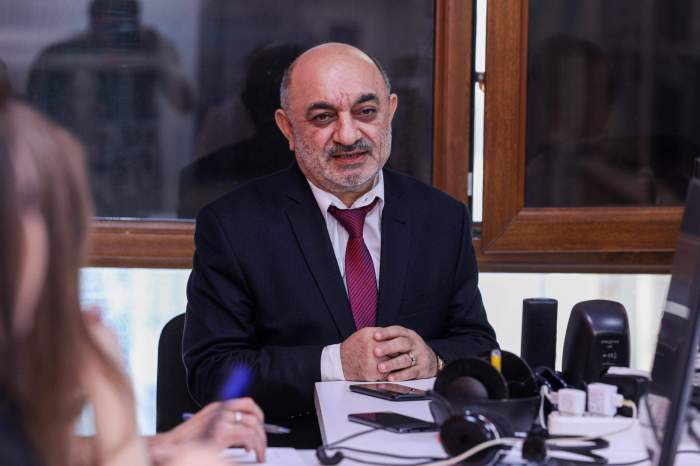
Expert Sadraddin Soltan, in an interview with News.Az, noted that military cooperation between Iran and Armenia has been ongoing for some time. "During the 44-day war , Iran supplied Armenia with weapons it had received from Russia. Following the conflict, Armenian military officials were quick to visit Iran to explore its military-industrial facilities and inspect locally manufactured military equipment and ammunition. This indicates that military cooperation between Iran and Armenia has deepened following the 44-day war," Soltan said.
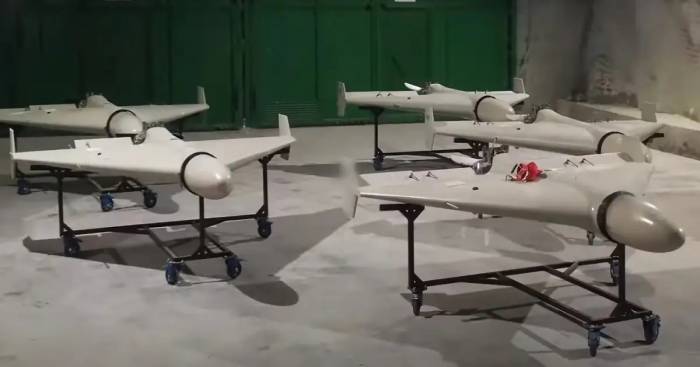
Soltan outlined several reasons for this shift: "Firstly, Armenia views Iran as an alternative to Russia, particularly in energy and military domains. Armenians are convinced that Iranian military equipment proved effective during the Russian-Ukrainian conflict and demonstrated reliability. Consequently, they perceive Iranian weaponry to be superior to Russian armaments. Armenia primarily purchased Shahed drones of various models, the Mohajer drone, as well as the 3rd Khordad and Arman air defense systems from Iran."
Another significant factor is the absence of political obligations tied to the sale of Iranian arms. "When Russia sells or provides weapons to Armenia, it often entails certain political commitments toward Russia. However, in the military relationship between Iran and Armenia, such political obligations do not exist," Soltan explained. He also emphasized Iran's geographical proximity to Armenia, allowing for quicker supply of weapons and military equipment in times of war compared to distant suppliers like Russia. "If Armenia were to run out of weapons during a conflict, it could easily acquire them from Iran. This proximity means that Iran is geographically closer, allowing Armenia to quickly obtain replacements for exhausted or damaged weapons and facilitate repairs," he added.
Soltan highlighted another significant arms deal: "It's reported that Armenia signed a contract worth $600 million with India , which represents about 90 percent of Armenia's total military budget, amounting to $1.1 billion." He noted that with this step, Iran strengthens Armenia in the region, increasing the threat to regional security.
Soltan argued that the secret arms deal could have broader geopolitical implications. "Western countries, including the United States, might be overlooking the arms deal between Armenia and Iran. This could be interpreted as a geopolitical gesture by Armenia, possibly aimed at balancing relations with Russia. The financial gain for Iran, around half a billion dollars, may not significantly impact the United States and its allies economically. However, those funds could potentially be used by Iran in various regional contexts, including activities perceived as detrimental to Israeli and U.S. interests in Syria, Lebanon, Hamas, Gaza, and Yemen."
Armenia's rapprochement with Iran and its neglect of Russia cannot be overlooked. Dmitry Peskov, press secretary of the Russian president, recently stated that Armenia is a brotherly country and an ally for Russia, but their choices may result in consequences similar to those in Ukraine. "It means that, as in Ukraine, military operations could be carried out in Armenia as a special military operation, since Moscow refers to the war in Ukraine as such," Soltan explained.
The joint exercise with the United States focuses on combating riots, ensuring citizen safety, and evacuation. The European Union has also allocated 10 million euros to Armenia for military purposes, strengthening Armenia's position in the South Caucasus. "This issue is very dangerous for the region and it gives impetus to rapid armament in the region. Iran both gains from Armenia and creates a problem for peace in the South Caucasus," Soltan warned.
To date, neither Iranian nor Armenian officials have made any official statements regarding this secret deal. "It seems that this issue can also have a negative impact on the process of restoration, normalization, and development of Iran-Azerbaijani relations," Soltan concluded.
Information about a military deal between Armenia and Iran may seem dubious, as the publication that disseminated these data failed to provide concrete facts. Nevertheless, it is worth reminding our readers that it was recently revealed that Iran had unofficially transferred drones to Kurdish militants in Iraq for use against Turkey. According to the newspaper Yeni Şafak, Turkey demanded that Iran cease supplying weapons to the Kurdistan Workers' Party (PKK), which is banned in Turkey, and refrain from interfering in Ankara's military operations against armed Kurdish formations. A similar situation is observed in the case of Armenia and Iran. Although neither Armenia nor Iran officially acknowledges this deal, there are sources claiming that the sale, especially of drones, did indeed take place.


Similar news