Firefly Aerospace releases video of Blue Ghost's historic moon landing - VIDEO


Firefly Aerospace, the Texas-based startup, has shared video footage of its Blue Ghost lander’s successful soft-landing on the moon, making it only the second private-sector company to achieve this feat.
Blue Ghost shared the footage after successfully deploying an X-band antenna, which can beam troves of data and images back from the vehicle, the company said, News.Az reports, citing CNN.
The video, taken as Blue Ghost descended just north of the moon’s equator within an ancient volcanic basin called Mare Crisium, shows the vehicle steadily making its way down before landing upright on its four legs.
Within the basin, the lunar lander is near an ancient volcanic feature called Mons Latreille, which lies on the far eastern edge of the moon’s visible face.
Blue Ghost is expected to study the moon’s surface for about two weeks until lunar nightfall plunges the landing zone into extreme cold and darkness, making it all but impossible for the largely solar-powered lander to continue operations.
The vehicle will attempt to briefly continue working in the darkness, as the spacecraft is equipped with batteries that aim to allow five or more hours of operation in the absence of sunlight.
In a blog post Tuesday, NASA — which sponsored this mission through its Commercial Lunar Payload Services, or CLPS, program — said that all 10 of the agency’s science instruments and tech demonstrations on board Blue Ghost “continue to be healthy.”
Several instruments have also begun collecting data. They include the Electrodynamic Dust Shield, or EDS, which is designed to sweep moon dust kicked up by the landing off of the spacecraft’s surface using electrical currents. Moon dust plagued astronauts and spacecraft during NASA’s Apollo program in the mid-20th century, as the fine and abrasive material damaged camera lenses and visors, according to NASA.
The space agency said initial data analysis suggests the EDS experiment is a “promising solution for future lunar surface operations.”
The Lunar Global Navigation Satellite System Receiver Experiment, or LuGRE, also powered on, making history by acquiring a GPS signal from the lunar surface for the first time.
NASA’s Stereo Cameras for Lunar Plume-Surface Studies, or SCALPSS, also captured images that will help the space agency understand how lunar soil reacts to a spacecraft’s engine as it heads in for landing.
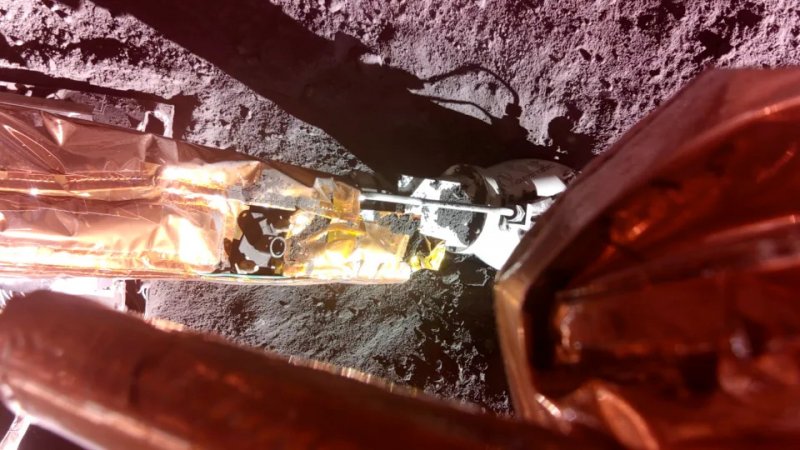
Finally, Blue Ghost deployed the Lunar PlanetVac, or LPV, a type of vacuum equipped with its own gas that’s designed to suck up soil from the lunar surface, testing how sample collection might be made more efficient in the absence of gravity. NASA confirmed the vacuum has begun operations but did not yet say how well the instrument worked.
Blue Ghost is the first of two lunar landers developed by separate Texas-based companies to head for the surface of the moon this week.


Similar news