Georgia and China upgrade ties as US lawmakers raise concerns over influence


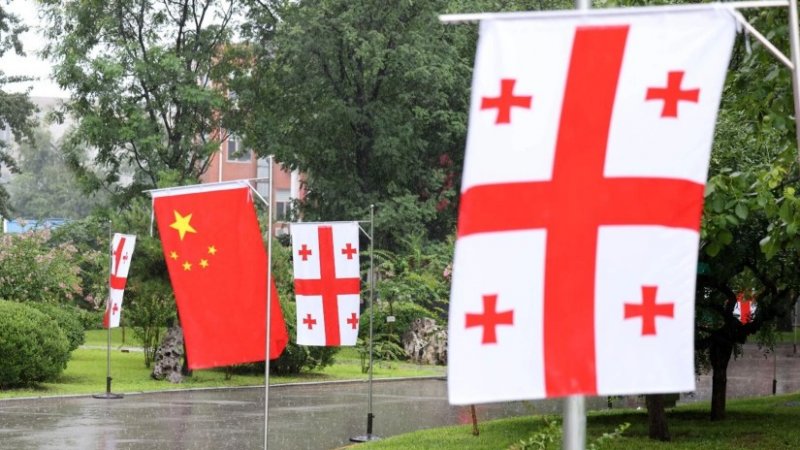
Tbilisi and Beijing have elevated their relations to a comprehensive strategic partnership, marking a major upgrade in bilateral ties announced on 9 June through published letters from Chinese President Xi Jinping and Georgian President Mikheil Kavelashvili.
The announcement coincided with the 34th anniversary of diplomatic relations between the two countries and formalised a new stage in cooperation that both sides describe as one of the highest levels of engagement in Chinese diplomacy, News.Az reports, citing News Georgia. Unlike the 2023 strategic partnership agreement, which was accompanied by a visit by then Prime Minister Irakli Garibashvili to China and a formal signing ceremony, the latest upgrade was announced without a public signing event.
Prime Minister Irakli Kobakhidze described the decision as “very important”, saying China had become one of Georgia’s key economic partners over the past three years.
“Over the three years of strategic partnership, China has become one of Georgia’s key economic partners,” Kobakhidze said, noting that trade turnover between the two countries increased by 21% in 2025 and by a further 45% in the first four months of 2026. He added that China is now the second-largest destination for Georgian exports and the third-largest trading partner overall.
RECOMMENDED STORIES
He also highlighted the introduction of mutual visa-free travel, the expansion of direct air links, and the development of the Middle Corridor — a transport route connecting China and Europe via the South Caucasus.
“This is not a strategic partnership only on paper, but cooperation that brings concrete benefits to both countries. This is exactly how an exemplary strategic partnership between two states should be — based on mutual respect, fairness and dignity, and focused on mutual benefit,” the Georgian prime minister said.
The move came just one day after, on 8 June, the US House of Representatives approved a bill calling for a report on Chinese and Russian influence in Georgia.
The bill, initiated by Republican Congressman Joe Wilson, requires the US State Department to prepare, within 180 days, a classified report on the penetration of Russian and Chinese intelligence structures in Georgia and their potential interaction. It also calls for a five-year strategy for US–Georgia relations, including an assessment of continued financial assistance to Tbilisi.
Wilson also proposed incorporating similar provisions into the US defence budget for 2027. Last week, related amendments were approved by the House Armed Services Committee.
During debates in the House of Representatives, Wilson sharply criticised the ruling Georgian Dream party, accusing it of rapprochement with China, Russia and Iran, electoral fraud, and abandoning a pro-Western course.
“The nightmare regime of Georgian Dream must, through free and fair elections, abandon its anti-American course, release political prisoners, end politically motivated prosecutions, ensure a fair electoral environment, repeal draconian laws that suffocate American business, and stop repression against freedom of speech,” Wilson said.
He added that the proposed legislation would help identify covert Russian and Chinese operations not only in Georgia but across the wider region, and would allow Washington to reassess financial assistance to Tbilisi.
Responding to the criticism, Prime Minister Kobakhidze described Wilson as an “absolutely unserious person”, saying the congressman is not taken seriously even in the United States. He also suggested that US President Donald Trump is seeking to improve relations with China.
“When someone like Joe Wilson talks about the negative influence of China in the South Caucasus, it looks completely unserious,” Kobakhidze said.
Speaker of Parliament Shalva Papuashvili went further, calling the initiative by US lawmakers “absolute fiction”, created solely for informational noise.
“Does anyone really think that US intelligence agencies are waiting for Joe Wilson’s instructions to study Russian or Chinese influence?” he said.
The Chinese ambassador to Georgia, Zhou Qian, also criticised Washington’s initiative, saying Beijing was not interested in the views of “some American congressman”.
“Our friendship and cooperation with Georgia is not directed against third countries and is not part of any alliance,” he stressed.
According to News Georgia, the series of statements reflects the rapidly shifting foreign policy landscape around Georgia.
In 2024, the Joe Biden administration suspended its strategic partnership with Tbilisi amid the adoption of the “foreign agents” law, disputes over democratic standards and foreign policy direction, and the government’s decision not to continue EU accession negotiations. Washington also imposed sanctions on several senior Georgian security officials and Bidzina Ivanishvili, honorary chairman of Georgian Dream.
Georgian Dream had hoped that Donald Trump’s return to the White House would lead to a reversal of these measures. However, no such review has taken place so far, although Tbilisi has cited “positive signals” from Washington.
Against this backdrop, China has steadily expanded its economic presence in Georgia. Beijing has shown interest in the Anaklia deep-sea port project and the development of the Middle Corridor — areas also identified by the United States as strategically important. However, in the political sphere, outcomes of cooperation with China remain more ambiguous. Last week, China abstained from voting on a resolution affirming the right of Georgian refugees to return to Abkhazia and the Tskhinvali region.


Similar news