Georgia at the crossroads of geopolitical struggle between the West and Russia


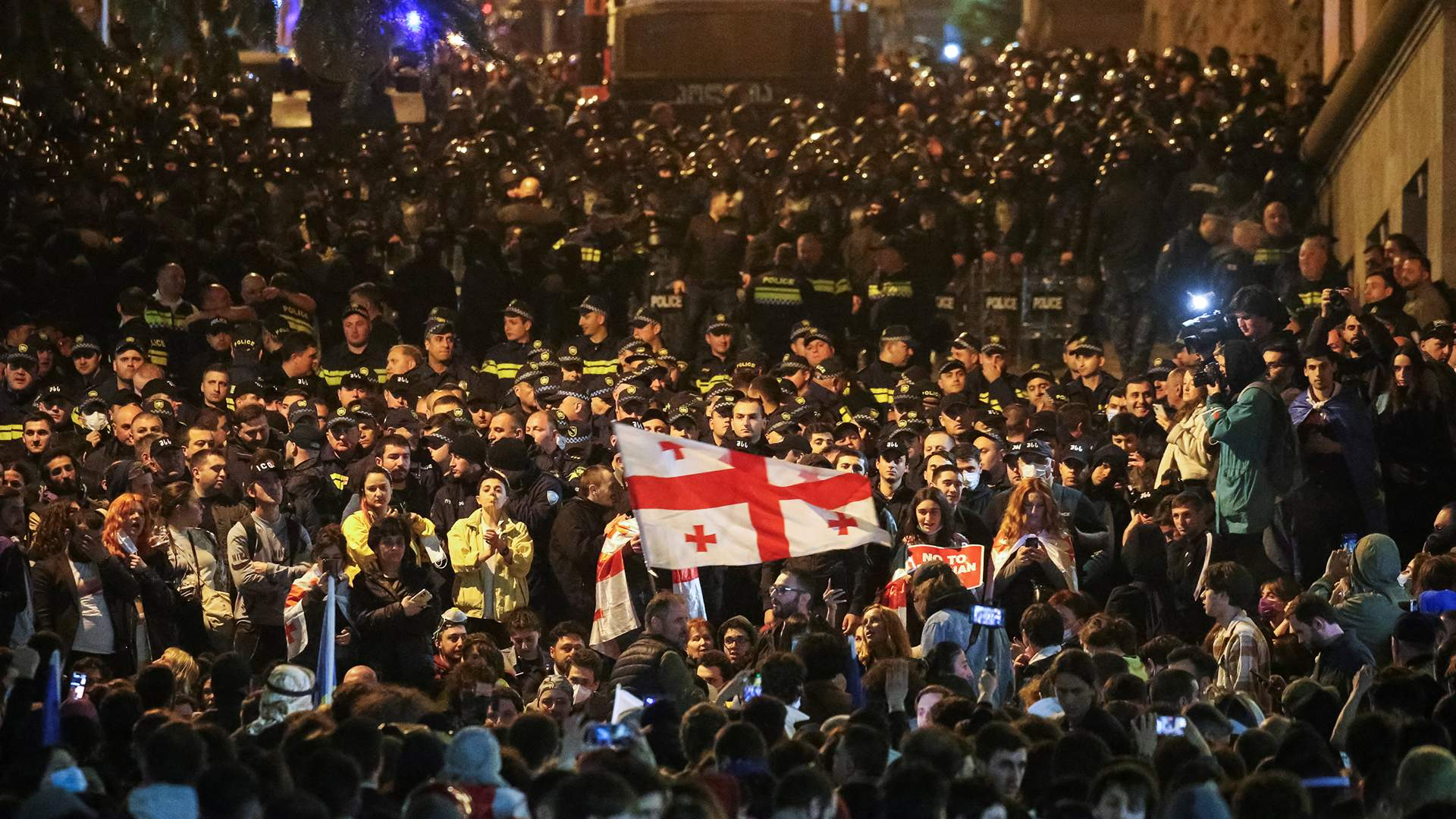
In early April the Georgian government re-introduced a slightly glossed-over and re-worded version of the Russian-style ‘foreign agents’ bill that was withdrawn a year ago due to mass protests and international condemnation. Named the Law on Transparency of Foreign Influence, it passed in the first parliamentary reading through the support of the ruling populist Georgian Dream party on April 17, against the background of renewed mass protests and police violence.
While the bill received harsh criticism from the majority of Western leaders and international organisations for potentially targeting NGOs and independent media funded from abroad, it was heartily praised by the chairman of the Russian State Duma Vyacheslav Volodin and other Russian officials.
While it is not yet clear whether the bill will eventually be adopted by the parliament, after a likely veto by President Salome Zourabichvili, it is worth considering the potential consequences of both its successful adoption and enforcement, or its repeated failure to survive the pressure.
There are two main directions of political development that the (non-)adoption of the law will influence: the prospects of the ruling party in the parliamentary elections to take place in October this year, and Georgia’s potential progress, or its lack thereof, on its path towards EU integration.
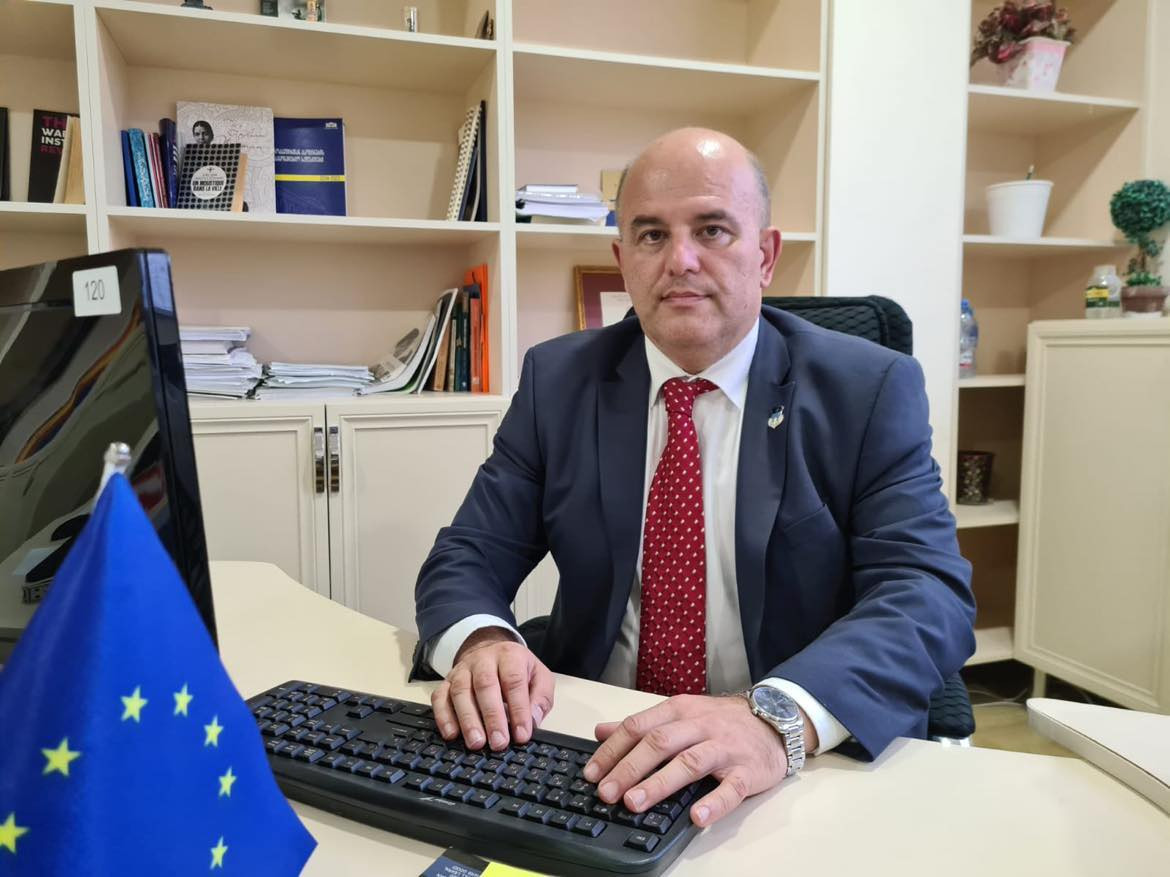
Georgian political scientist Vakhtang Maisaya provided insights to News.Az regarding the political climate in Georgia, describing it as a geopolitical contest between the West and Russia. He characterized this confrontation as hybrid, with Georgia serving as a key battleground in this bipolar conflict.
During a recent session of the European Parliament held in Strasbourg from April 22 to April 25, delegates discussed the Georgian situation. They focused particularly on the reintroduction of the "foreign agents" bill. The legislators criticized the ruling "Georgian Dream" party and called for targeted sanctions against those who supported the bill.
Maisaya drew parallels between the Georgian "transparency of foreign influence" bill and the Russian "foreign agents" law, enacted in 2022, highlighting that the first six articles of both laws are "completely identical." He remarked that both pieces of legislation exhibit undemocratic and authoritarian trends.
The political scientist voiced concerns that Georgian legislators might have hoped that the pre-election campaign in the European Parliament would divert attention from Georgian issues, potentially as part of a strategy to facilitate the passage of the controversial bill.
Maisaya speculated that, should the bill pass, the European Union might implement retaliatory measures against Georgia, contradicting the EU's constitution, spirit, and policies. This unprecedented policy response could significantly impact the results of the upcoming parliamentary elections on October 26. He outlined three potential scenarios for Georgia, drawing analogies with Poland, Belarus, or Georgia's own 2008 political crisis, which was triggered by a rift within the ruling elite.
Vakhtang Maisaya underscored the complexity of Georgia's internal political structure, pointing to the existence of 5-6 clan factions within the "Georgian Dream" ruling party. He suggested that one of these factions might challenge the current leadership before the parliamentary elections scheduled for October 26.
He also raised concerns about potential election fraud. Maisaya theorized that the current authorities might seek to ally with pro-Russian factions, allegedly under the influence of oligarchs Davit Kezerashvili and Ivane Merabishvili, who he claimed have strong connections with Russian security forces led by Nikolai Patrushev.
Looking ahead to the elections, Maisaya cautioned against the formation of a homogeneous parliament that could include pro-Russian groups such as "Georgian Dream," "People's Power," "Georgian Idea," and "Alt-Info."
Finally, Maisaya explored different scenarios for the forthcoming elections. The Polish model, which he described as more democratic, posits that "Georgian Dream" could secure a substantial share of votes, achieving a political and parliamentary majority. However, he noted the risk of the opposition uniting to siphon votes from the ruling party, similar to the situation in Poland. The most likely scenario, he suggested, could be a "Belarusianization" of Georgia, where power is concentrated in the hands of a few individuals with authoritarian tendencies.


Similar news