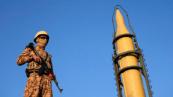
How IRGC’s claimed attack on USS Tripoli could reshape Gulf tensions


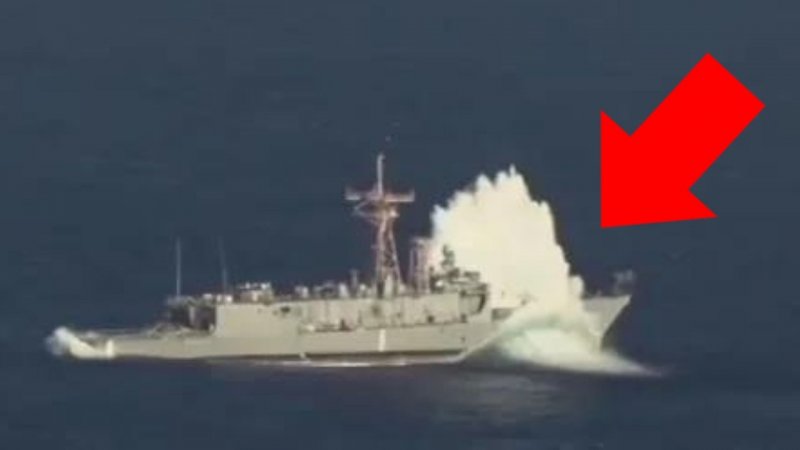
A claim by Iran’s Islamic Revolutionary Guard Corps that it has carried out attacks against the USS Tripoli and other United States and Israeli targets marks a potentially serious escalation in an already volatile regional environment.
Even when such claims are not immediately verified, they carry weight because they signal intent, posture, and the possibility of further action.
RECOMMENDED STORIES
The USS Tripoli is an amphibious assault ship, a high value naval asset designed for expeditionary operations, air support, and rapid deployment of Marines. Any reported attack on such a vessel elevates the situation beyond routine proxy skirmishes and into the realm of direct or near direct confrontation.
The significance lies not only in the alleged action itself but also in the messaging. Statements from the IRGC are often calibrated to influence multiple audiences at once. Domestically, they reinforce a narrative of strength and resistance. Regionally, they signal deterrence and capability. Internationally, they test reactions and probe thresholds without necessarily committing to full scale escalation. This layered communication makes it essential to analyze both the operational and informational dimensions of the claim.
What is the IRGC and how does it operate
The Islamic Revolutionary Guard Corps is a powerful branch of Iran’s military establishment, operating parallel to the conventional armed forces. It has its own ground forces, naval units, aerospace command, and a network of affiliated groups across the Middle East. The IRGC Navy, in particular, specializes in asymmetric maritime warfare, including the use of fast attack craft, mines, drones, and anti ship missiles.
Unlike traditional militaries that rely on large scale fleet engagements, the IRGC emphasizes tactics designed to exploit vulnerabilities of larger forces. These include swarm attacks, harassment maneuvers in narrow waterways, and the use of coastal missile systems. This approach is especially relevant in areas like the Persian Gulf and the Strait of Hormuz, where geography favors asymmetric strategies.
The IRGC also plays a central role in Iran’s regional policy. Through allied groups and networks, it extends influence beyond Iran’s borders. This means that any claim of an attack could involve direct IRGC action, proxy forces, or a combination of both. Understanding this layered operational structure is key to interpreting the claim.
What is the USS Tripoli and why would it be targeted
The USS Tripoli is an amphibious assault ship used by the United States Navy to project power in maritime and coastal environments. It can carry helicopters, tilt rotor aircraft, and short takeoff and vertical landing jets, along with Marines and equipment. Its role is to support amphibious operations, humanitarian missions, and rapid response scenarios.
Targeting such a vessel would carry both symbolic and strategic implications. Symbolically, it represents a challenge to United States naval presence. Strategically, it would test the ability of U.S. forces to operate safely in contested waters. Even an attempted attack could disrupt operations, trigger defensive responses, and increase military alert levels.
The choice of target also reflects a broader pattern in regional tensions, where naval assets become focal points due to their visibility and strategic importance. An attack on a ship like the USS Tripoli would be seen as a direct challenge to U.S. deterrence posture.
Were other targets involved and what does that indicate
The claim also mentions attacks on other United States and Israeli targets. This suggests a coordinated or at least multi dimensional approach. Such claims often aim to demonstrate reach and capability across different domains, including maritime, land, and possibly air or cyber operations.
If multiple targets are involved, it may indicate an attempt to overwhelm defensive systems or to create a perception of widespread vulnerability. It can also signal a shift from isolated incidents to a broader campaign. However, without independent confirmation, it is important to treat such claims cautiously and focus on the strategic messaging behind them.
The inclusion of Israeli targets is particularly notable. It reflects the interconnected nature of regional dynamics, where tensions involving one actor often involve others. This linkage increases the risk of escalation and complicates diplomatic efforts.
Has the claim been independently verified
In many cases, initial claims by military or paramilitary organizations are not immediately verified by independent sources. Verification requires satellite imagery, official statements from targeted countries, or corroborating evidence from multiple observers. The absence of confirmation does not necessarily mean the event did not occur, but it does mean that details remain uncertain.
Verification is also complicated by the nature of modern conflict. Cyber operations, drone strikes, and limited engagements can occur without immediate visibility. This creates a space where information warfare becomes as important as physical action. Claims can be used to shape narratives even in the absence of clear evidence.
It is therefore essential to monitor official responses from the United States and Israel, as well as reports from credible observers. These responses often provide clues about the scale and nature of any incident.
What are the possible scenarios behind the claim
Several scenarios can be considered when analyzing such a claim. One possibility is that an actual attack occurred, either directly by IRGC forces or through affiliated groups. In this case, the claim would be an acknowledgment of action intended to signal capability and resolve.
Another possibility is that the claim exaggerates or misrepresents a smaller incident. For example, a routine encounter or defensive action could be framed as a successful attack. This approach is often used to amplify perceived success and influence public perception.
A third scenario is that the claim is primarily informational, designed to deter or provoke without corresponding physical action. In this case, the emphasis is on signaling rather than execution. This can still have significant effects, as it may alter the behavior of other actors.
Each scenario carries different implications for escalation, response, and future developments.
How might the United States respond
The United States response will depend on the credibility and severity of the claim. If an attack is confirmed, the response could range from diplomatic measures to military action. This might include reinforcing naval presence, conducting defensive operations, or targeting sources of threat.
Even in the absence of confirmed damage, the United States may increase surveillance, adjust force posture, and issue warnings. The goal would be to maintain deterrence while avoiding unnecessary escalation. Communication channels, both public and private, may be used to signal red lines and expectations.
The response is also influenced by broader strategic considerations. The United States must balance immediate security concerns with long term regional stability. This often leads to calibrated actions rather than immediate escalation.
What role does Israel play in this situation
Israel is both a direct and indirect participant in regional dynamics involving Iran. Claims of attacks on Israeli targets suggest an expansion of the scope of confrontation. Israel’s response will depend on the nature of the alleged attacks and the level of threat perceived.
Israel has a history of responding decisively to perceived threats, particularly those involving strategic assets or civilian targets. At the same time, it operates within a complex regional environment where actions can have cascading effects. Coordination with allies, including the United States, is likely to be a key factor.
The involvement of Israel also increases the risk of multi front escalation, where actions in one area trigger responses in others. This interconnectedness makes the situation more difficult to manage.
What are the risks of escalation
The primary risk is that a cycle of action and response could develop, leading to broader conflict. Even limited incidents can escalate if misinterpreted or if responses are not carefully calibrated. The presence of multiple actors with overlapping interests increases the complexity.
Another risk is miscalculation. In a tense environment, actions intended as signals may be perceived as attacks, prompting stronger responses than anticipated. This is particularly true in maritime settings, where encounters can escalate quickly.
There is also the risk of proxy involvement. Groups aligned with Iran or other actors may take independent actions that complicate the situation. This can blur lines of responsibility and make de escalation more difficult.
How does this affect global energy and trade routes
The Persian Gulf and surrounding waterways are critical for global energy supplies and trade. Any increase in tension raises concerns about the safety of shipping routes. Even the perception of risk can lead to higher insurance costs, rerouting of vessels, and fluctuations in energy markets.
The Strait of Hormuz, in particular, is a strategic chokepoint. Disruptions in this area can have immediate global effects. Claims of attacks on naval assets in the region heighten concerns about potential disruptions.
Market reactions often depend on the perceived likelihood of escalation. Clear communication and visible efforts to maintain security can help stabilize expectations.
What should observers watch for next
Key indicators include official statements from the United States and Israel, movements of naval forces, and any additional claims or incidents. Satellite imagery and reports from independent observers may provide further clarity.
Diplomatic activity is another important indicator. Increased communication between regional and global actors may signal efforts to manage the situation. Conversely, a lack of communication could indicate rising tension.
Finally, the behavior of affiliated groups and proxy actors should be monitored. Their actions can provide insight into broader strategies and potential future developments.
Why information warfare matters in this context
In modern conflicts, information is a strategic tool. Claims, statements, and narratives are used to shape perceptions and influence behavior. The IRGC’s claim can be seen as part of this broader information environment.
Information warfare allows actors to achieve effects without direct confrontation. By creating uncertainty or projecting strength, they can alter the calculations of others. This makes it essential to analyze not only what is claimed but also why it is claimed.
Understanding the informational dimension helps in assessing risks and responses. It also highlights the importance of verification and critical analysis in a rapidly evolving situation.
What are the broader implications for regional security
The claim reflects underlying tensions that have been building over time. It highlights the fragility of the current security environment and the potential for rapid escalation. At the same time, it underscores the importance of deterrence and communication.
Regional security is shaped by a complex interplay of military capabilities, political interests, and strategic calculations. Events like this can shift the balance, even if only temporarily. They can also influence future actions and policies.
Ultimately, the situation remains fluid. The outcome will depend on how actors interpret and respond to the claim, as well as on developments in the days and weeks ahead.
By Faig Mahmudov


Similar news