How Kazakhstan and Azerbaijan connect Europe and Asia with a submarine cable


By Sabina Alizade
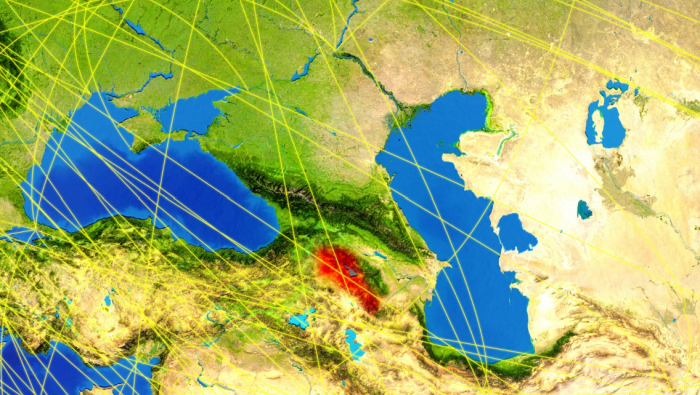
Kazakh and Azerbaijani telecommunications operators have joined forces to implement an ambitious project: laying a Trans-Caspian fiber-optic cable along the bottom of the Caspian Sea. This step will be a key element in creating a new telecommunications corridor connecting Europe and Asia, called the Digital Silk Road.
The project is currently in the contractor selection phase for design and construction, indicating its imminent implementation. The new infrastructure is expected to significantly improve communication between Central Asia and Azerbaijan, promote economic development, and integrate the regions into the global digital community.
The goal of the Digital Silk Road project is to create a reliable and high-speed telecommunications channel that will serve as the foundation for data transmission and expanded internet connectivity between Europe and Asia. This important strategic direction reflects the countries' desire to enhance their role in digital development and the global digital economy.

Professor Magbat Spanov of Kazakh National University and an expert at the Institute of Innovative Economy noted in an exclusive interview with News.Az that the Trans-Caspian fiber-optic cable project was planned back in 2019, but delays occurred due to both objective and subjective reasons. Why has this project become relevant now?
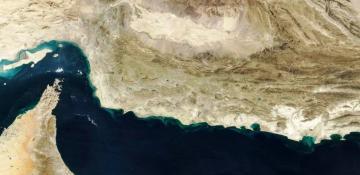
"First of all, the geopolitical situation has changed significantly. We know that communication channels passing through the world's oceans are subject to certain risks. For example, several fiber-optic channels pass through the Persian Gulf, and some have already been damaged for various reasons. In the Trans-Caspian region, several factors have influenced the delay in project implementation, but now its execution is accelerating. The Trans-Caspian Silk Road is part of the Middle Corridor. This corridor requires certain digital support to speed up transit and documentation processes. Secondly, the Middle Corridor serves as an alternative to logistical and communication lines previously passing through Russia. Accordingly, to ensure the safety of our countries or create additional backup internet traffic capacity, appropriate measures must be taken. Therefore, we are reducing the risks and threats to our countries' information security," the expert noted.
The Kazakh expert, commenting on why the laying of the Trans-Caspian fiber-optic cable took so long, noted that neither Azerbaijan nor Kazakhstan previously had the capability to lay such cables underwater. This 370-kilometer cable requires significant preparation.
"But given that we need to invest about $100 million in this project, with Azerbaijan and Kazakhstan each contributing $50 million, financial difficulties delayed the project. The main part of the maritime project will be completed according to plan in 2025, with its full completion expected in 2026. However, it should be noted that this project is part of other transport projects passing through our countries. For example, there are projects like Tassim or Kazakhstan's projects that pass from China through Kazakhstan to Russia. There are projects passing through Afghanistan. All this creates a certain conglomerate, a network," Spanov stated.

In turn, economic expert Emin Garibli told News.Az that Azerbaijan is gradually becoming a transport and communication hub, which strengthens our position in the global economy.
"This is especially important in current economic processes because the transport and communication lines passing through our territory increase our political and economic significance. In such a situation, pressure on the country may decrease as we occupy a strategically important position," he said.
The expert noted that the main issue is not who controls the territory through which transport lines pass, but who controls them. " Agreements and projects between Azerbaijan and Kazakhstan show that we are the initiators of this project and will benefit from it in the future. By becoming a transport and communication hub, Azerbaijan will expand its integration into the global economy. In particular, the laying of the fiber-optic cable signifies strengthened cooperation between the countries of the region," he added.
"I am confident that along with the creation of free economic zones and the laying of the fiber-optic cable, a new period will begin in Azerbaijan, and the country will become one of the leading in the field of IT technologies," the expert noted.
The creation of the Trans-Caspian fiber-optic cable opens up new prospects for cross-border cooperation in telecommunications and strengthens geopolitical ties in the Caspian Sea region. This step has multi-level significance: it is not only economically beneficial but also strategically important, as it promotes sustainable development and strengthens cooperation within the framework of the New Silk Road in the era of digital transformation.
Firstly, the cable will become an important link in the telecommunications infrastructure, significantly improving the quality and speed of data transmission between the countries of the region. This, in turn, will create favorable conditions for the development of the digital economy and stimulate investment inflows into the IT sector.
Secondly, the project has strategic importance for strengthening the geopolitical positions of the participating countries. Laying the fiber-optic cable along the bottom of the Caspian Sea strengthens regional ties, improves mutual understanding, and promotes peaceful cooperation. This is especially important in the context of current global challenges, where stable and reliable communication channels become a key factor for security and sustainable development.
Furthermore, the development of such infrastructure contributes to the integration of the region's countries into the global digital economy, opening up new opportunities for international trade and cooperation. The Trans-Caspian fiber-optic cable will become an important element of the international network connecting Europe and Asia, contributing to the creation of a single digital space.
Thus, the Trans-Caspian fiber-optic cable project represents a significant step forward in the development of telecommunications technology and the strengthening of geopolitical ties in the region. It is an important achievement that will contribute to the prosperity and sustainable development of all participating countries in the rapidly changing digital world.


Similar news