How long do EV batteries last in real conditions


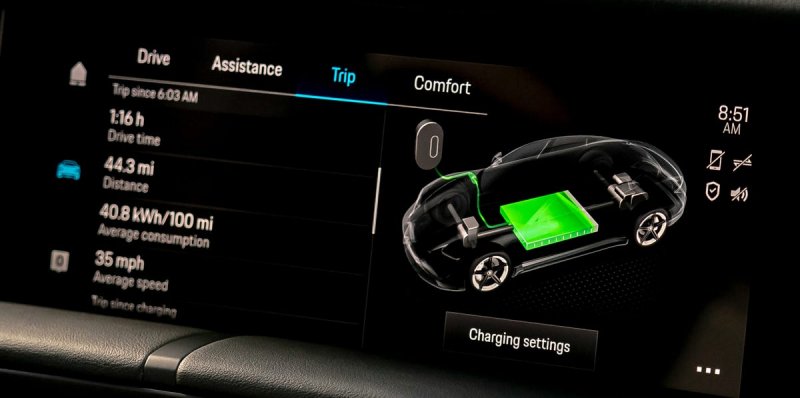
Electric vehicles have moved from niche innovation to mainstream reality, yet one core question continues to dominate global search trends and consumer decision making: how far can an electric car go, and how long will its battery last.
This theme sits at the intersection of technology, economics, and user confidence. It is the single most influential factor shaping adoption rates, resale values, and long term trust in the transition from internal combustion engines to electrified mobility, News.az reports
RECOMMENDED STORIES
From early range limitations to modern long distance capabilities, battery technology has evolved rapidly. Leading manufacturers such as Tesla and BYD have pushed the boundaries of performance, while companies like Changan Automobile are expanding access to more affordable electric models. Despite these advances, uncertainty around range and lifespan remains the most searched and most debated topic in the EV ecosystem.
What does battery range actually mean in an electric vehicle
Battery range refers to the total distance an electric vehicle can travel on a single full charge. It is typically measured in kilometers or miles and depends on several factors including battery capacity, vehicle efficiency, driving conditions, and external environment.
Modern EVs generally offer a wide range of capabilities. Entry level models may deliver between 250 and 350 kilometers per charge, while mid range vehicles often reach 400 to 500 kilometers. Premium models, particularly those developed by Tesla, can exceed 600 kilometers under optimal conditions.
However, real world range is rarely identical to official figures. Standardized testing cycles provide estimates, but actual performance varies based on driving style, terrain, climate, and load. Aggressive acceleration, high speeds, and extreme temperatures can significantly reduce effective range.
Why is range anxiety still a major concern
Range anxiety describes the fear that an electric vehicle will run out of battery before reaching a charging point. Despite improvements in infrastructure and battery capacity, this psychological barrier remains one of the most significant obstacles to EV adoption.
The concern is not purely technical. It is behavioral and rooted in decades of familiarity with fuel based vehicles, where refueling is quick and widely accessible. Even though many drivers rarely exceed daily distances of 50 to 100 kilometers, the idea of limited range creates hesitation.
Manufacturers have responded by increasing battery capacity, improving efficiency, and expanding fast charging networks. Still, perception often lags behind reality, keeping range anxiety at the forefront of consumer questions.
How long do EV batteries last in real conditions
Battery lifespan is measured in both years and charge cycles. Most modern EV batteries are designed to last between 8 and 15 years, depending on usage patterns and environmental conditions.
A charge cycle refers to using 100 percent of the battery’s capacity, whether in a single discharge or multiple partial uses. Many lithium ion batteries can withstand between 1,000 and 3,000 full cycles before significant degradation occurs.
In practical terms, this translates into hundreds of thousands of kilometers. For example, a vehicle with a 400 kilometer range could theoretically reach 400,000 to over 1 million kilometers before the battery capacity drops to a lower threshold.
What is battery degradation and how significant is it
Battery degradation is the gradual loss of capacity over time. It means that the vehicle’s maximum range decreases as the battery ages.
Studies and real world data show that most EV batteries lose approximately 1 to 3 percent of their capacity per year under normal conditions. After 8 to 10 years, many batteries still retain 70 to 80 percent of their original capacity.
The rate of degradation depends on several factors including frequent fast charging, exposure to high temperatures, deep discharge cycles, and thermal management quality.
Manufacturers have made significant progress in mitigating degradation through advanced battery management systems. Tesla uses sophisticated software to regulate charging behavior and temperature, while BYD’s blade battery design emphasizes safety and longevity.
How do different battery technologies affect lifespan and range
The majority of electric vehicles use lithium ion batteries, but within this category there are multiple chemistries, each with distinct characteristics.
Nickel manganese cobalt batteries offer high energy density, which translates into longer range. However, they can be more expensive and sensitive to degradation under certain conditions.
Lithium iron phosphate batteries, widely used by BYD and increasingly adopted by Tesla in some models, provide lower energy density but greater durability and safety. They are less prone to overheating and typically support more charge cycles.
Solid state batteries represent the next frontier. Although still in development, they promise higher energy density, faster charging, and longer lifespan. If commercialized at scale, they could significantly reshape the EV landscape.
Does driving style really impact EV range
Driving behavior plays a critical role in determining real world range. Smooth acceleration and consistent speeds maximize efficiency, while aggressive driving can reduce range by 20 to 30 percent or more.
Regenerative braking, a key feature of EVs, allows vehicles to recover energy during deceleration. Drivers who use this system effectively can extend their range, particularly in urban environments.
Highway driving, especially at speeds above 110 kilometers per hour, tends to consume more energy due to aerodynamic drag. In contrast, city driving often yields better efficiency because of lower speeds and frequent energy recovery.
How do weather and temperature affect battery performance
Temperature is one of the most important external factors influencing battery performance. Cold weather can reduce range by 10 to 30 percent due to increased internal resistance and the energy required to heat the cabin.
Hot climates also present challenges. Excessive heat can accelerate battery degradation if not properly managed. Modern EVs include thermal management systems to maintain optimal battery temperature, but extreme conditions still have an impact.
Preconditioning, which involves heating or cooling the battery before driving, is an effective way to improve efficiency in both cold and hot environments.
What happens when an EV battery reaches end of life
End of life does not mean the battery stops working entirely. Instead, it typically refers to the point at which capacity falls below a certain threshold, often around 70 percent of the original capacity.
At this stage, the battery may no longer provide sufficient range for automotive use, but it can still be repurposed for secondary applications. These include stationary energy storage systems for homes, businesses, and power grids.
Recycling is another critical component. Valuable materials such as lithium, cobalt, and nickel can be recovered and reused, reducing environmental impact and supporting a circular economy.
How much does it cost to replace an EV battery
Battery replacement costs have declined significantly over the past decade. Early EV batteries were extremely expensive, but advancements in manufacturing and economies of scale have reduced costs dramatically.
Today, replacement costs vary depending on the vehicle and battery size, typically ranging from several thousand to over ten thousand dollars. However, most owners never need to replace the battery during the vehicle’s lifespan.
Manufacturers usually provide warranties covering 8 years or 160,000 kilometers, offering reassurance to buyers and reducing financial risk.
Are modern EVs achieving sufficient range for daily use
For most drivers, current EV range is more than sufficient. Studies consistently show that average daily driving distances are well below the range offered by modern electric vehicles.
A vehicle with a 400 kilometer range can comfortably handle daily commuting, errands, and short trips without requiring frequent charging. Even longer journeys are increasingly feasible with the expansion of fast charging infrastructure.
The gap between perceived and actual needs is a key factor in ongoing skepticism. As awareness grows, this gap is expected to narrow.
How are manufacturers improving battery performance
Continuous innovation is driving rapid improvements in battery technology. Key areas of development include higher energy density, faster charging speeds, enhanced thermal management systems, and advanced software for battery optimization.
Tesla continues to invest heavily in battery research, focusing on cost reduction and scalability. BYD’s integrated approach combines battery production with vehicle manufacturing, enabling tighter control over performance and efficiency. Changan Automobile is also investing in next generation platforms to compete in the evolving market.
Is battery range still the main barrier to EV adoption
While range remains the most searched topic, its role as a barrier is gradually diminishing. Improvements in technology, combined with expanding charging infrastructure, are addressing many of the original concerns.
However, psychological factors remain significant. Consumers often evaluate EVs based on worst case scenarios rather than typical usage patterns. This leads to an overemphasis on maximum range rather than overall efficiency and convenience.
As education and experience increase, the importance of range as a limiting factor is expected to decline, though it will remain a key consideration.
What is the future outlook for EV battery range and lifespan
The future of EV batteries is defined by rapid innovation and scaling production. Industry forecasts suggest that average ranges will continue to increase, potentially exceeding 700 to 800 kilometers in mainstream vehicles within the next decade.
Battery lifespan is also expected to improve, with new chemistries and technologies enabling longer cycle life and reduced degradation. Solid state batteries, in particular, could deliver transformative gains in both performance and durability.
At the same time, costs are projected to decline further, making electric vehicles more accessible to a broader population.
Why battery range and lifespan remain the defining EV theme
Battery range and lifespan are not just technical specifications. They represent trust, reliability, and long term value. For consumers transitioning from traditional vehicles, these factors determine whether electric mobility feels practical and dependable.
The dominance of this theme in search behavior reflects deeper questions about infrastructure, cost, and technological maturity. It is the lens through which all other aspects of EV ownership are evaluated.
As the industry continues to evolve, improvements in battery technology will shape not only vehicle performance but also the pace of global electrification. The progress made in this area will ultimately determine how quickly electric vehicles move from alternative choice to dominant standard.
Conclusion
The question of how far an electric vehicle can go and how long its battery will last is central to understanding the entire EV ecosystem. It influences purchasing decisions, policy frameworks, and industrial strategies.
Despite rapid advancements, the topic continues to generate intense interest and scrutiny. This is not a sign of weakness, but of transition. As technology matures and real world experience accumulates, confidence in battery range and lifespan is steadily increasing.
Electric vehicles are no longer defined by their limitations, but by their trajectory. And at the heart of that trajectory lies the battery, the component that will continue to shape the future of mobility for decades to come.
By Faig Mahmudov


Similar news