How Trump’s Iran trade tariffs reshape global sanctions politics


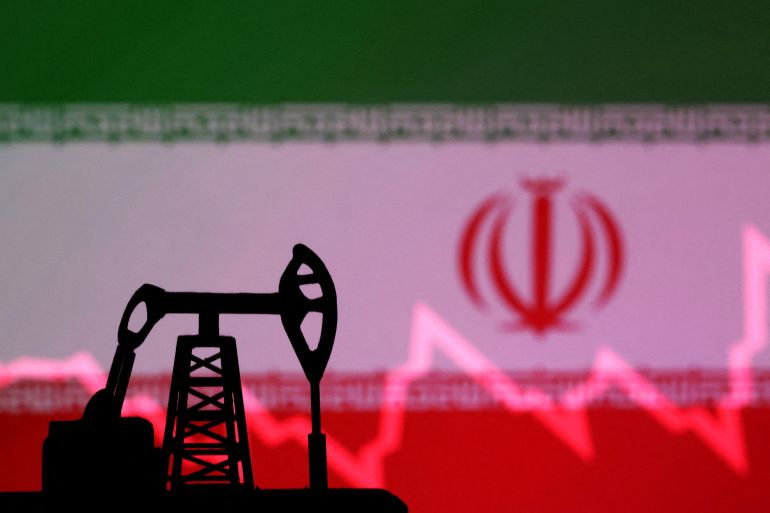
In recent years, economic coercion has become one of the most powerful instruments in global politics. Sanctions, export controls, financial restrictions, and trade barriers are now central to how major powers pursue strategic objectives without resorting to military force, News.Az reports.
Within this context, former US president Donald Trump’s proposal to impose a 25 percent tariff on countries “doing business” with Iran represents more than a routine trade measure. It signals a potential shift in how the United States seeks to enforce compliance with its foreign policy goals. Framed as tariffs, the measure effectively mirrors the logic of secondary sanctions while avoiding their formal label. This approach raises important questions about legality, enforcement, economic impact, and the future of the global trading system.
How Trump’s tariff proposal differs from traditional sanctions
Traditional US sanctions against Iran have relied heavily on financial mechanisms. These include restrictions on dollar transactions, banking access, investment, and energy exports. Secondary sanctions, in particular, have targeted third-country companies and banks by threatening to cut them off from the US financial system if they continue business with Iran. Trump’s proposed tariff strategy departs from this model by shifting the pressure point from finance to trade. Instead of blacklisting companies or freezing assets, the policy would impose blanket tariffs on goods imported from countries that maintain commercial ties with Iran. While the outcome is similar – discouraging engagement with Tehran – the mechanism is broader and potentially more disruptive, affecting entire national economies rather than specific firms.
Why the concept of “doing business with Iran” is strategically vague
One of the most controversial aspects of the proposal is the lack of clarity around what constitutes “doing business” with Iran. Trade relationships today are complex, layered, and often indirect. Energy shipments may involve intermediaries, reflagged vessels, or blended cargoes. Financial transactions can be routed through multiple jurisdictions. Industrial supply chains may include Iranian inputs several steps removed from the final product. By leaving the definition ambiguous, the policy creates uncertainty that itself becomes a tool of pressure. Governments and companies may overcomply to avoid risk, scaling back even marginal or indirect engagement with Iran. At the same time, ambiguity raises concerns about arbitrary enforcement and politicized decision-making.
How tariffs function as de facto secondary sanctions
Secondary sanctions work by forcing third parties to choose between access to the US market and engagement with a sanctioned country. Trump’s tariff proposal operates on the same logic. For export-dependent economies, especially those with significant trade exposure to the United States, a 25 percent tariff can severely undermine competitiveness. The message is clear: maintaining trade ties with Iran comes at a tangible economic cost. In practice, this creates a coercive hierarchy in which US trade access becomes a conditional privilege rather than a neutral economic relationship. While labeled as tariffs, the policy’s coercive intent and extraterritorial reach align closely with the core principles of secondary sanctions.
Why this approach appeals to Trump’s political strategy
From a domestic political perspective, tariffs are a familiar and popular tool within Trump’s political narrative. He has consistently portrayed tariffs as instruments of strength, leverage, and economic nationalism. Framing pressure on Iran-related trade as tariffs rather than sanctions allows the policy to be sold as defending American workers and industries, not merely enforcing foreign policy orthodoxy. It also sidesteps some of the legal and procedural complexities associated with formal sanctions regimes, which often require interagency coordination and congressional oversight. Politically, tariffs are easier to communicate, quicker to implement, and more flexible to adjust.
How global trade partners are likely to respond
The international response to such a policy would likely be mixed and fragmented. Countries with limited economic exposure to Iran but high dependence on US markets may quietly comply, reducing or terminating trade with Tehran. Others, particularly major economies with diversified trade portfolios, may resist or seek workarounds. Some governments could challenge the tariffs through international trade mechanisms, arguing that they violate principles of non-discrimination and free trade. Others might retaliate with counter-tariffs, escalating trade tensions beyond the Iran issue. Over time, repeated use of tariffs as sanctions could accelerate efforts by many states to reduce dependence on the US market and currency.
Why tariffs can backfire economically for the United States
Unlike targeted sanctions, tariffs impose costs not only on foreign exporters but also on domestic consumers and industries. Higher import prices can fuel inflation, disrupt supply chains, and provoke retaliation against US exports. When tariffs are applied broadly against multiple countries, the cumulative effect can weaken global demand and slow economic growth. Moreover, US companies operating in global supply chains may find themselves squeezed between compliance costs and lost competitiveness. While tariffs may exert pressure on Iran-related trade in the short term, their long-term economic consequences for the United States could be significant.
How this policy affects Iran’s economic adaptation strategies
Iran has spent years developing mechanisms to survive under sanctions pressure. These include barter trade, regional commerce, use of non-dollar currencies, and reliance on informal networks. A tariff-based pressure campaign could complicate these strategies but is unlikely to dismantle them entirely. Instead, it may push Iran and its partners to deepen alternative trading arrangements, particularly with countries willing to absorb higher costs or operate outside US-centered systems. Over time, this could contribute to the gradual emergence of parallel trade networks that reduce the effectiveness of US economic coercion.
Why enforcement will be the central challenge
Implementing tariffs based on third-party trade behavior requires extensive monitoring, intelligence gathering, and political judgment. Determining whether a country is “doing business” with Iran at a level that triggers tariffs is inherently subjective. Enforcement decisions may appear inconsistent or selective, undermining credibility. There is also the risk that enforcement becomes entangled with unrelated political disputes, further eroding trust in the neutrality of the global trading system. Without transparent criteria, the policy could be perceived as arbitrary, fueling diplomatic friction even among allies.
How this shift reflects broader changes in global economic power
The move toward tariff-based sanctions reflects deeper transformations in the international system. As financial sanctions become more widely used, targeted states and companies learn to adapt. At the same time, the dominance of the US dollar, while still strong, faces gradual erosion. By extending coercion into the trade domain, the United States signals both its continued leverage and its concern that traditional tools may be losing effectiveness. This evolution suggests a more fragmented global economy in which power is exercised through multiple overlapping mechanisms rather than a single dominant system.
Why allies may become increasingly uneasy
Allied countries have historically supported sanctions when they are coordinated, clearly defined, and rooted in multilateral frameworks. Unilateral tariff measures tied to foreign policy objectives challenge this tradition. Allies may worry that compliance today sets a precedent for future demands on other issues. The fear is not only economic but political – that trade relationships could increasingly be weaponized to enforce alignment across a wide range of policies. This unease could weaken long-term cooperation and encourage strategic hedging.
How tariffs blur the line between trade policy and foreign policy
Traditionally, trade policy and foreign policy have been governed by different rules, institutions, and norms. Trump’s proposal further blurs this distinction. When tariffs are used explicitly to influence third-country behavior toward a sanctioned state, trade becomes an extension of geopolitical pressure. This fusion complicates global governance, as institutions designed to manage trade disputes may be ill-equipped to adjudicate politically motivated measures. The result is a more contested and unstable international economic environment.
Why this approach matters beyond Iran
Although Iran is the immediate focus, the implications extend far beyond a single country. If tariffs prove effective as a coercive tool, they could be applied to other geopolitical disputes. This raises the prospect of a future in which access to major markets is routinely conditioned on political alignment. Such a trend would undermine predictability, increase transaction costs, and fragment the global economy into competing blocs. For smaller and mid-sized economies, the pressure to choose sides could become increasingly acute.
How businesses are likely to react
Multinational corporations tend to prioritize stability and predictability. Faced with the risk of sudden tariffs linked to geopolitical considerations, many companies may preemptively restructure supply chains, diversify markets, or reduce exposure to politically sensitive regions. Compliance costs will rise, as firms invest more in due diligence and risk management. In some cases, companies may exit certain markets altogether, not because of direct sanctions but due to the cumulative uncertainty created by tariff-based coercion.
Why the long-term effectiveness remains uncertain
The central question is whether tariffs framed as secondary sanctions can achieve their strategic objectives without causing disproportionate collateral damage. History suggests that economic pressure can influence behavior, but rarely in a linear or predictable way. Targeted states often adapt, while third parties seek ways to balance compliance with their own interests. Over time, excessive reliance on coercive tools can diminish their effectiveness as alternatives emerge.
Conclusion – how Trump’s tariff proposal redefines economic coercion
Donald Trump’s proposed tariffs on countries trading with Iran represent a significant evolution in the use of economic power. By repackaging secondary sanctions as tariffs, the policy expands US leverage while introducing new risks to the global trading system. It reflects a broader trend toward the politicization of trade and the search for new instruments of influence in an increasingly multipolar world. Whether this approach strengthens US strategic objectives or accelerates economic fragmentation will depend on how widely it is applied, how consistently it is enforced, and how other states choose to respond. What is clear is that the line between trade and sanctions has become thinner than ever, with lasting consequences for global economic governance.


Similar news