How uncertainty in Venezuela could influence global oil prices


.png)
Editor's note: Faig Mahmudov is a journalist based in Azerbaijan. The views expressed in this article are his own and do not necessarily reflect those of News.Az.
Oil markets react quickly to geopolitical developments, not only because of changes in physical supply but also because of expectations about future risk. When an event occurs in a country with meaningful energy resources, such as Venezuela, financial markets begin to reassess the stability of global oil flows.
This reaction influences prices, inflation, trade balances, and broader economic conditions around the world. Understanding these dynamics from an economic perspective is essential, especially when any form of U.S. action or intervention is involved.
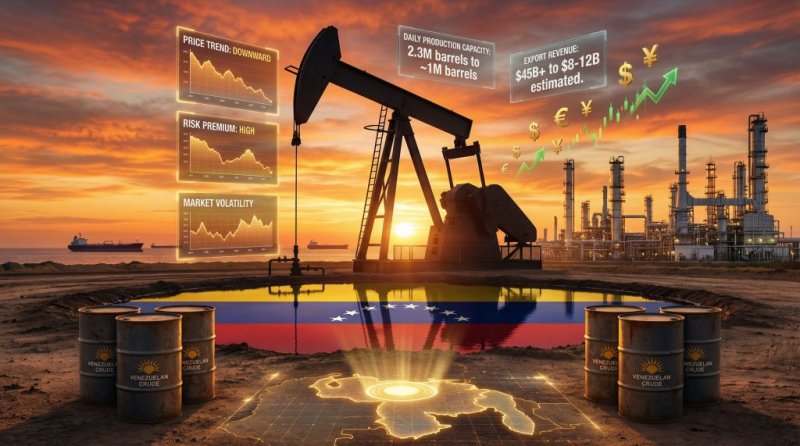
Venezuela holds the world’s largest proven oil reserves, but production in recent years has been well below its technical potential. This has been the result of declining infrastructure quality, reduced investment, operational difficulties, and the impact of sanctions and regulatory constraints. Despite reduced output, Venezuela remains part of the global supply ecosystem, particularly in the heavy crude segment. This means that uncertainty surrounding Venezuela does not stay local. It feeds directly into futures pricing and investor sentiment globally.
Source: Discoveryalert
In the short term, oil prices tend to react not to confirmed events but to expectations. Economists describe this as the creation of a risk premium. When uncertainty rises, markets begin to price the possibility of disruption even if actual production remains unchanged. Traders, hedge funds, and refiners all adjust their strategies, often by purchasing futures contracts or increasing inventories. This additional demand for paper barrels increases price levels. Futures markets typically show the sharpest response, because these contracts are the first mechanism through which uncertainty is expressed.
There are several ways uncertainty related to Venezuela might influence market expectations. One is the possibility of supply disruption, whether through operational shutdowns, export delays, workforce interruptions, or infrastructure strain. Even if such disruptions never occur, the probability of their occurrence is enough to change pricing behavior.
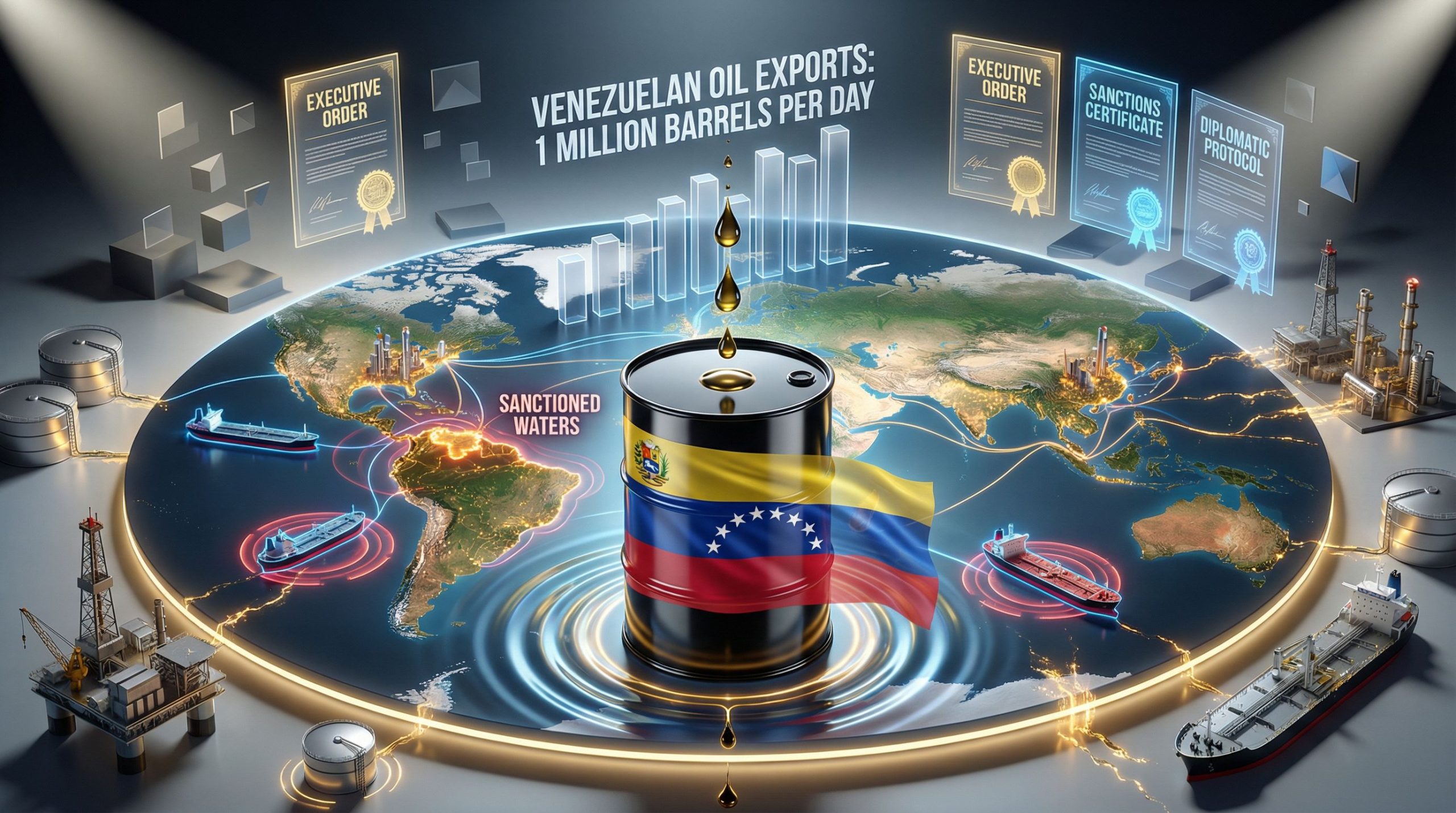
Another channel is regulatory or financial uncertainty. Additional sanctions, new compliance restrictions, or insurance and banking hesitancy can make Venezuelan crude more difficult to move through commercial channels. Oil that cannot easily be financed, insured, or transported becomes practically constrained, even before production levels change.
There is also a broader contagion effect. Markets sometimes treat instability in one producing state as an indicator of potential volatility elsewhere. This does not require direct linkage. It simply reflects the fact that the global oil market is sensitive to geopolitical environment changes in general. As a result, a development in Venezuela can lead to price adjustments beyond its national borders.
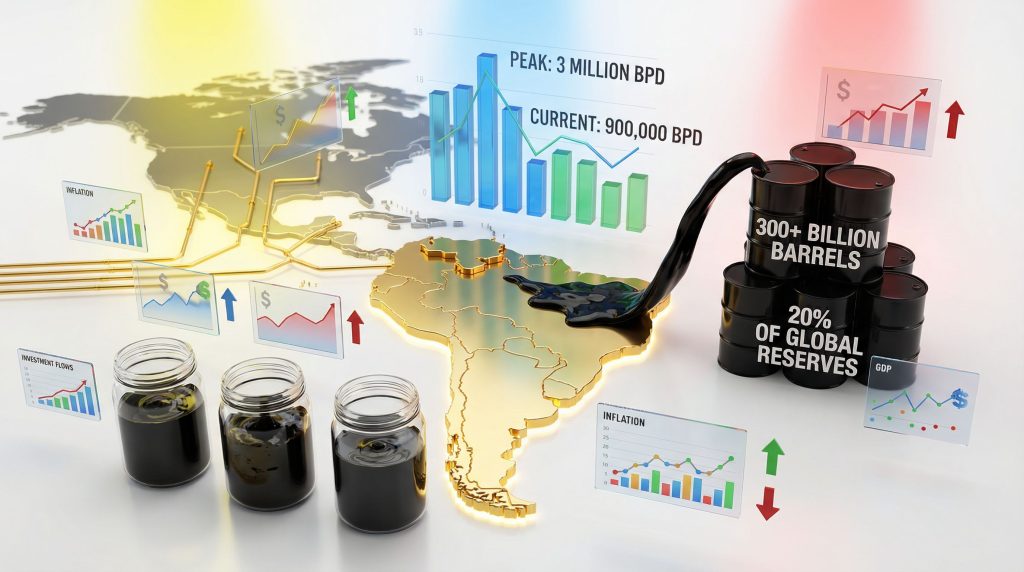
Source: Discoveryalert
A particularly important economic factor is the type of oil Venezuela produces. Much of its output consists of heavy sour crude. This grade requires complex refining capacity and is not interchangeable with light sweet crude without adjustments. Certain refineries in the United States and Asia are designed specifically to process heavier crude blends. If Venezuelan supply becomes less accessible, these refineries must secure alternative feedstocks that match technical specifications. This process increases procurement costs and can temporarily reduce operational efficiency.
In such a scenario, the price gap between heavy and light crude may widen. Refiners paying more for suitable feedstock may pass some of this cost to consumers through refined product prices. Countries producing similar heavy crude oils, such as Canada or some Middle Eastern states, may partially fill the gap. However, redirecting these volumes requires time, shipping adjustments, contract negotiations, and pricing revisions. The adjustment period is often where market volatility concentrates.
The balance between oil supply and demand is influenced not only by Venezuela but also by how other producers respond. OPEC+ plays a key role as a coordinating body. If Venezuelan supply weakens in a meaningful way, OPEC+ may choose to stabilize markets through production adjustments. However, such decisions are typically structured and data-based, not immediate reactions to headlines. They are influenced by broader assessments of demand conditions, inventory levels, and price trajectories.
Source: The Times
The United States also has a flexible shale industry. Historically, shale producers reacted quickly to higher prices by increasing output. Recent years, however, have been characterized by greater capital discipline. Many shale operators now prioritize profitability and debt reduction over rapid expansion. This means U.S. supply can increase when price signals support it, but the response may be slower than during earlier boom cycles. In economic language, supply elasticity exists but is more moderate.
Oil price changes do not occur in isolation. They feed directly into inflation, economic growth, currency stability, and fiscal conditions. When oil becomes more expensive, transportation, industrial input costs, and logistics expenses typically rise. These increases are often passed on to consumers through higher prices for fuel, food, and manufactured goods. For oil-importing economies, this can reduce household purchasing power and slow economic growth.
Oil-exporting countries may benefit from increased revenue, but their budgets also become more exposed to volatility.
Central banks monitor oil-driven inflation closely. Even if inflation increases are temporary, expectations may shift upward, leading central banks to maintain tighter monetary policy for longer periods. This, in turn, can slow credit growth and investment.
Exchange rates may also be affected. Countries with large energy import bills may see downward pressure on their currencies, particularly if they lack strong foreign exchange reserves. A weaker currency can compound inflationary pressure by making imports more expensive.
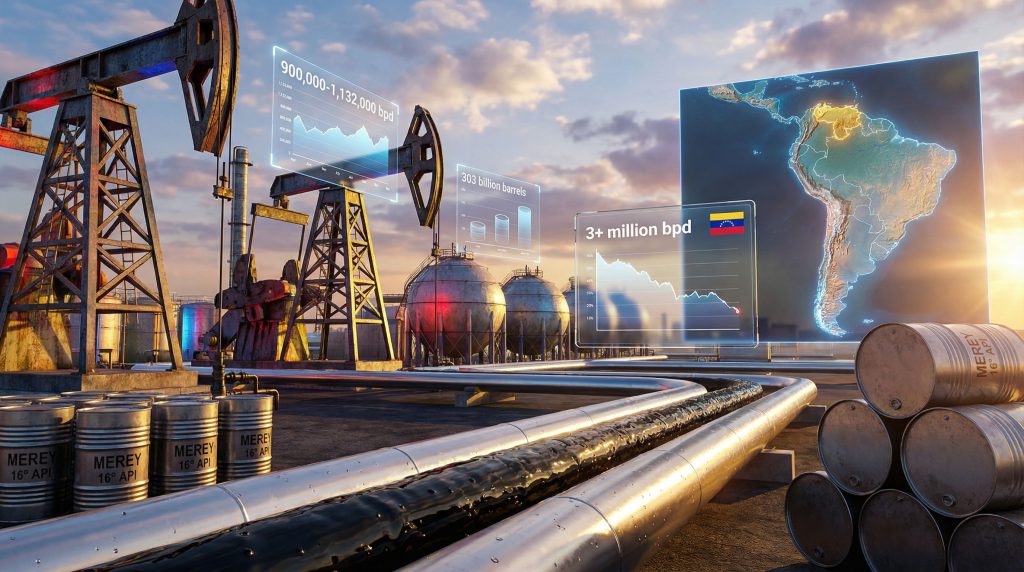
Source: Discoveryalert
In the medium term, economic outcomes depend heavily on how the situation evolves. If uncertainty persists and market confidence remains strained, oil may retain an elevated risk premium. Refiners reliant on heavy crude may continue to face feedstock insecurity, and governments may expand strategic oil reserves to hedge against further risk. All of these actions support firmer pricing than would otherwise prevail.
Alternatively, if developments eventually lead to greater clarity around operational stability, regulations, investment frameworks, and sanctions policy, Venezuela could incrementally restore production capacity. Doing so would require large-scale capital deployment, technical rehabilitation, and institutional predictability. It would also take time. Heavy crude extraction and upgrading are capital-intensive and operationally complex. Even under favorable conditions, meaningful increases in Venezuelan output would likely occur over several years rather than months.
However, expectations matter. If market participants begin to anticipate higher future Venezuelan supply, the risk premium embedded in current prices may gradually ease. Prices may still remain sensitive to external shocks, but the structural tightness created by uncertainty would lessen. This reflects a recurring feature of energy markets: they often respond first to risk and only later to realized supply shifts.
Source: Discoveryalert
It is also important to recognize that demand conditions will shape the ultimate price outcome. If global economic growth moderates, oil demand may slow, limiting upward price pressure even in the presence of uncertainty. If growth strengthens, particularly in large emerging markets, geopolitical risk can amplify already firm demand trends.
Financial markets further amplify price dynamics. Oil is widely traded as a financial asset, meaning investment flows, algorithmic trading, and hedging activity can increase volatility. In such environments, price fluctuations may exceed what underlying fundamentals justify. Over time, as clarity improves, market behavior typically becomes more stable.
For oil-importing countries, particularly those with limited fiscal space, sustained price increases complicate budget planning, subsidy policy, and inflation control. Some governments respond by adjusting fuel taxes, expanding storage capacity, or diversifying their supply portfolio. Each of these measures has economic trade-offs.

Source: Discoveryalert
Oil-exporting states, meanwhile, often experience budgetary benefits when prices rise. However, volatility can make long-term fiscal planning more difficult. Countries that rely heavily on hydrocarbon revenue must manage spending carefully to avoid exposure when prices later stabilize or decline.
A neutral economic assessment suggests the following: in the short term, oil prices are likely to face upward pressure due to uncertainty and the resulting risk premium, particularly in heavy crude markets. In the medium term, price direction will depend on whether market confidence moves toward stability and investment recovery or remains shaped by prolonged uncertainty. Structurally, developments in Venezuela matter because oil markets remain globally interconnected.
Ultimately, U.S. involvement in Venezuela has economic consequences that extend beyond the immediate political context. It becomes an input into oil pricing models, macro-economic risk calculations, investment behavior, and policy planning. The key takeaway is that uncertainty itself has a measurable cost. That cost is reflected in global oil prices, and through them, in the broader world economy.
(If you possess specialized knowledge and wish to contribute, please reach out to us at opinions@news.az).


Similar news