How UPI and Alipay Plus integration could redefine digital money flows


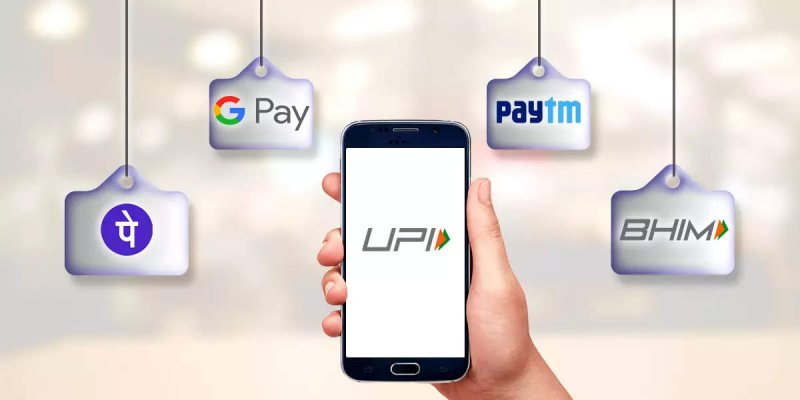
India’s digital payments system is entering a new and potentially transformative phase as policymakers and financial institutions explore the possibility of linking the Unified Payments Interface with Alipay Plus for cross border transactions. This development is not simply a technical experiment, News.Az reports.
It reflects deeper shifts in how emerging economies view financial sovereignty, digital infrastructure, and their place in the evolving global payments landscape.
RECOMMENDED STORIES
At its core, the discussion around connecting UPI with Alipay Plus is about scale, reach, and influence. It signals India’s ambition to take a domestically successful system and extend its relevance beyond national borders, while also engaging with one of the world’s largest international payment aggregation platforms. If pursued carefully, such a linkage could reshape how millions of people move money across borders, especially in Asia and other emerging markets.
This evergreen analysis explains what the idea means, why it matters, and how it fits into India’s long term digital and economic strategy.
Understanding UPI and why it matters
UPI is more than a payment tool. It is a public digital infrastructure that has changed how money moves within India. Built to enable instant bank to bank transfers through mobile devices, UPI has become a daily utility for individuals, small businesses, and large enterprises alike.
Its success rests on several pillars. It is interoperable across banks. It is low cost for users. It operates in real time. It integrates easily with a wide range of applications. Most importantly, it is trusted. For millions of Indians, UPI is not perceived as a private product but as part of the national digital backbone.
This trust has allowed UPI to scale rapidly. It supports peer to peer payments, merchant transactions, bill payments, and increasingly, more complex financial services. Its design philosophy prioritizes simplicity and reliability, which has helped bring digital payments to people who previously relied on cash.
As UPI matured domestically, a new question emerged. Could this system travel beyond India’s borders and serve as a foundation for international payments?
What Alipay Plus represents in global payments
Alipay Plus is not a single wallet. It is a global payment platform that connects multiple regional digital wallets, banks, and merchants across countries. It acts as an interoperability layer, allowing users of different payment apps to transact seamlessly when traveling or shopping internationally.
The strength of Alipay Plus lies in its geographic reach and merchant acceptance. It connects payment systems across Asia and beyond, enabling cross border consumer spending without requiring users to adopt entirely new financial tools. For merchants, it simplifies access to international customers. For consumers, it reduces friction when paying abroad.
In practical terms, Alipay Plus functions as a bridge between domestic payment ecosystems. It does not replace national systems but links them in ways that make cross border commerce smoother and more scalable.
This bridging role is precisely why it attracts attention from countries looking to internationalize their domestic payment infrastructure without surrendering control to legacy global card networks.
Why India is exploring this linkage now
India’s interest in linking UPI with international platforms reflects timing, confidence, and strategic calculation.
First, timing. UPI has reached a level of maturity where reliability and scale are proven. Domestic adoption is widespread, and system stability has improved significantly over time. This creates room to think beyond internal growth and toward external connectivity.
Second, confidence. India now views its digital public infrastructure as exportable. Initiatives in identity, payments, and data governance are increasingly seen as models that other countries may adopt or integrate with. Linking UPI internationally reinforces this narrative.
Third, strategy. Global payments are dominated by a small number of legacy networks. These systems are efficient but often costly and slow, especially for smaller value cross border transfers. India’s policymakers have long emphasized the need for alternatives that are faster, cheaper, and more inclusive.
Exploring a connection with Alipay Plus fits into this broader goal. It offers a pathway to internationalization without immediately building bilateral links with every country or relying entirely on traditional card based systems.
What a UPI and Alipay Plus link could look like
In practical terms, linking UPI with Alipay Plus would likely focus first on consumer payments rather than complex financial flows. Indian travelers abroad could pay merchants who accept Alipay Plus using their familiar UPI apps. Similarly, inbound visitors could transact more easily in India through connected systems.
Over time, the scope could expand to include ecommerce payments, small business transactions, and possibly remittances. Each expansion would require careful coordination around settlement, compliance, currency conversion, and data governance.
Importantly, such a link does not mean merging systems. UPI would remain a domestic infrastructure governed by Indian institutions. Alipay Plus would act as an external connector, translating transactions across systems while respecting local rules.
The success of this model depends on clear protocols, transparent oversight, and strong technical safeguards.
Strategic implications for India
The strategic implications of linking UPI with Alipay Plus extend beyond convenience.
At one level, it strengthens India’s position in shaping how future payment systems interact. Rather than adapting to existing global standards set elsewhere, India can influence interoperability frameworks based on its own experience.
At another level, it enhances economic diplomacy. Payments infrastructure is increasingly seen as a form of soft power. Countries that offer reliable and inclusive digital systems can deepen trade, tourism, and people to people ties.
There is also a competitive dimension. As more countries develop their own instant payment systems, the question is how these systems will connect. Early movers in interoperability may set norms that others follow.
For India, participating in such linkages signals readiness to engage globally while preserving domestic control.
Concerns and sensitivities
Despite its potential, the idea of linking UPI with Alipay Plus is not without sensitivities.
Data governance is a central concern. Payments data is sensitive, and India has emphasized data protection and localization principles. Any cross border linkage must ensure that transaction data is handled in line with national laws and expectations.
Security is another issue. Cross border systems introduce additional attack surfaces. Ensuring end to end security, fraud prevention, and system resilience is essential to maintaining public trust.
There are also geopolitical considerations. Payment systems are no longer neutral infrastructure. They are embedded in broader strategic relationships. India must balance openness with caution, ensuring that partnerships align with long term national interests.
These concerns do not necessarily block progress, but they shape how cautiously and selectively such initiatives move forward.
Impact on travelers and consumers
For everyday users, the most visible impact would be convenience. Indian travelers could use familiar UPI apps abroad without switching to cash or cards. This reduces friction and improves the travel experience, especially in regions where digital wallets dominate everyday payments.
For foreign visitors to India, similar benefits could emerge over time, supporting tourism and retail spending. Small merchants, who may not always accept international cards, could gain access to foreign customers through interoperable digital payments.
These consumer level benefits help explain why cross border payment integration is often politically attractive. It delivers tangible value to individuals while supporting broader economic goals.
Implications for merchants and businesses
Merchants stand to gain from simplified access to international customers. For small and medium enterprises, especially in tourism, hospitality, and ecommerce, payment interoperability can lower barriers to cross border trade.
Lower transaction costs and faster settlement improve cash flow and reduce reliance on intermediaries. Over time, this can support greater participation of small businesses in global commerce.
For larger firms, integrated payment systems can support data driven insights into consumer behavior, although this must be balanced with privacy protections.
How this fits into global payment trends
The exploration of a UPI and Alipay Plus link fits into a global trend toward instant payment system interoperability. Countries around the world are developing real time payment rails. The next challenge is connecting these rails across borders.
Traditional cross border payments are often slow and expensive. New models aim to reduce friction through direct system linkages, standardized messaging, and coordinated settlement frameworks.
India’s approach reflects a belief that public digital infrastructure can play a central role in this evolution. Rather than leaving cross border payments entirely to private global networks, governments and central banks are increasingly involved in shaping the architecture.
Long term possibilities
If successful, a UPI and Alipay Plus connection could serve as a template for other partnerships. India could pursue similar linkages with additional regions, gradually building a network of interoperable payment systems.
This does not mean replacing existing global networks overnight. Instead, it adds new options and increases competition, which can drive innovation and lower costs.
Over the long term, such networks could support broader goals such as digital trade facilitation, financial inclusion for migrant workers, and smoother regional economic integration.
Why this move matters beyond payments
At a deeper level, this exploration reflects how digital infrastructure has become a strategic asset. Payments systems influence how economies function, how data flows, and how trust is built between institutions.
By taking an active role in shaping cross border payment connectivity, India signals that it intends to be a rule shaper, not just a rule taker, in the digital economy.
This matters for other developing and emerging economies watching closely. India’s experience may inform how they design their own systems and partnerships.
Conclusion: a cautious but significant step
India’s exploration of linking UPI with Alipay Plus for global payments is best understood as a cautious yet significant step. It is not a dramatic announcement of immediate change, but a signal of direction.
The direction points toward greater interoperability, strategic autonomy, and global engagement built on domestic digital strength. The path forward will require careful design, regulatory clarity, and sustained trust building.
If managed well, this initiative could expand the reach of UPI, enhance user convenience, and contribute to a more inclusive global payments ecosystem. More importantly, it reinforces the idea that the future of global finance will be shaped not only by legacy institutions, but also by public digital systems developed in emerging economies.
By Faig Mahmudov


Similar news