Huawei unveils three-year plan to challenge Nvidia in AI chips


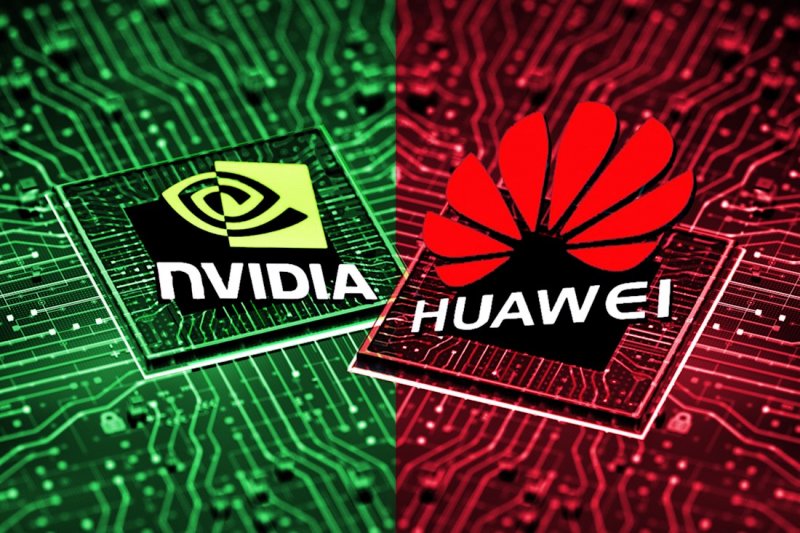
Huawei Technologies has revealed a three-year strategy aimed at narrowing the gap with Nvidia in the AI chip market.
While acknowledging that its chips currently lag behind Nvidia’s in raw power, the Chinese tech giant plans to leverage its strengths in scale, networking, and government support, News.Az reports, citing Bloomberg.
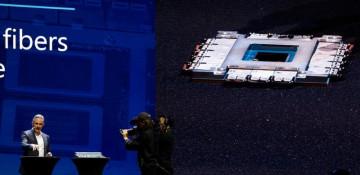
At the annual Huawei Connect conference on Thursday, Rotating Chairman Eric Xu detailed the company’s vision for advanced AI technology, drawing widespread media attention.
The unusually loud fanfare — emerging a day before US President Donald Trump and Chinese leader Xi Jinping held their second phone meeting in four months — stands in contrast with Huawei’s typically more subdued approach. The secretive company has introduced successive generations of AI products without even a press release after it lost access to Taiwan Semiconductor Manufacturing Co., the go-to chipmaker for Nvidia, in 2020 due to US curbs.
Huawei has also not specified the technology of mobile processors in its latest smartphones in recent years — industry experts had to break down devices to figure out their technological innards.
On Thursday, the company trumpeted its grand plan with all the drama of an Nvidia launch. Xu took the stage to present the next generation of AI chips, twinned with its upgraded “SuperPod” designs — a term borrowed from Nvidia’s own playbook that refers to a data center platform that encompasses computing, storage, networking, software and infrastructure management technologies.
In theory, the technique lets Huawei link as many as 15,488 of its Ascend-branded AI chips using self-developed UnifiedBus interconnect protocol, a new technology also formally unveiled on Thursday.
That’s the rough equivalent of overwhelming an enemy force through sheer numbers, and its prowess is further enhanced by far faster data transmissions between individual chips — as much as 62 times quicker than Nvidia’s upcoming NVLink144 technology, Huawei claims. Meanwhile, Nvidia’s current-generation NVLink72 technology allows the company to connect 72 Blackwell graphic processing units and 36 Grace central processing units together.
Huawei’s announcement coincided with a recent plethora of revelations about advances in AI chips led by Chinese firms from Alibaba Group Holding Ltd. to Baidu Inc. The drumbeat of news is remarkable given most of the country’s firms have for years kept their cutting-edge technology a secret, to avoid drawing Washington’s scrutiny. They’re emerging in rapid succession as Beijing puts chip policy at the center of delicate talks with the US.
Washington for years has tried to ringfence China, for fear that US technology will further its economic and military ambitions. In response, Beijing has exhorted the country’s tech firms to climb the value chain. The Chinese government recently launched a series of moves targeting Nvidia, including a directive to stop Chinese firms from buying certain components supplied by the company.
Earlier this year, China’s Xi showed that his country is prioritizing support for strategic sectors when he met with a small group of entrepreneurs including Huawei founder Ren Zhengfei. Senior Chinese officials have also repeatedly pledged to harness the entire nation’s resources to speed homegrown technologies breakthroughs.
Chinese chips generally remain inferior to those from Nvidia or Advanced Micro Devices Inc., both of which get to use the world’s most cutting-edge chipmaking processes offered by TSMC. Bernstein analysts noted that a single next-generation Ascend 950 can only offer 6% the performance of Nvidia’s upcoming VR200 superchip.
But in recent years, Chinese firms have found innovative solutions to get around power and performance ceilings. Huawei talked Thursday about how it can group or cluster up to a million chips, theoretically bridging that gap.
To build the so-called super cluster, Huawei plans to ramp up connection and memory access speeds within chips. It claims a self-designed high-bandwidth memory architecture that can beef up a processor’s ability to transfer data between different components. That’s despite US restrictions that cut Huawei’s ties to memory industry leaders like SK Hynix Inc.
On Thursday, Huawei also touted its technology for connecting multiple chips with blazingly fast speeds for sharing data, a core competency for the company because of its long history as the leader in communications equipment for telecom operators. Xu claimed the Ascend 970 slated for 2028 will sport a 4 terabit-per-second interconnect speed. Nvidia currently offers an interconnect speed of 1.8 terabit-per-second.
It remains to be seen whether any of Huawei’s claims will hold up over time — and whether their designs can be produced at scale. Huawei surprised the tech world by introducing a 7-nanometer chip to power its Mate 60 Pro smartphone in 2023, but it hasn’t been able to advance beyond that level since. Xu on Thursday also did not elaborate on how the company will manufacture the new chips — a potentially serious choke point.
Nvidia’s dominance of the market is such that even AMD and Intel Corp. are relegated to also-rans in the hot AI space. Elsewhere, companies like ASML Holding NV dominate high-end chip equipment. TSMC makes most of the world’s most sophisticated processors — and is technically barred from doing business with a swath of Chinese firms including Huawei sanctioned by the US government.


Similar news