Hungary lifts veto on Ukraine's EU accession


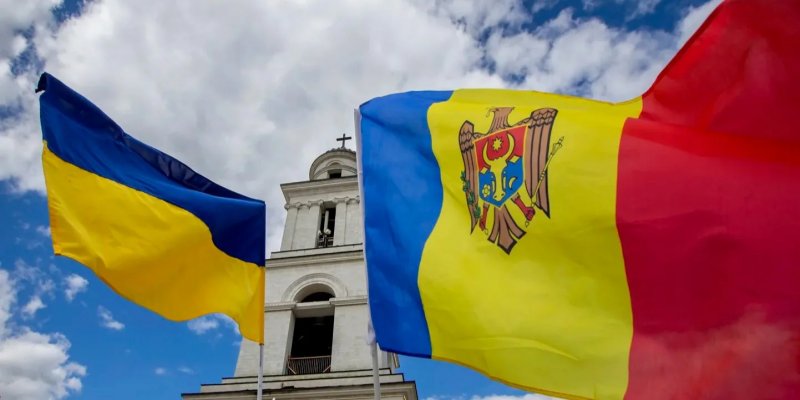
Hungary has signalled its intention to lift its two-year-long veto on Ukraine's bid to join the European Union after Prime Minister Péter Magyar announced a deal with Kyiv on minority rights, allowing the process to enter its next phase.
"We have reached a comprehensive agreement with Ukraine on the expansion of the linguistic, educational, cultural and political rights of the 100,000-strong Hungarian minority," Magyar said on Wednesday on a Facebook video, News.Az reports, citing CNN.
Ukraine did not immediately confirm the content of the deal.
In Brussels, the shift in position unfolded suddenly during a meeting of ambassadors.
The Hungarian envoy signalled the easing of reservations, prompting a last-minute change to the agenda. This allowed the 27 member states to take the necessary procedural step that had until now been blocked.
"This positive development sends a strong message of unity and determination," a spokesperson from Cyprus, the country that chaired the meeting, said.
Taras Kachka, Ukraine's deputy prime minister for European integration, said the step "brings us closer to our joint European future".
Accession consists of 33 chapters split into six thematic clusters.
The first cluster, known as fundamentals because it covers the rule of law, human rights and the judiciary, is the first and last to be opened in the complex process.
For the past two years, Ukraine and Moldova, which are informally coupled as candidates, have been trying to unlock the first cluster.
But the veto imposed by former Hungarian Prime Minister Viktor Orbán, just as his country took the reins of the EU Council's presidency, froze the trajectory.
Since then, Brussels has been trying to get around the veto in various ways, to no avail.
The matter became personal for Ukrainian President Volodymyr Zelenskyy, who repeatedly slammed Orbán's blockage and urged leaders to take action. Zelenskyy considers accession as a security guarantee for his country's post-war future.
The change was only made possible after Orbán was roundly defeated in the polls by Péter Magyar, who promised to restore ties between Hungary and Ukraine.
In a video posted on Facebook, Magyar confirmed progress made in consultations with Kyiv over the rights of the Hungarian minority in the western region of Transcarpathia, the long-standing flashpoint of tensions between the two countries.
The commitments, which were not detailed, will be reflected in the action plan that Ukraine has sent to Brussels as part of its membership bid, he said.
Still, Magyar reiterated his opposition to fast-track Ukraine’s accession, a position shared by multiple member states, and signalled its future membership will be put to a referendum in Hungary.
"If Ukraine manages to close all 33 accession chapters within 10 or 15 years, our country will hold a legally binding referendum on the issue," Magyar said.
Marta Kos, the European Commissioner for Enlargement, welcomed the news.
"Ukraine and Moldova are already now delivering on rule of law requirements set by Member States," she said. "It is now time to accelerate on their road to EU membership. This is the best way to ensure minority rights are respected."
Following Wednesday's meeting, the EU Council sent a letter to Ukraine and Moldova confirming their readiness to open the first cluster. In the meantime, member states will work on a common position for negotiations.
In principle, Hungary could re-impose the veto at any time, but officials and diplomats in Brussels are confident that the intergovernmental conference, marking the formal opening of the first cluster, will unfold smoothly on 15 June in Luxembourg.
By Faig Mahmudov


Similar news