If China attacks Taiwan, you will be affected too, Taiwan’s deputy FM warns Europe - VIDEO


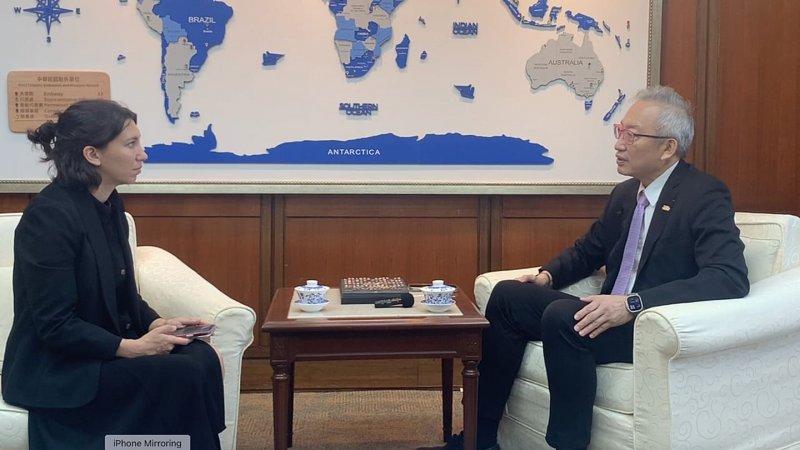
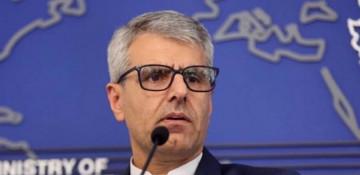
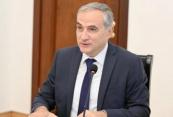
A Chinese takeover of Taiwan would send profound shockwaves from Washington to Tokyo, Taiwan’s Deputy Foreign Minister François Chih-chung Wu warned in an exclusive interview, stating that the international community cannot afford to ignore the escalating political tensions.
Emphasizing that Taiwan's stability is intertwined with global prosperity, Wu pushed back against Beijing’s historical claims over the self-governing island. China has never ruled out using force to bring the island under its control since the end of the Chinese civil war in 1949 and continues to refuse to recognize it as a sovereign state, insisting on the international designation of "Chinese Taipei" to reflect its "one China" policy, News.Az reports, citing EuroNews.
Officially known as the Republic of China—a name originating from the government that fled to the island after losing to Mao Zedong’s Communist forces—Taiwan possesses a complex history that challenges Beijing's narrative of continuous sovereignty. Wu pointed out that the island has been ruled by the Dutch, the Spanish, the Qing Empire, and Japan at various times, with the Qing Dynasty administering parts of the island for over a century but only establishing it as a province between 1885 and 1894.
RECOMMENDED STORIES
The deputy foreign minister argued that this brief ten-year period of genuine strategic interest by the Qing Dynasty does not justify Beijing's current sovereignty claims and ambitions, noting that China was not the only country present in Taiwan's history.
In the decades since, Taiwan has developed a critical technological edge that the global economy heavily depends on, specifically through the Taiwan Semiconductor Manufacturing Company (TSMC). TSMC produces more than 90% of the world's most advanced semiconductor chips, which are vital for artificial intelligence, high-performance computing, smartphones, and military systems. This concentration of advanced technology forms a "silicon shield" for the island, recently described by Nvidia CEO Jensen Huang as the "epicentre of the AI revolution" and the "world’s best supply chain." Despite ongoing efforts by the United States and other nations to replicate chip manufacturing domestically, Wu asserted that they will not catch up in the near future because mastering precision manufacturing takes decades, a capability Taiwan has been steadily building since the 1970s.
Taiwan currently manufactures about 70% of all semiconductors globally, including 95% of the most advanced chips and 100% of the chips destined for artificial intelligence applications. Wu explained the depth of this expertise by noting that Taiwanese manufacturers are able to fit more than 10 billion chips into a single square centimeter of semiconductor, a fingertip-sized piece of silicon, adding that Taiwan possesses the will to share this know-how with democratic nations for the good of humanity. Consequently, a Chinese attack or a blockade around Taiwan would severely damage global interests, making regional stability a collective global responsibility.
Wu clarified that France and the broader European continent have vital interests in the region as Indo-Pacific actors. Furthermore, Taiwan's chip production relies heavily on European inputs, creating a mutual dependency: the advanced photolithography machines come from the Netherlands, precision optics from Germany's Zeiss, industrial gases from France's Air Liquide, and chip design tools from Belgium's IMEC in Leuven, prompting Wu to remark that all of Europe is inside that one square centimeter of silicon.
Simultaneously, Taiwanese enterprises are expanding their partnerships within Europe, highlighted by a recent collaboration between the Taiwanese giant Foxconn and France’s Thales regarding semiconductors and space data centers. Wu argued that as Taiwan becomes increasingly attractive to international partners, China's anxiety intensifies, leading Beijing to use every available means to take the island due to a mindset that dictates "once Chinese, always Chinese." Despite these persistent threats, Taiwan's economy has flourished, with its stock market recently overtaking those of Germany and France according to data compiled by Bloomberg. Wu reflected that fear has driven Taiwan to prepare, allowing it to achieve democracy and prosperity despite being threatened by China for 70 years.
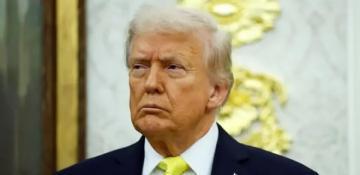
Commenting on the May summit between US President Donald Trump and Chinese President Xi Jinping, where Xi reportedly staked China's claim over Taiwan, Wu stated that American policy has not changed from Taiwan's perspective, noting that the US Speaker of the House immediately pledged American support for the island after the meeting.
While the United States remains one of Taiwan's primary allies, Wu emphasized that Europe holds strong importance, stating that Europeans are beginning to realize they cannot let China choose their friends. He asserted that Europe has the right to choose its friends outside of formal diplomatic relations, though he admitted that building these ties remains difficult because China does everything to block Taiwan from discussing important issues normally.
Nevertheless, human ingenuity has allowed Taiwan and Europe to find low-profile formulas to work together. Stressing that Taiwan does not need to declare independence, Wu noted that the island is distinct from Hong Kong because it maintains its own army and independent foreign policy. He concluded that Taiwan is forced to maintain a difficult balance between defending its democracy and avoiding over-provoking China, while navigating a world that often ends up being neutral in China's favor. Ultimately, Wu stated that Taiwan is not asking Europe to go to war, but rather for friendship and collaboration, expressing deep belief in Taiwanese resilience.
By Leyla Şirinova


Similar news