Iran as a trigger for the end of NATO?


Editor’s note: Moses Becker is a special political commentator for News.Az. He holds a PhD in political science and specializes in interethnic and interreligious relations. The views expressed in this article are the author’s own and do not necessarily reflect the position of News.Az.
In recent times, profound tectonic shifts have been taking place on the global political stage. After the collapse of the socialist system and the dissolution of the Warsaw Pact, NATO remained the only relic of the Cold War era. Established on April 4, 1949, at a conference in Washington, it brought together under a common flag the United States, Canada, Belgium, the United Kingdom, Denmark, Italy, Iceland, Luxembourg, the Netherlands, Norway, Portugal, and France.
In 1952, Greece and Türkiye joined, followed by West Germany in 1955 and Spain in 1982. On March 12, 1999, with the accession of Hungary, Poland, and the Czech Republic, NATO began its eastward expansion. On March 29, 2004, Bulgaria, Latvia, Lithuania, Romania, Slovakia, Slovenia, and Estonia joined the bloc. In April 2009, Albania and Croatia became members, and on July 5, 2022, Finland and Sweden also joined. Today, the alliance comprises 32 states.
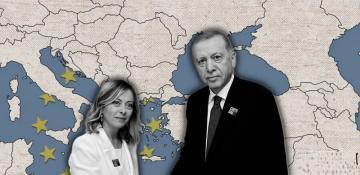
Until the rise to power of the 47th U.S. president, Donald Trump, the bloc demonstrated outward unity. However, after the summit between the U.S. and Russian presidents in Anchorage on August 15, 2025, where Ukraine’s prospects in NATO were discussed, serious disagreements began to emerge. In an effort to ease tensions, seven leading European politicians arrived in Washington on August 18, 2025. Among them were NATO Secretary General Mark Rutte, European Commission President Ursula von der Leyen, UK Prime Minister Keir Starmer, French President Emmanuel Macron, German Chancellor Friedrich Merz, Italian Prime Minister Giorgia Meloni, and Finnish President Alexander Stubb. At the time, the talks temporarily muted the emerging rift and preserved the appearance of unity.
Source: foxnews
The United States remains the key country in the North Atlantic alliance. Washington accounts for 66.8% of NATO’s defense spending, compared to 6.8% for Berlin, 6.7% for London, and only 4.9% for Paris. Without American power, Europe would be vulnerable due to its geography, demographic challenges, and migration pressures from Asia and Africa.
Largely because the United States bears the main burden of military spending, Europeans have achieved remarkable prosperity and social benefits — something many appear to have forgotten.
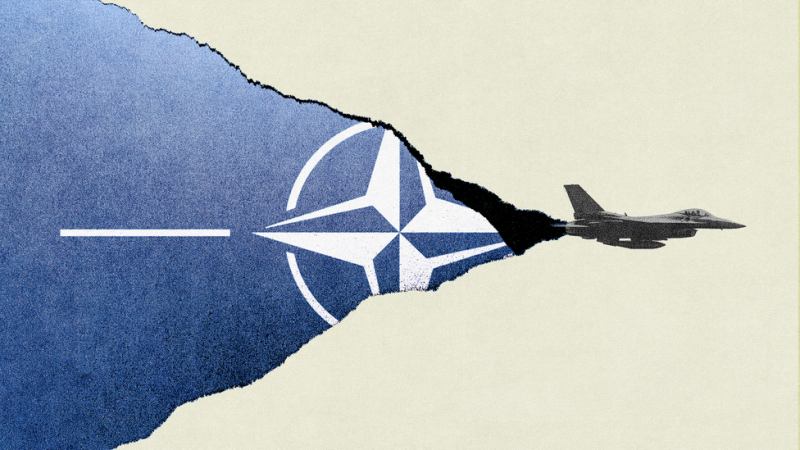
As later became clear, the initial crack caused by disagreements over Ukraine began to widen due to the war involving the United States and Israel against Iran. President Donald Trump expressed frustration that alliance members not only failed to come to the aid of the United States but that some even restricted or prohibited the use of their airspace and joint military bases for U.S. operations against Iran. He was also dissatisfied with Europe’s delay in unblocking the Strait of Hormuz, arguing that this is “not the job of the United States” but the responsibility of countries dependent on oil supplies through that route.
In this context, Trump described NATO as a “paper tiger” and warned that the United States might consider leaving the alliance. According to Secretary General Mark Rutte, Trump is “clearly disappointed” with NATO allies, acknowledging that “some countries in the alliance failed the U.S. test.” Trump wrote on Truth Social: “NATO was not there when we needed them. And if we need them again, they won’t be there either.”
Despite this, Rutte described his meeting with the American leader as “a very frank and open discussion between two good friends.” However, The Guardian expressed doubts that the visit would help improve strained relations between the United States and European members of the bloc. White House Press Secretary Karoline Leavitt said that Trump would discuss the possibility of the U.S. leaving NATO during his meeting with Rutte, noting that allies had “turned their backs on the American people” during the six weeks of war with Iran.
Rutte admitted that some NATO members indeed failed to meet their obligations during the operation against Iran, though most provided assistance. He specifically highlighted the efforts of UK Prime Minister Keir Starmer, whom Trump had repeatedly criticized in recent weeks. Notably, London provided access to its military bases only after Trump remarked that Starmer was “no Winston Churchill.” France, for its part, did not participate at all—something the United States would “never forget.”
Trump also made a sarcastic remark about President Emmanuel Macron, alluding to his personal controversies. Spain went even further, condemning the attack on Iran and banning the use of its airspace and bases by the United States during the war. In response, Trump threatened to cut off all trade relations with Madrid.
According to Politico’s European bureau, many Europeans now view the United States as a greater threat to Europe than China, with growing calls for greater strategic autonomy on the continent.
Meanwhile, The Wall Street Journal reports that the Trump administration is considering plans to “punish” NATO members that did not support the military operation against Iran. This could involve withdrawing U.S. troops from those countries and relocating them to states that demonstrated stronger support, such as Poland, Lithuania, Romania, and Greece.
Currently, around 84,000 American troops are stationed in Europe, with bases serving as critical hubs for U.S. operations. If such plans are implemented, the United States could close at least one base in Spain or Germany.

Source: fairobserver
In the event of a U.S. withdrawal from NATO, it is clear that Europe would struggle to replace American capabilities. The creation of a new European military alliance appears unlikely, particularly given competition between key states such as Germany and France for leadership in Europe, which could itself lead to serious tensions.
The North Atlantic alliance appears increasingly strained. Spain, Switzerland, and Austria have restricted U.S. airspace access. Italy blocked access to the Sigonella airbase in Sicily. France also imposed limitations, disrupting U.S. logistics.
An unconventional perspective on a potential U.S. withdrawal from NATO was offered by former counterterrorism official Joe Kent. He suggested that Washington could leave the alliance if a military confrontation were to occur between Türkiye and Israel in Syria. In such a scenario, the United States would side with Israel, while other NATO countries might step back to avoid being drawn into the conflict.
(If you possess specialized knowledge and wish to contribute, please reach out to us at opinions@news.az).


Similar news