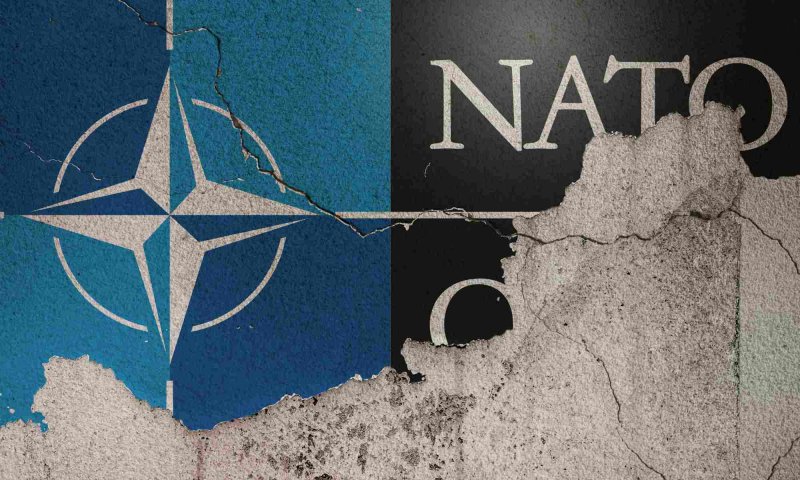
How the Greenland dispute exposed NATO’s internal fault lines



Editor’s note: Moses Becker is a special political commentator for News.Az, holding a PhD in political science and specializing in interethnic and interreligious relations. The views expressed in this article are the author’s own and do not necessarily reflect the position of News.Az.
In recent years, profound tectonic shifts have been unfolding on the global political stage. After the collapse of the socialist system and the dissolution of the Warsaw Pact, NATO remained the sole surviving relic of the Cold War era. Established on April 4, 1949, at a conference in Washington, the alliance initially comprised the United States, Canada, Belgium, the United Kingdom, Denmark, Italy, Iceland, Luxembourg, the Netherlands, Norway, Portugal, and France. Greece and Türkiye joined in 1952, West Germany in 1955, and Spain in 1982.
On March 12, 1999, NATO embarked on its eastward expansion with the accession of Hungary, Poland, and the Czech Republic. This process continued on March 29, 2004, when Bulgaria, Latvia, Lithuania, Romania, Slovakia, Slovenia, and Estonia joined the bloc. Albania and Croatia became members in April 2009, followed by Finland and Sweden on July 5, 2022. At present, the alliance consists of 30 countries.
Ukraine’s attempt to join NATO led to a conflict with Russia, which could not accept the alliance’s presence on its borders. History suggests, however, that any expansion carries within it the seeds of eventual disintegration. The unification of states with differing levels of economic and political development, divergent mentalities, and conflicting historical memories ultimately generates internal contradictions that can undermine the entire structure. A clear example is the long-standing confrontation between Athens and Ankara over Cyprus and a number of Greek islands in the Aegean Sea located in close proximity to Turkish territory. Because of these disputes, both sides have repeatedly come to the brink of war.
Source: Reuters
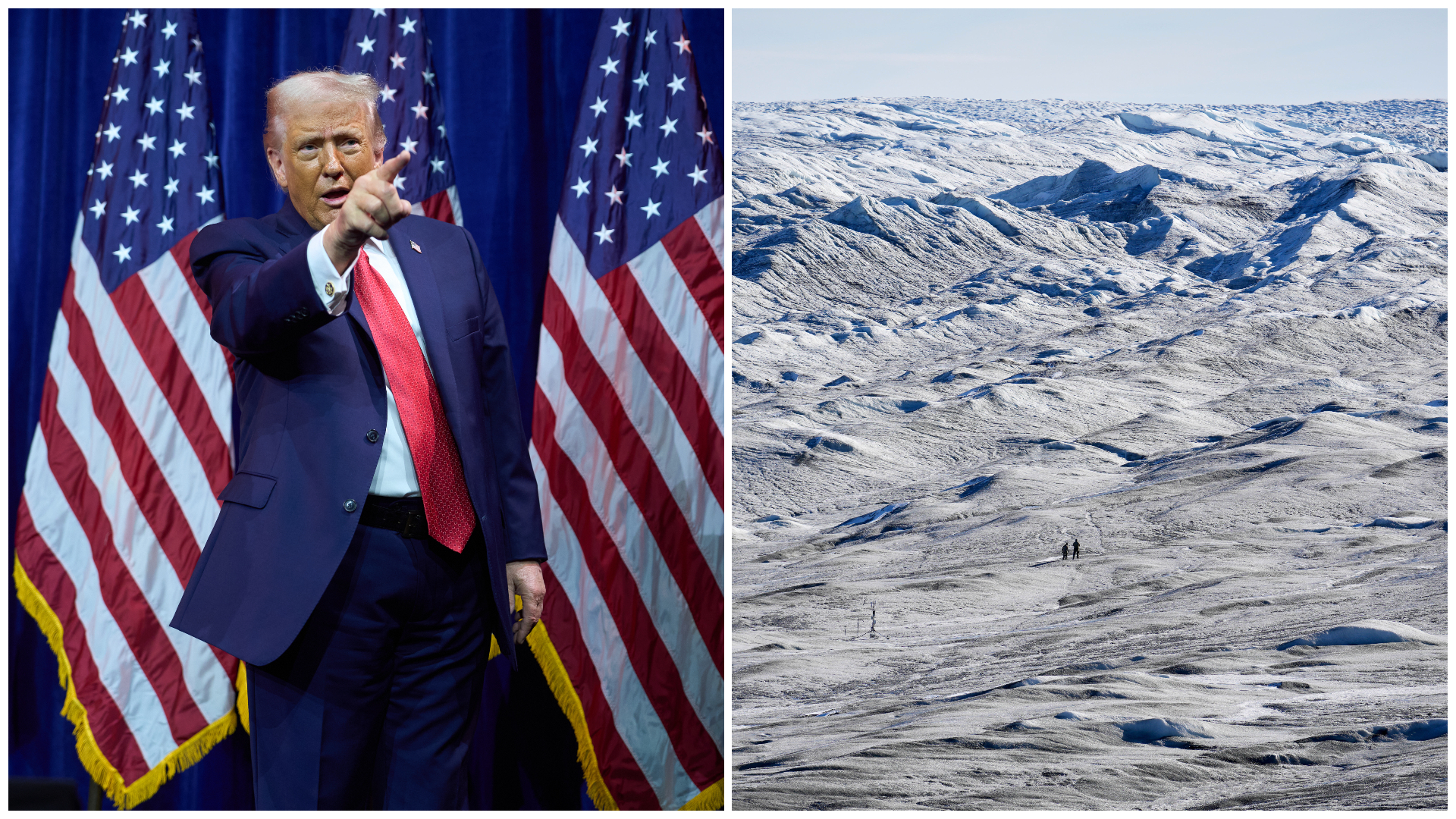
Recently, U.S President Donald Trump threatened to annex Greenland. However, Greenland is part of Denmark, a U.S. ally within NATO. This creates the risk of an armed confrontation within the alliance itself, with Paris, London, Berlin, Rome, Madrid, Warsaw, and Stockholm standing in defense of Copenhagen. A split is clearly visible, triggered by an attempt by one NATO member to seize part of another member’s sovereign territory. In this context, the question arises: is an alliance that cannot protect the rights of its weaker partners from stronger members even necessary?
Judging by Washington’s recent actions, this fragment of the former world order appears to be of diminishing importance to the United States. The country may ultimately leave NATO due to growing disagreements with European allies. This possibility was raised on January 16 by former NATO Secretary General Jens Stoltenberg.
“I cannot promise that the United States will remain in NATO. No one can promise that,” Stoltenberg said in an interview with the German newspaper Der Spiegel. “But I am convinced that we must do everything possible to reduce the risk of their withdrawal from the alliance and to be in the best possible position to deal with it if they do leave.” At the same time, the former secretary general acknowledged that nothing lasts forever and that circumstances can change. He also urged that U.S. statements regarding an intention to take control of Greenland be taken seriously.
In practical terms, without the United States the alliance would be doomed. Absent American power, NATO members have little substantial capacity to ensure their collective defense against any serious external threat.
That Washington does not intend to abandon the idea of acquiring Greenland is underscored by Donald Trump’s repeated statements that the island is vital from a national security perspective. The president has described it as a strategically important region, arguing that the European Union is allegedly interested in the United States taking control of Greenland because Denmark cannot ensure an adequate level of security for the island.
Justifying his position toward America’s formal allies, Trump has stated that while NATO might be upset if the United States were to leave the alliance, such a move would save Washington a great deal of money. In doing so, he made it clear that the United States does not intend to shoulder the financial burden of defending its partners alone. He has also once again expressed doubts that U.S. allies in NATO would come to Washington’s aid if it were ever necessary.

Source: Reuters
NATO officials have emphasized that if the United States were to attack Greenland, the alliance would effectively cease to exist. The European perspective on this issue was most vividly articulated by Italian Prime Minister Giorgia Meloni. “I do not understand what concrete steps I am supposed to take. If this strategy is wrong, then you must formalize an alternative for me,” she said, sarcastically suggesting that potential responses could include leaving NATO, closing American bases, severing trade ties, or even attacking McDonald’s.
This context also sheds light on Donald Trump’s position on Ukraine: he simply does not need it. As a result, the conflict initiated by the previous U.S. administration has left Europe face to face with Russia while incurring significant economic losses. In an effort to at least symbolically demonstrate solidarity with the Kingdom of Denmark, European countries hastily assembled and dispatched a military mission to Greenland: 15 personnel from France, 13 from Germany, three from Sweden, two each from Norway and Finland, and one each from the Netherlands and the United Kingdom.
This gesture appears both inadequate and humiliating, especially when contrasted with the scale of support provided to Ukraine, which has received weapons worth around $90 billion, along with advisers, mercenaries, missiles, aircraft, and tanks. That is genuine support. The deployment of European servicemembers to Greenland is not a meaningful military mission but rather a diplomatic display of solidarity that entails no real obligations. Meanwhile, hundreds of U.S. troops remain stationed at American bases on the island.
The primary objective for Washington is to remove Greenland from Danish sovereignty and, by extension, from its association with the European Union. Copenhagen has already recognized Greenland’s right to hold a referendum on independence. Such a vote is likely to take place, allowing Nuuk to free itself from Danish rule. Everything else would then become a matter of technical arrangements and mutual interest. After all, the United States already has Puerto Rico, an island that voluntarily joined it and now enjoys a special status.
Thus, the process of dismantling NATO has begun. The alliance effectively ceased to function when Donald Trump declared his intention to take Greenland from another member state, Denmark. It is now only a matter of time before this union, once created under U.S. leadership, formally comes to an end.
The paths of Americans and Europeans have diverged, most likely for good. Europe should now brace for the emergence of new blocs and alliances on the continent, as surviving alone will be extremely difficult. Given demographic trends and mounting economic challenges, European states may be forced to fundamentally reassess their relations with Russia, China, and the Middle East.


Similar news