Iran poll reports strong public support for military, nuclear policies


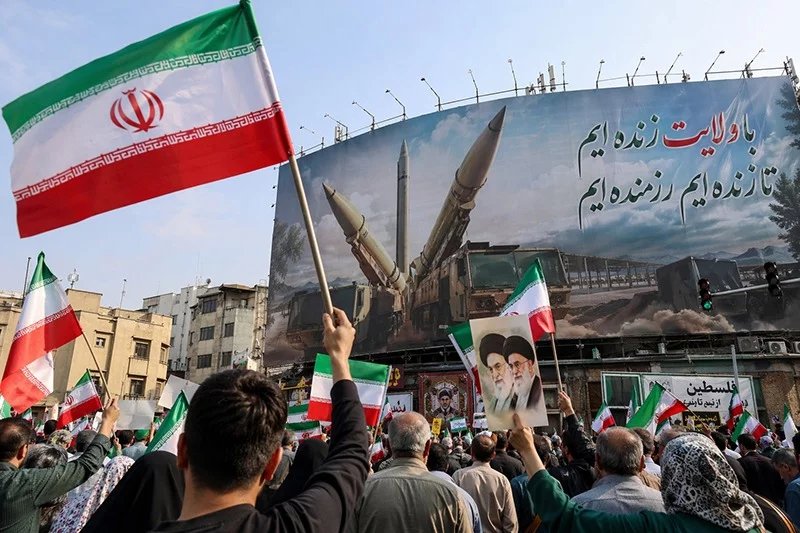
An Iranian state-affiliated survey has reported strong public support for the country’s armed forces and strategic defence and nuclear policies following what it describes as a 40-day conflict involving a US–Israeli coalition.
The survey, conducted by the Islamic Republic of Iran Broadcasting (IRIB) Research Center during and after the conflict, found that a majority of respondents opposed potential conditions reportedly associated with a possible agreement with the United States, including restrictions on Iran’s missile programme, limits on uranium enrichment, and reductions in enriched uranium stockpile, News.Az reports, citing Iran's English-language Press TV.
According to the findings, 85.7 per cent of respondents said Iran should not accept restrictions on its missile programme, while 79.4 per cent opposed ending uranium enrichment. A further 82.6 per cent rejected the removal of 400 kilograms of enriched uranium from the country. Around 73.7 per cent opposed unrestricted maritime passage through the Strait of Hormuz, and 68.1 per cent opposed ending cooperation with allied regional groups.
RECOMMENDED STORIES
On perceptions of the conflict, the survey found that 66 per cent of respondents viewed Iran as the victor of the 40-day confrontation, while 57.5 per cent said the United States had greater need for a ceasefire. By contrast, 9.8 per cent said Iran needed it more.
The report also stated that 87.2 per cent of respondents rated the performance of Iran’s armed forces as strong or very strong, with nearly half giving the highest rating. It further said that more than half of respondents participated in public gatherings or convoy-style demonstrations during the conflict period.
In terms of outlook, 71.7 per cent of respondents said they expected Iran’s future to improve, while 13.5 per cent anticipated deterioration. The survey also reported that 80.1 per cent rated government performance in maintaining supply chains for essential goods during the conflict as satisfactory.
The IRIB survey concludes that public opinion reflects what it described as resilience and cohesion in the face of external pressure, though the findings are based on self-reported responses collected during and after the conflict period.


Similar news