Iran says US talks focused on ending war, not nuclear issue or Hormuz control


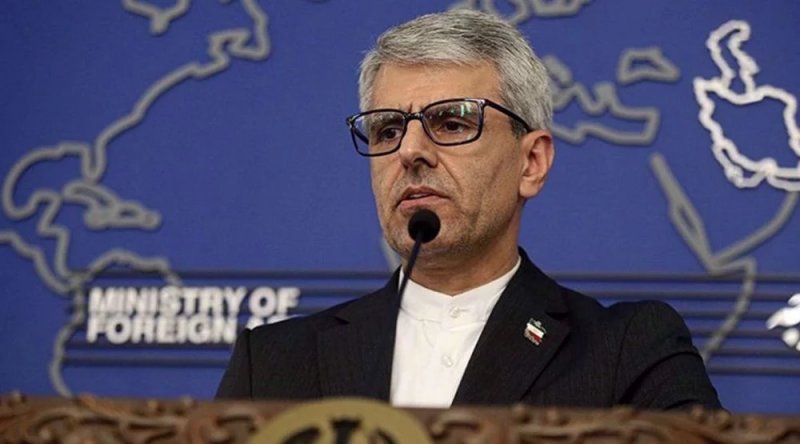
Iran’s Foreign Ministry spokesman Esmaeil Baghaei has said that indirect talks with the United States are focused on ending the war across all fronts, while nuclear issues and management of the Strait of Hormuz are not part of the negotiations.
“The focus of the negotiations is on ending the war, and at this stage we are not discussing nuclear issues,” Baghaei said during his weekly press conference on Monday, News.Az reports, citing Iran’s English-language Press TV.
He also rejected suggestions that the management of the Strait of Hormuz was being discussed during the talks.
“How this region should be managed concerns the littoral states,” he said.
RECOMMENDED STORIES
Baghaei added that Iran and Oman were working on a mechanism to ensure safe transit through the Strait of Hormuz, describing the issue as a matter of global concern.
“We understand that the security of the Strait of Hormuz is a concern for the entire world,” he said.
According to the spokesman, Iran is “not seeking to impose tolls” in the strategic waterway, although services and environmental protection measures naturally involve costs.
Responding to proposals by Britain and France regarding the management of the Strait, Baghaei stressed that responsibility lies solely with Iran and Oman.
“No country other than Iran and Oman is present in the Strait of Hormuz. It is the responsibility of Iran and Oman to formulate the mechanism for safe transit,” he said.
Baghaei said discussions linked to a 14-point memorandum of understanding would continue over a 60-day period, but reiterated that the current priority remains ending the war.
Commenting on media reports about the possible contents of the memorandum, he described many of the claims as “a combination of speculation”.
“The actual memorandum focuses on ending the war and ending the US’s illegal naval blockade against the Islamic Republic,” he said, adding that it also addresses what Tehran describes as Washington’s attempts to complicate transit through the Strait of Hormuz.
“The blockade must stop,” Baghaei said, adding that Iran would take measures to ensure safe transit through the waterway.
He said recent developments followed weeks of negotiations conducted through Pakistani mediation and noted that understandings had been reached on a number of issues.
“It is true that we have reached understandings on many of the subjects under discussion, but no one can claim that the signing of an agreement is imminent,” he said.
Baghaei also criticised what he described as inconsistencies in US policymaking, saying contradictory positions complicate negotiations.
“What matters to us is securing national interests, and whenever we reach a result, we will announce it,” he added.
The spokesman said any agreement aimed at ending the war would cover all fronts, including Lebanon, while accusing Israel of attempting to sabotage ceasefire efforts and diplomatic initiatives in the region.
He also warned that Iran would respond “with greater intensity” to any future attack, saying Tehran would rule out no option when it comes to defending itself.


Similar news