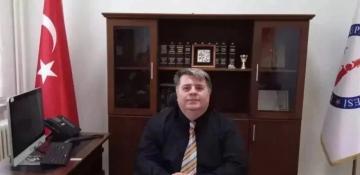
Ishkhan Verdyan: Pashinyan will implement his mandate effectively in next five years – INTERVIEW


Following Armenia’s parliamentary elections, Prime Minister Nikol Pashinyan’s Civil Contract party has secured another mandate to govern the country for the next five years. The outcome is expected to shape Armenia’s domestic political agenda, its approach to constitutional reform and the future of the peace process with Azerbaijan.
News.Az spoke with Armenian activist Ishkhan Verdyan about the election results, the factors behind Civil Contract’s victory, the priorities facing the new parliament and Armenia’s foreign policy trajectory following the vote.
- How do you assess the results of the parliamentary elections in Armenia?
- The results of Armenia’s parliamentary elections look logical. At the same time, I have the impression that Nikol Pashinyan fell slightly short of the vote he could have received, because, in my view, his level of support was higher than the final figures suggest. However, this is only my personal impression. In any case, Nikol Pashinyan has received another mandate for the next five years, and I am confident that he will implement it quite effectively.
- What, in your opinion, was the main factor behind the victory of the Civil Contract party?
- In my opinion, there were two fundamental factors behind Nikol Pashinyan’s victory. The first was his own policy, both domestic and foreign. In foreign policy, Pashinyan is associated with bringing peace to Armenia, which in turn contributes to economic growth and the country’s overall revival — something people feel and recognise. Noticeable changes have taken place in Armenia’s socio-economic sphere; society feels these changes, and they became one of Pashinyan’s key assets during the election.
The second reason for his decisive victory was his political opponents. Pashinyan’s opponents are the former elites and former rulers of Armenia. It is likely that among those who voted for him were people who made this choice primarily because they did not want the old elites to return to power.
Be that as it may, Pashinyan currently has a fairly solid foundation for his further political activity.

Credit: cepa.org
- What priority tasks, in your view, will the newly elected parliament address?
- There is a sense that the new parliament will focus on cleaning up the country’s legislation and bringing it into line with the new political realities. Most likely, efforts will be made to move Armenia away from a path of confrontation and to provide it with the tools for further development in peace with its neighbours, particularly Azerbaijan. I also think there will be an active struggle against the former Karabakh clan and the old elites, to whom some state institutions, or individual representatives within them, still remain subordinate in one way or another.
In general, I believe Armenia’s further development will be built around the regional economy and regional politics.
- The ruling party still failed to secure a constitutional majority in parliament. The absence of this political leverage deprives the authorities of the ability to initiate constitutional reform without obstacles, which is Azerbaijan’s main condition for signing a peace treaty. How, in your view, can this situation be changed?
- Yes, Nikol Pashinyan’s team did not secure a constitutional majority, and this is a problem, because this factor will create certain obstacles. Armenia’s constitution in its current form closes the possibility of signing a peace treaty and possibly even of further developing relations, including diplomatic relations, between Armenia and Azerbaijan.
This is a fundamental issue embedded in the structure of the Armenian constitution, which in effect creates a barrier to the normalisation of Armenia’s relations with a neighbouring state. And this is certainly a negative factor.
I think Pashinyan’s team will look for ways to resolve this problem. It must be acknowledged that this is a non-trivial and extraordinary issue, and therefore the ways to resolve it are also likely to be far from straightforward.
- How will the election results affect Armenia’s foreign policy? What consequences will the election results have for Armenia’s relations with Russia, the European Union and neighbouring states?

Credit: Azernews
- I believe that the existing perception of a choice between Russia and the West for Armenia is largely artificial. Such discussions became particularly active on the eve of the elections, and some political forces oriented towards Russia tried to use them in their rhetoric, framing the issue as “the West versus Russia”.
However, in reality, this choice does not exist in such a rigid form. Although Nikol Pashinyan has spoken about a course towards making Armenia a more “European” country, he never implied a deterioration of relations with Russia and never said that one direction should develop at the expense of another. I think he will continue to follow this line and will not take any sharp steps.
Hypothetically speaking, if Armenia were to withdraw from the CSTO or the EAEU, it is important to understand that such steps, even if they ever occur, would most likely be the result of external circumstances rather than a direct political initiative by Nikol Pashinyan.


Similar news