Israel–Hamas war: A day-by-day chronology of the past week


The Israel–Gaza war continues to reshape the political and security landscape across the Middle East, with intense fighting in Gaza, continuing hostage and prisoner-release negotiations, and growing international pressure for a durable ceasefire, News.az reports.
The conflict began after a large-scale Hamas attack inside Israel on 7 October 2023, and Israel responded with a prolonged air and ground campaign aimed at dismantling Hamas as a military and governing force. Since then, the war has evolved into a complex and multi-layered crisis, combining military operations, humanitarian suffering, diplomatic bargaining, and heightened regional tensions.
Israel’s core military objectives have remained largely unchanged: destroy Hamas’s command structure, eliminate its leadership, and degrade its ability to operate in or govern Gaza. Israeli forces have conducted ground operations across much of the territory, focusing at different times on the northern, central, and southern areas. Urban warfare, tunnel clearing operations, and strikes on what Israel says are militant facilities have defined the campaign. Israeli officials argue that Hamas embeds fighters and weapons among civilians, complicating operations and contributing to widespread damage.
Hamas, meanwhile, continues to frame itself as a resistance movement, insisting it will not surrender or disarm. It has relied on guerrilla tactics, tunnel networks, improvised explosives, and sporadic rocket launches toward Israel. The group has also used hostage negotiations to influence the tempo of the war. A brief pause earlier in the war allowed for limited hostage-and-prisoner exchanges, but efforts to secure a broader deal have repeatedly stalled over disagreements on sequencing, ceasefire duration, and post-war arrangements.
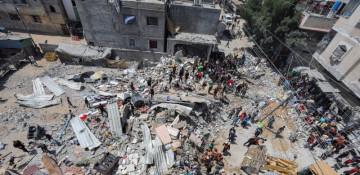
The humanitarian toll remains severe. Much of Gaza’s civilian infrastructure has been damaged or destroyed, including homes, medical facilities, and utilities. Access to food, water, fuel, healthcare, and sanitation has been restricted and inconsistent, with aid deliveries dependent on complex negotiations and security conditions. Displacement has been widespread, with large portions of the population forced to move repeatedly as fighting shifts. Humanitarian agencies continue to warn of growing risks from disease, malnutrition, and lack of medical care, particularly among children and the elderly.
Inside Israel, the war has also reshaped public debate and politics. Many families of hostages still held in Gaza have pressed the government to prioritize agreements that would secure their release, even if that requires concessions or pauses in fighting. At the same time, supporters of the military campaign argue that halting operations too early would leave Hamas largely intact and able to regroup. These tensions have fueled demonstrations, political strain, and debates over security doctrine.
Diplomacy has intensified but remains fragile. Regional and international mediators, including the United States, Egypt, and Qatar, have tried to bridge gaps between the parties on ceasefires, hostage exchanges, and humanitarian access. Proposals have ranged from temporary pauses with phased exchanges to more ambitious frameworks designed to lead toward a sustained cessation of hostilities. Disagreements persist over guarantees, verification mechanisms, the role of third-party monitors, and the future governance of Gaza.
The question of “the day after” looms large. Israel has said it does not intend to permanently reoccupy Gaza but also insists that Hamas cannot return to power. Different ideas have circulated about a transitional administration, the role of Palestinian institutions, and whether a multinational or regional force might help stabilize the territory. None of these options have yet gained decisive agreement. The future political status of Gaza, and its relationship to any broader revival of peace talks between Israelis and Palestinians, remains uncertain.
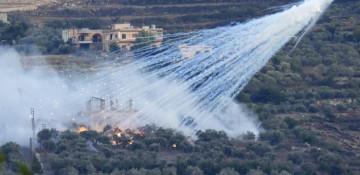
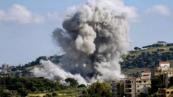
Regionally, the war has raised the risk of escalation. Armed groups aligned with Iran in Lebanon, Syria, Iraq, and Yemen have engaged in varying levels of confrontation with Israel or Israeli-linked interests. Cross-border fire between Israel and Hezbollah in Lebanon has periodically intensified, raising concerns about a larger northern war. Maritime security in the Red Sea and Gulf of Aden has also been affected by attacks on shipping claimed by Yemen’s Houthi movement, prompting international naval responses. Throughout, major powers have sought to deter a wider regional conflict, even as incidents continue.
The war has also divided global opinion. Many governments have condemned the initial Hamas attack and support Israel’s right to self-defence, while simultaneously calling for proportionality, civilian protection, and adherence to international humanitarian law. Others have framed the conflict within the broader history of the Israeli-Palestinian dispute, occupation, blockade, and stalled peace processes. Public opinion has been deeply polarized across many countries, leading to large-scale demonstrations, campus activism, and heated political debates.
Economically and socially, the costs continue to mount. Gaza’s reconstruction needs are expected to be immense, and Israel has faced disruption to sectors affected by mobilization, security risk, and uncertainty. The conflict has also had ripple effects on regional trade, investment confidence, and energy markets, although the scale of those effects has varied over time.
Looking ahead, several key variables will shape the next phase of the war. One is whether negotiations can produce a sustained ceasefire linked to hostage releases and expanded humanitarian access. Another is the trajectory of fighting inside Gaza, including whether Israeli operations continue at the current tempo or shift toward more targeted, intelligence-led missions. The internal political dynamics within Israel and among Palestinian factions will also play a major role, as will the position of key regional states and international mediators.
At the strategic level, the war has reinforced long-standing questions: Can Hamas be eliminated or permanently weakened through military means alone? What political and security arrangements could realistically govern Gaza afterward? And is there any viable path back to broader negotiations on a two-state solution, or is the conflict likely to harden positions for years to come?
For now, the war remains a profoundly destabilizing and traumatic chapter for Israelis and Palestinians alike, with civilians continuing to bear the brunt of violence and deprivation. As diplomatic efforts continue and fighting persists, the world’s attention remains fixed on whether the conflict can be contained and resolved, or whether it will widen further and become an even more entrenched and enduring crisis.


Similar news