Japan deploys long-range counterstrike missiles for first time


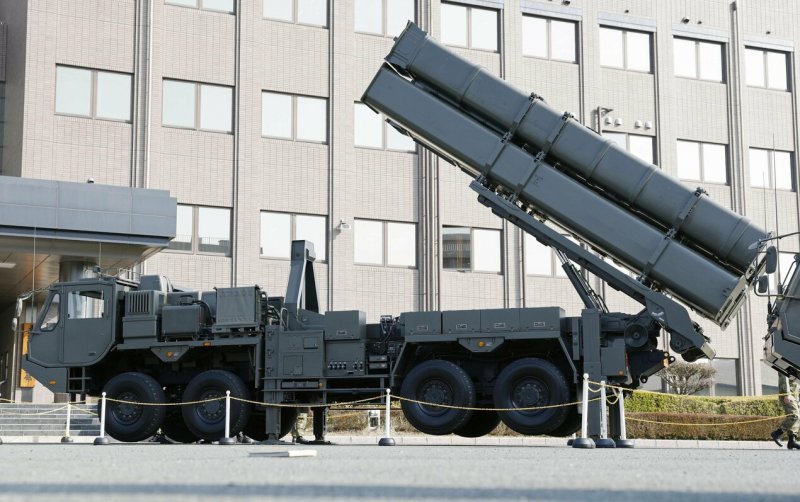
Japan’s Defense Ministry announced Tuesday that long-range missiles with counterstrike capabilities have been deployed at two Ground Self-Defense Force bases, marking a significant shift from the country’s traditionally defense-only posture under its war-renouncing Constitution.
The missiles are now stationed at Camp Kengun in Kumamoto Prefecture, southwestern Japan, and Camp Fuji in Shizuoka Prefecture, central Japan, News.Az reports, citing Kyodo.
This deployment represents Japan’s first acquisition of a counterstrike capability, aimed at strengthening deterrence amid rising tensions with China.
The system allows Japan to target enemy bases once an imminent attack is deemed likely, even before any damage occurs. However, an error in judgment could constitute a violation of international law, which prohibits preemptive strikes.
RECOMMENDED STORIES
Defense Minister Shinjiro Koizumi described the deployment as “an extremely important effort to strengthen our deterrence and response capabilities as we face the most severe and complex security environment of the postwar era.”
While the ministry emphasizes the necessity of the new systems for regional security, local residents expressed concerns that the bases could become targets in a conflict. About 50 residents protested at Camp Kengun on Tuesday, holding signs reading, “No to deployment” and “We don’t need missiles.” Hidemitsu Horiuchi, 73, said, “The surrounding area is densely populated. Kumamoto will be a target.”
Camp Kengun is equipped with a ground-launched version of the upgraded Type 12 land-to-ship guided missile, with a range of approximately 1,000 kilometers, capable of reaching parts of the continental coastline from Kyushu. Meanwhile, Camp Fuji hosts hypervelocity gliding projectiles for the defense of remote islands, with operational methods being studied. Plans are underway to deploy missiles to Camp Kamifurano in Hokkaido and Camp Ebino in Kyushu in fiscal 2026. The current missile model has a range of several hundred kilometers, with upgrades planned to reach around 2,000 km.
When asked about briefings for local residents, Koizumi said, “There is no such plan at this point.” However, on March 17, the Defense Ministry exhibited missile launchers and equipment to top local officials, including the prefectural governor and the capital’s mayor.
The formal introduction of counterstrike capabilities was outlined in three revised security documents in 2022 during Prime Minister Fumio Kishida’s tenure. The ministry plans to continue expanding long-range missile deployments across various units. On Friday, the Maritime Self-Defense Force’s Chokai destroyer, equipped with Aegis technology, gained the capability to launch U.S.-made Tomahawk cruise missiles.
Additional plans include equipping the MSDF destroyer Teruzuki in Yokosuka, Kanagawa Prefecture, F-2 fighter jets at the Air Self-Defense Force’s Hyakuri Air Base in Ibaraki Prefecture with Type 12 missiles, and deliveries of long-range Joint Strike Missiles for F-35A stealth fighter jets have already begun.
By Nijat Babayev


Similar news