Japan’s ruling LDP secures two-thirds majority in snap elections


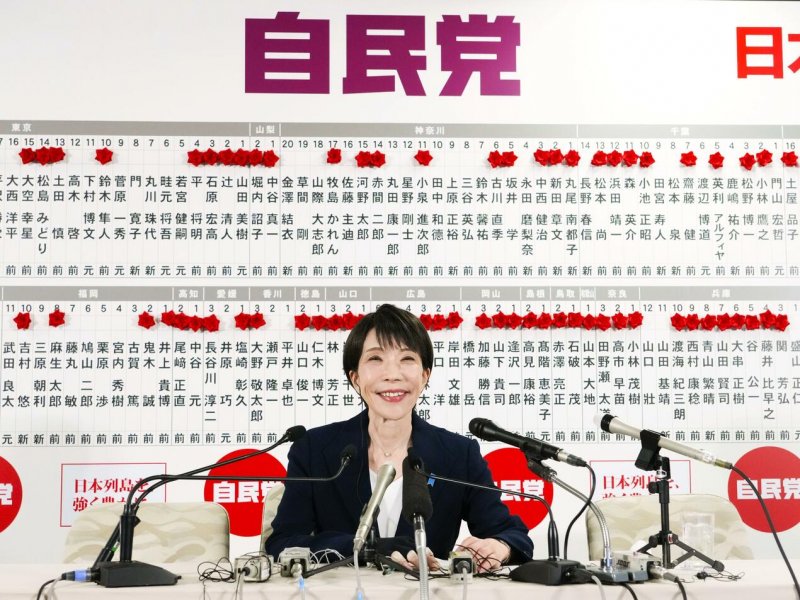
Japan’s ruling Liberal Democratic Party (LDP) won more than a two-thirds majority in the House of Representatives in Sunday’s election, clinching a historic landslide victory that gives Prime Minister Sanae Takaichi a major boost to advance her conservative policy agenda.
The LDP sharply increased its seat count to 315 from 198 before the election, a gain widely attributed to Takaichi’s personal popularity, News.Az reports, citing Kyodo.
The result positions her to remain in office after taking power last October. Together with its coalition partner, the Japan Innovation Party (JIP), the ruling bloc secured 351 seats in the 465-member lower house.
RECOMMENDED STORIES
The election delivered a severe setback to the newly launched Centrist Reform Alliance, whose seats plunged to 49 from 167. Following the outcome, the alliance’s co-leaders, Yoshihiko Noda and Tetsuo Saito, suggested they could step down.
Speaking at a press conference on Monday morning, Noda said the result was “an extremely bitter blow.” Saito indicated that installing new leadership ahead of a special parliamentary session expected on Feb. 18 would allow the party to nominate a candidate when parliament chooses the prime minister. Noda added that he first needs to establish a proper organizational structure for the hastily formed party, saying he could not “simply take the irresponsible stance of saying ‘I’m quitting today.’” Further discussions were expected at a party board meeting later in the day.
By crossing the two-thirds threshold of 310 seats, the LDP became the first party in postwar Japan to achieve the feat, enabling it to pursue constitutional amendments and pass legislation even if rejected by the House of Councillors, where the ruling coalition remains in the minority.
Against a backdrop of prolonged inflation and a worsening international environment, Takaichi has pledged to pursue a “responsible yet aggressive” fiscal policy and strengthen Japan’s defense capabilities. “We bear an extremely heavy responsibility to focus on steadily delivering on the campaign pledges we have made,” she said during a television program on Sunday after the victory was confirmed.
In a separate appearance, Takaichi signaled she would largely maintain the current Cabinet lineup, which has enjoyed relatively strong public support since its inauguration less than four months ago. She also expressed hope that the JIP, which declined to take ministerial posts when the coalition was formed in October, would share responsibility within the Cabinet.
The JIP, also known as Nippon Ishin, gained two seats to reach 36 but lagged behind its senior partner. The LDP and JIP did not coordinate candidates during the election. “It was an election in which we felt pressure from the LDP,” JIP leader Hirofumi Yoshimura said at a press conference in Osaka, adding that the party sought to persuade voters of its importance within the coalition.
Elsewhere, the populist Sanseito, known for its “Japanese First” slogan, expanded its presence to 15 seats from two. Team Mirai, which promotes the use of digital technologies to enhance political participation, won its first lower-house representation with 11 seats.
Voter turnout rose to 56.26 percent in single-seat constituencies and 56.25 percent in proportional representation, up from 53.85 percent and 53.84 percent, respectively, in the previous election, according to the internal affairs ministry.
Nearly 1,300 candidates contested the 465 seats, with 289 elected from single-seat districts and 176 via proportional representation across 11 regional blocks. Early voting also surged, with a record 27.02 million people casting ballots ahead of Sunday—about 6 million more than in the 2024 lower house election.
As households grapple with rising living costs, major parties campaigned on pledges to reduce tax burdens. Takaichi said her government would accelerate discussions on a proposed two-year suspension of the 8 percent consumption tax on food, a key campaign promise.
Under Takaichi, a security hawk, the ruling parties also sought public backing to bolster Japan’s defenses amid a more challenging security environment.
The late formation of the Centrist Reform Alliance—uniting lawmakers from the Constitutional Democratic Party of Japan and Komeito—appeared to backfire after drawing criticism that the merger was driven by electoral convenience. Komeito, backed by the Buddhist lay organization Soka Gakkai, had been an LDP ally for 26 years and a key campaign partner before the alliance fractured in October.
By Nijat Babayev


Similar news