Yandex metrika counter
Maps and charts of the Iran crisis
Source: Screenshot

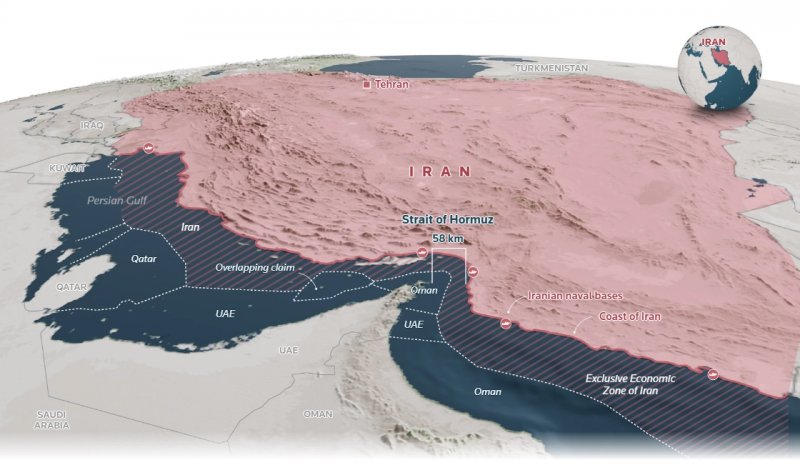
The steady flow of Gulf oil shipments to Europe, the United States and Asia through the narrow shipping lanes of the Strait of Hormuz has created the world’s largest oil transit chokepoint.

After the United States and Israel launched the most ambitious attack on Iran in decades, Tehran’s ability to disrupt transit in the strait has rattled markets and choked trade, News.Az reports, citing Reuters.

Already, oil prices have risen sharply and analysts expect them to remain elevated over the coming days while markets focus on the impact of escalating Middle East conflict on supplies through the strait.

OPEC members Saudi Arabia, Iran, the United Arab Emirates, Kuwait and Iraq export most of their crude via the strait, mainly to Asia.

Qatar, among the world’s biggest liquefied natural gas exporters, sends almost all of its LNG through the strait.
News about - Maps and charts of the Iran crisis

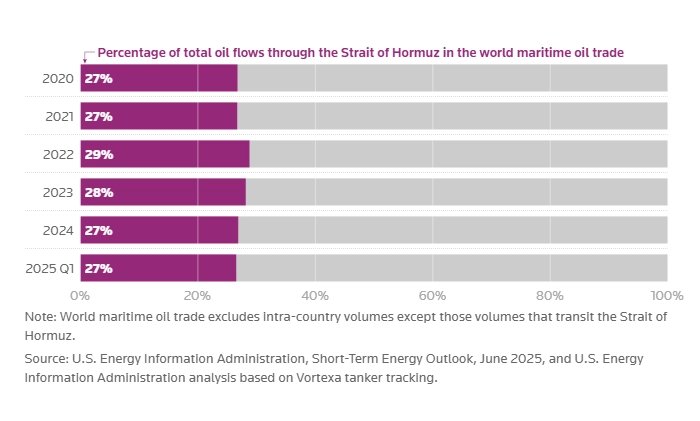
Shipping through the strait between Iran and Oman, which carries around one-fifth of oil consumed globally as well as large quantities of gas, has ground to a near halt after vessels in the area were hit as Iran retaliated to U.S. and Israeli strikes.

Several tanker owners, oil majors and trading houses have suspended crude oil, fuel and liquefied natural gas shipments via the Strait of Hormuz after the U.S. and Israel attacked Iran, trading sources said on Saturday.

“Our ships will stay put for several days,” one top executive at a major trading desk said. Satellite images from tanker trackers showed vessels backed up next to big ports, such as Fujairah in the United Arab Emirates, and not moving through Hormuz.

Iran’s ability to disrupt the strait

Iran has said it closed navigation through the critical waterway, and shipping has ground to a near halt after vessels in the area were hit as Iran retaliated to U.S. and Israeli strikes.

The U.S.-flagged products tanker Stena Imperative was damaged by “aerial impacts” while berthed in the Middle East Gulf, the vessel’s owner Stena Bulk and its U.S. manager Crowley said in a statement, and a shipyard worker was killed as a consequence of the impact.

On Sunday, a projectile hit the Marshall Islands-flagged product tanker MKD VYOM, killing a crew member as the vessel sailed off the coast of Oman, its manager said on Sunday, and two other tankers were also damaged.

Also on Sunday, a projectile hit the Gibraltar-flagged oil bunkering tanker Hercules Star off the UAE coast, manager Peninsula said in a statement. The tanker returned to anchorage in Dubai on Sunday morning and the crew were safe, Peninsula added.

In addition to direct attacks on ships via missiles and drones, Tehran may also deploy mines in the strait.

U.S. intelligence estimates Iran has stockpiled as many as 6,000 mines, including drifting, limpet, bottom and moored mines.

“Floating and naval mines pose a severe asymmetric threat in these confined waters, particularly in the Strait of Hormuz’s narrow transit lanes, where shallow depths and Iran’s coastal positioning enable swift, potentially deniable deployment from fast attack craft, submarines, or other platforms,” said Scarlett Suarez, senior intelligence analyst with UK based maritime risk intelligence and cybersecurity specialists Dryad Global.

“Although no large-scale mining or confirmed mine detections have been reported amid the ongoing crisis, persistent threats and the potential for partial or targeted use remain credible.”

Moored mine

Moored mines are attached to the sea floor or a weight and are often arrayed in mine fields. They explode when they come in contact with passing ships.

An illustration of a moored mine.
Drifting mine

Drifting mines float on the surface of the water and are harder to counter because they do not stay in fixed positions within mine fields.

An illustration of a drifting mine.
Limpet mine

Limpet mines are attached directly to the hull of a ship via magnets and are often detonated by a timed fuse.

An illustration of a limpet mine.
Bottom mine

Bottom mines sit on the seafloor in shallow water and explode when they detect a ship overhead. They are harder to detect and sweep than moored mines.

An illustration of a bottom mine.
Iran’s Supreme Leader Ali Khamenei was killed on Saturday, Iranian officials confirmed, after the United States and Israel launched the most ambitious attack on Iranian targets in decades.

Israel also said the attacks killed several key figures in Iran’s military leadership.

Israeli military operations over the past two years had already killed some of Iran’s senior military officials and severely weakened several of Tehran’s once-feared proxy forces across the Middle East.

Mousavi was appointed to second highest commander after Supreme Leader when his predecessor Mohammad Bagheri was killed during US strikes in 2025.

Pakpour was appointed after his predecessor Hossein Salami was killed during US strikes in 2025. Iran says he was replaced by Ahmad Vahidi.

On Sunday, Iranian President Masoud Pezeshkian said a leadership council composed of himself, the judiciary head and a member of the powerful Guardian Council had temporarily assumed the duties of Supreme Leader.

Security chief Ali Larijani accused the United States and Israel of trying to plunder and disintegrate Iran and warned “secessionist groups” of a harsh response if they attempted any action, state television said on Sunday, after the two countries launched a wave of air attacks on Iran that included the bombing of a girls’ primary school. Reuters could not independently confirm the reports from the state media.

Iran’s power structure

Killed

Ali Khamenei

Supreme Leader, Commander-in-Chief

Appoints

ARMED FORCES

JUDICIARY

Advises

Includes a Supreme Court

and lower courts

ISLAMIC

REVOLUTIONARY

GUARD CORPS

REGULAR

MILITARY

Guardian Council

6 clerics and 6 jurists

Approves all candidates

for elected office

SUPREME NATIONAL

SECURITY COUNCIL

Elected offices

Appoints

Appoints the supreme leader and is empowered to remove a leader, though it has never done so.

Masoud Pezeshkian

Ali Larijani

President

Secretary

Assembly of experts

Parliament

Following the killing of Khamenei on Saturday, many senior U.S. officials remain skeptical that the U.S. and Israeli military operation against the Islamic Republic will lead to a regime change in the near term.

The U.S. intelligence discussions about the implications of a possible Khamenei killing have not been limited to whether it might lead to a change in government leadership.

Two of the U.S. officials said that, since January, there has been significant debate - but no consensus - among officials of various agencies about the extent to which Khamenei’s killing would lead to a significant shift in the way Iran approached negotiations with the U.S. regarding its nuclear program.

U.S. officials have also debated the extent to which Khamenei’s death or ouster would deter the country from rebuilding its missile or nuclear facilities and capacities, said those officials, who requested anonymity to discuss sensitive internal conversations.

The biggest foreign-policy gamble of U.S. President Donald Trump’s presidency comes after he campaigned for reelection as a “peace president” and after saying he preferred a diplomatic solution to the standoff with Iran.

The United States unleashed an array of weaponry against Iranian targets on Saturday, including Tomahawk cruise missiles, stealth fighters, and for the first time in combat, low-cost one-way attack drones modelled after Iranian designs.

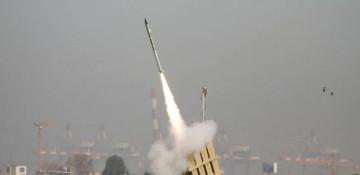
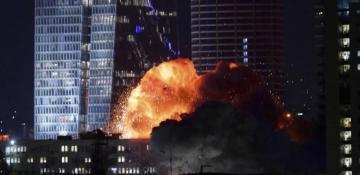
Iran has called the strikes unprovoked and illegal and responded with missiles fired at Israel and at least seven other countries, including Gulf states that host U.S. bases.


News.Az 

By Faig Mahmudov

Similar news

Archive

Prev Next
Su Mo Tu We Th Fr Sa
  1 2 3 4 5 6
7 8 9 10 11 12 13
14 15 16 17 18 19 20
21 22 23 24 25 26 27
28 29 30 31