Moscow calls for joint food reserves with BRICS


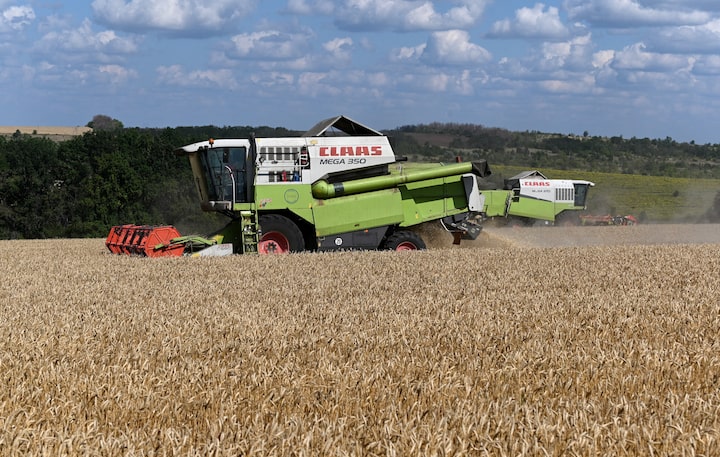
Russia has proposed creating joint food reserves with BRICS nations and regional allies to reduce growing risks to global food security linked to the Middle East conflict.
A senior official from Russia’s Security Council said stronger coordination among partner countries is essential as disruptions to energy and fertilizer supplies threaten agricultural production worldwide, News.Az reports, citing Reuters.
According to Russian officials, the ongoing Middle East conflict is already affecting global supply chains, particularly fertilizers—critical for crop production.
RECOMMENDED STORIES
Roughly half of the world’s food depends on fertilizers, while about a third of global fertilizer trade previously passed through the Strait of Hormuz, a key corridor now heavily disrupted.
Officials warned that if shortages persist into early summer, crop yields could drop sharply, potentially triggering a surge in global food prices and worsening hunger.
The proposal focuses on expanding cooperation with the BRICS group—comprising major emerging economies—as well as countries in the Eurasian Economic Union.
The idea is to build shared food reserves that could be used to stabilize supply during crises and prevent extreme market volatility.
Russia’s Security Council, chaired by Vladimir Putin, plays a key role in shaping national strategy on such issues.
International institutions including the World Bank, IMF and the World Food Programme have recently warned that rising oil, gas and fertilizer prices will likely drive food inflation and increase food insecurity worldwide.
Estimates suggest the number of people facing hunger could climb to over 670 million, highlighting the scale of the potential crisis.
Despite risks, Moscow says it is well positioned to expand food exports to regions such as the Middle East, Asia, Africa and Latin America.
Countries like Egypt—one of the largest importers of Russian wheat—as well as China and India remain key markets.
Russia aims to increase agricultural exports by 50% by 2030, positioning itself as a central player in global food supply as geopolitical tensions reshape trade flows.
By Aysel Mammadzada


Similar news