US brokers Israel-Lebanon ceasefire framework tied to Hezbollah withdrawal


By Ben Aris in Berlin
The US has secured a new ceasefire framework between Israel and Lebanon on June 3 that would require Hezbollah to halt all attacks and withdraw its forces from southern Lebanon, marking the most significant diplomatic effort in years to stabilise one of the Middle East's most volatile frontiers.
The deal hinges on Hezbollah withdrawal from the southern border and disarmament, as Washington pledges support for the Lebanese army to take exclusive control. The White House said the agreement between Israel and Lebanon was contingent on “a complete cessation” of attacks by Hezbollah and a withdrawal of its forces.
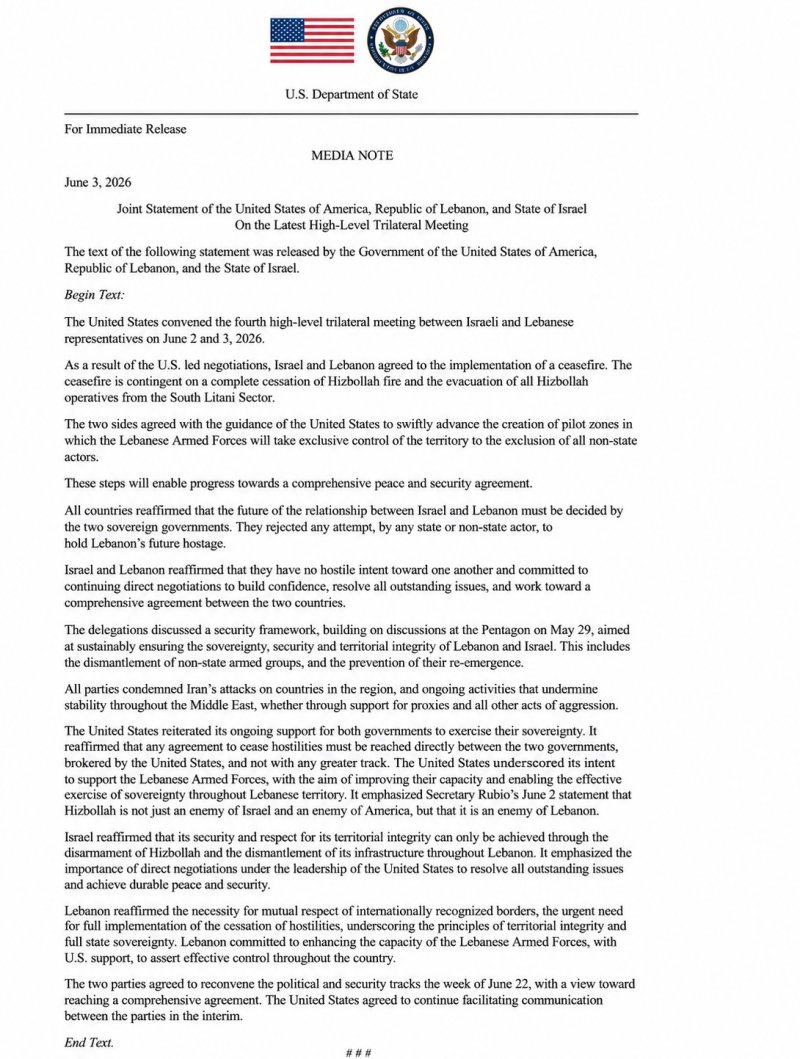
“As a result of the US-led negotiations, Israel and Lebanon agreed to the implementation of a ceasefire. The ceasefire is contingent on a complete cessation of Hezbollah fire and the evacuation of all Hezbollah operatives from the South Litani Sector,” the White House said in a statement.
RECOMMENDED STORIES
“The two sides agreed with the guidance of the United States to swiftly advance the creation of pilot zones in which the Lebanese Armed Forces will take exclusive control of the territory to the exclusion of all non-state actors. These steps will enable progress towards a comprehensive peace and security agreement.”
Tehran said last week that it has suspended its participation in ceasefire negotiations as long as Israel continues its attacks in Lebanon.
There was no immediate indication whether Hezbollah had accepted the terms of the deal. President Donald Trump this week said he spoke with “highly placed representatives” of Hezbollah and that they agreed that all shooting would stop between the group and Israel, Bloomberg reports.
A growing rift has opened by Tel Aviv and Washington as Trump claims the fighting in Lebanon will stop whereas Israel has expanded its operations north of the Litani River and is ignoring the White House calls for a ceasefire.
“Israel and Lebanon reaffirmed that they have no hostile intent toward one another and committed to continuing direct negotiations to build confidence, resolve all outstanding issues, and work toward a comprehensive agreement between the two countries,” according to the White House statement.
Iranian Foreign Minister Araghchi said on June 3 there has been "no tangible progress" in peace talks with the US and talks were de facto frozen.
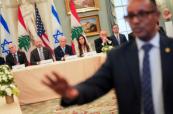
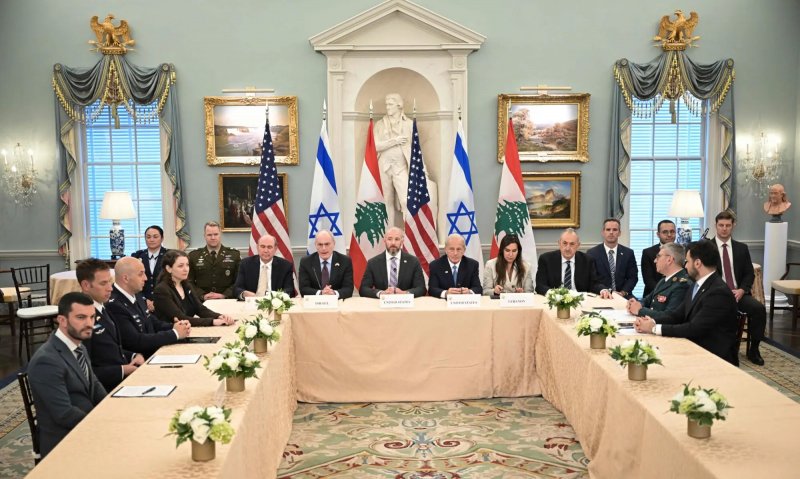
The agreement was reached during a fourth round of trilateral talks involving the US, Israel and Lebanon on June 2-3, according to a joint statement released on Wednesday. The framework is designed to reduce the risk of renewed conflict along the Israel-Lebanon border and create a pathway towards a broader political settlement between the two countries.
Israel is pushing for the withdrawal of all Hezbollah operatives from the area south of the Litani River, a longstanding Israeli demand that echoes provisions contained in UN Security Council Resolution 1701, which ended the 2006 Israel-Hezbollah war.
The creation of pilot security zones in southern Lebanon is part of a push to empower the Lebanese Armed Forces that are under government control to ensure Lebanese security, replacing the autonomous Hezbollah forces.
The talks come after months of military action that threatened to open a full-scale northern front alongside the Gaza conflict. Since late 2023, cross-border exchanges between Israel and Hezbollah have displaced tens of thousands of civilians on both sides of the border and raised fears of a wider regional war. More than a million refugees from southern Lebanon have been displaced by the current conflict.
Washington has increasingly prioritised efforts to stabilise Lebanon's southern border, viewing the conflict as one of the most dangerous flashpoints in the region. US officials have long argued that effective deployment of the Lebanese Armed Forces in the south is essential to reducing Hezbollah's military presence near Israel.
Hezbollah remains Lebanon's most powerful non-state military force and retains substantial political influence within the country. Previous efforts to fully implement the provisions of Resolution 1701 have largely failed, with both Israel and Hezbollah accusing each other of repeated violations.
Whether the framework can evolve into the broader peace agreement envisioned by its sponsors will depend on the willingness of Hezbollah, Lebanon's political leadership and Israel to sustain negotiations after years of conflict and mutual distrust.
Shaky ceasefire
The fourth round of Israel-Lebanon talks began in Washington on June 1 in the midst of ongoing attacks by Israel on Lebanon.
Despite US President Trump's announcement June 1 evening that Hezbollah had agreed that "all shooting will stop," and that Israel "agreed to stop shooting at them," rocket sirens sounded off across northern Israel three times shortly after midnight.
Early on June 2, the IDF said it intercepted two projectiles that crossed from Lebanon into Israel, and that a suspicious aerial target later fell inside Israeli territory.
While Trump took to Truth Social after his announcement to thank Israeli Prime Minister Benjamin Netanyahu for agreeing to call off "a major raid of Beirut," and said the two had a "very productive call," Axios later reported that the president "lashed out" at the premier during the "expletive-laden" call for putting talks with Iran in jeopardy by escalating operations against Hezbollah.
Trump also "claimed he'd helped keep Netanyahu out of jail," according to reports, a reference to his repeated calls that Netanyahu should be pardoned in his criminal corruption trial.
Following their call, Netanyahu said he told Trump that "if Hezbollah does not stop attacking our cities and citizens, Israel will attack terrorist targets in Beirut," adding that "the IDF will continue to operate as planned in southern Lebanon."
On June 2, Defence Minister Katz threatened that if Hezbollah "attacks continue, we will strike Dahiyeh in Beirut," referring to the section in the city that is under Hezbollah control.
According to Lebanese media, the IDF struck several southern Lebanese villages on June 2, killing four people. The IDF also re-issued an evacuation for the residents of Nabatieh, calling on them to immediately head north of the Zahrani River before it targets Hezbollah facilities in the area.
In Lebanon, Parliament Speaker Nabih Berri said he thanked his Iranian counterpart for what he described as Tehran's insistence that ending Israeli attacks on Lebanon be the first item addressed in any cease-fire agreement between the US and Iran.
Bne IntelliNews is a News.Az media partner. This article first appeared here


Similar news