Nasdaq jumps as oil retreats on Middle East optimism


U.S. equities rallied sharply on Tuesday, with investors responding to renewed optimism that tensions in the Middle East may begin to ease.
Markets were buoyed by signals suggesting a possible de-escalation in the ongoing conflict involving United States, Israel, and Iran, alongside indications that global oil supply disruptions could be less severe than previously feared.
RECOMMENDED STORIES
Major indices post strong gains
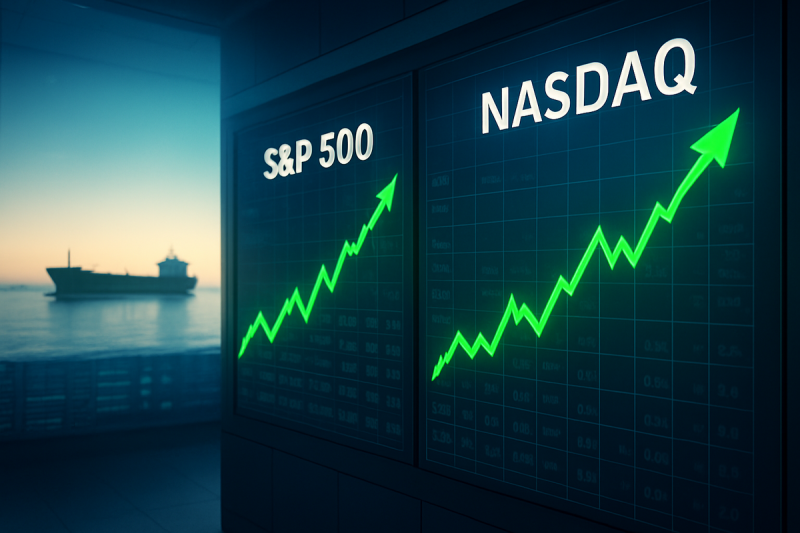
All three major U.S. stock indices recorded significant advances during the session. The benchmark S&P 500 rose by 2.6 percent to 6,508.11 points, while the tech-heavy NASDAQ Composite jumped 3.6 percent to 21,533.60 points. Meanwhile, the Dow Jones Industrial Average climbed 2.3 percent to 46,245.02 points.
The rally reflects a sharp shift in investor sentiment, driven by geopolitical developments rather than purely economic fundamentals.
De-escalation hopes drive investor optimism
Market sentiment improved after reports suggested that Donald Trump is open to winding down the conflict with Iran without necessarily securing the immediate reopening of the strategically critical Strait of Hormuz.
Further optimism came from statements attributed to Masoud Pezeshkian, who reportedly indicated that Iran is prepared to end the war if provided with credible security guarantees. These signals were interpreted by markets as a potential turning point in a conflict that has weighed heavily on global risk appetite.
Despite lingering skepticism among analysts regarding the durability of these developments, the immediate reaction in equities was strongly positive.
Oil prices retreat as tensions ease
Energy markets also reflected the shifting outlook. Oil prices, which had surged in recent weeks due to fears over supply disruptions, began to pull back following the latest developments.
The Strait of Hormuz, through which roughly one fifth of the world’s oil supply passes, has been a central flashpoint in the conflict. Any signs of stabilization in the region tend to have an outsized impact on global energy prices.
Lower oil prices are typically supportive for equities, as they reduce input costs for businesses and ease inflationary pressures on consumers.
Strategic importance of the Strait of Hormuz
The potential reopening or stabilization of the strait is viewed as essential for restoring normal oil flows and reducing volatility in global markets. Any prolonged closure could have far-reaching economic consequences, including inflation spikes and recession risks in energy-importing countries.
Policy signals from Washington
According to reports, the U.S. administration is weighing a strategy that prioritizes targeted military pressure on Iran’s naval and missile capabilities while simultaneously pursuing diplomatic avenues to de-escalate the conflict.
President Trump has suggested that the war may not last much longer, expressing confidence that the Strait of Hormuz will eventually reopen. At the same time, he has urged other countries to take a more active role in securing the waterway, signaling a potential shift in U.S. global security commitments.
These mixed signals have introduced both hope and uncertainty into the market narrative.
Inflation concerns remain in focus
Despite the positive momentum in equities, underlying economic concerns persist. Rising energy prices in recent weeks have already begun to feed into inflation data globally.
In Europe, inflation accelerated beyond the target set by the European Central Bank, while in the United States gasoline prices have climbed above four dollars per gallon for the first time since 2022.
Higher inflation could complicate monetary policy decisions, potentially forcing central banks to reconsider interest rate trajectories at a time when economic growth remains fragile.
Labor market signals raise caution
Economic data released on Tuesday painted a mixed picture of the U.S. labor market. While consumer confidence showed a modest improvement, job openings declined slightly, and hiring activity weakened.
The latest figures from the U.S. Bureau of Labor Statistics indicated that job openings fell to 6.882 million in February. The hiring rate dropped to its lowest level since early 2020, raising concerns about a potential slowdown in labor market momentum.
Economists warn that a prolonged geopolitical crisis could exacerbate these trends, particularly if business confidence deteriorates further.
Corporate developments and stock movers
On the corporate front, several notable developments influenced individual stock movements. Shares of Marvell Technology surged after the company announced an artificial intelligence infrastructure partnership with Nvidia, including a substantial investment.
Conversely, McCormick shares declined following news of a merger agreement with Unilever’s food business, forming a major global consumer goods entity.
Investors are also closely watching upcoming earnings from Nike, seeking insights into how geopolitical tensions may be affecting corporate performance and consumer demand.
Market outlook remains uncertain
While Tuesday’s rally reflects a surge in optimism, analysts caution that markets remain highly sensitive to geopolitical developments. The situation in the Middle East is fluid, and any reversal in de-escalation efforts could quickly reignite volatility.
At the same time, macroeconomic challenges including inflation, interest rates, and labor market dynamics continue to shape the broader investment landscape.
For now, the combination of easing oil prices and hopes for reduced geopolitical risk has provided a strong tailwind for equities. However, the sustainability of this rally will depend on whether diplomatic progress materializes and whether energy markets stabilize further.
Conclusion
The sharp rise in U.S. stocks underscores the powerful influence of geopolitical developments on financial markets. As investors navigate an environment marked by uncertainty and rapid change, the interplay between conflict dynamics, energy prices, and economic fundamentals will remain a critical driver of market direction in the weeks ahead.
By Faig Mahmudov


Similar news