Polish president sets up council for a new constitution draft


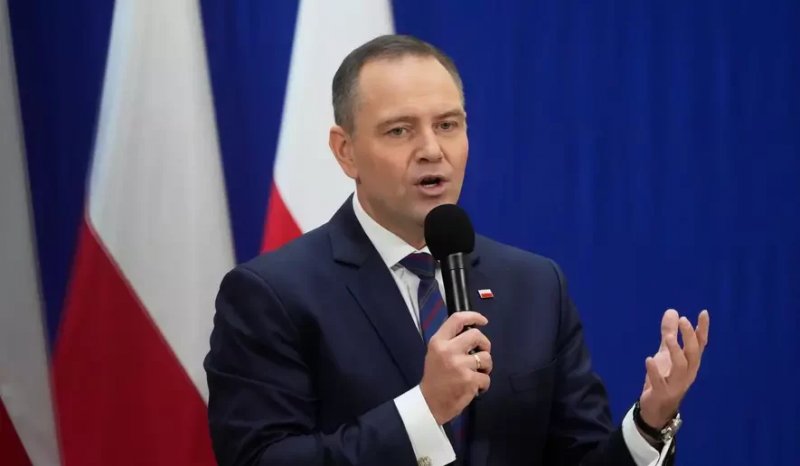
Polish President Karol Nawrocki has established a council to draft proposals for a new constitution, fulfilling a promise he made upon taking office last year.
The move was first announced on Sunday during Constitution Day celebrations, News.Az reports, citing foreign media.
RECOMMENDED STORIES
It comes amid ongoing tensions between the presidency and the ruling coalition, with Nawrocki vetoing multiple government bills, contributing to legislative deadlock in areas including judicial reform and defense spending.
Nawrocki said the new body would begin work on a “modernized” constitution suited to contemporary challenges, arguing that Poland faces “systemic problems” beyond day-to-day politics.
“It cannot go on like this, with power in Poland split between two centers,” he said, referring to institutional disputes and legislative gridlock.
However, any constitutional change requires a two-thirds majority in the Sejm, which the president-aligned with the opposition-does not have.
The initiative was immediately criticized by the government, which dismissed it as politically motivated and unworkable under current parliamentary arithmetic. Prime Minister Donald Tusk called the proposal “a political game” that risks adding confusion at a time when “Poland needs stability above all else.”
The president has so far appointed ten members to the council, including legal scholars and several figures linked to the opposition Law and Justice (PiS), which governed Poland from 2015 to 2023.
Among them is Julia Przylebska, the former head of the Constitutional Tribunal, whose tenure was widely criticized by government opponents as politically influenced.
Presidential spokesman Rafal Leskiewicz told Polsat News that the council would “brainstorm” proposals that could later be processed by parliament and potentially put to a referendum.
Poland’s current constitution was adopted in 1997 during the post-communist transition. Critics-particularly on the right-have long argued that it no longer reflects the country’s political and institutional realities.
In his speech, Nawrocki described the existing constitution as a “necessary compromise” shaped by the conditions of the 1990s, but said a “new-generation constitution” is now needed.
He also invoked the legacy of the 1791 constitution of the Polish-Lithuanian Commonwealth, widely regarded as Europe’s first modern constitution, as an example of national “self-correction.”
Deputy Prime Minister Wladyslaw Kosiniak-Kamysz said the priority should be adherence to the existing constitution rather than rewriting it.
With parliamentary elections due next year, the initiative is likely to become part of a broader political contest between the government and the opposition.
Current polling suggests that even a potential opposition victory would fall well short of the two-thirds majority required to amend the constitution, making Nawrocki’s proposal unlikely to advance beyond the conceptual stage in the near term.
By Ulviyya Salmanli


Similar news