Political spotlight grows on U.S. “One Big Beautiful Bill Act”


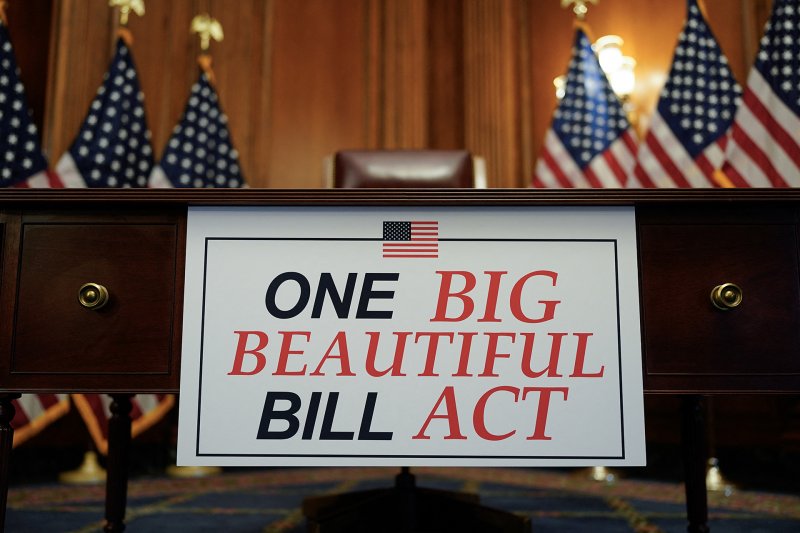
In recent months, one phrase has begun appearing repeatedly across American political conversation: the “One Big Beautiful Bill Act.” Whether used by supporters as a rallying cry or by critics as a point of debate, the slogan has quickly become one of the most searched and discussed themes related to U.S. policymaking. It reflects a broader trend in Washington toward bundling multiple policy priorities into a single, sweeping piece of legislation rather than pursuing them separately, News.Az reports.
This evergreen analysis explains what the term means, why it has attracted national and international attention, and what its rise signifies about modern governance, political communication, and public expectations from the U.S. Congress.
A slogan that speaks to today’s politics
The phrase “One Big Beautiful Bill Act” is not just legislative branding. It encapsulates an idea: rather than passing numerous smaller bills across different issue areas, lawmakers attempt to package major spending, regulatory, and policy initiatives into one comprehensive deal. Supporters argue this approach forces compromise and accelerates decision-making. Critics warn that combining unrelated measures can obscure debate, reduce transparency, and pressure lawmakers to support proposals they otherwise might reject.
The term resonates partly because it mirrors contemporary political rhetoric. Short, memorable slogans travel quickly across digital platforms, cable commentary, and political speeches. This particular slogan—optimistic, bold, and slightly theatrical—reflects how public communication has evolved in the social media era. It also highlights how political branding can shape perceptions of otherwise technical budget or policy negotiations.
What “one big bill” usually means in practice
In Washington, “one big bill” typically refers to an omnibus or comprehensive package. These can include budget appropriations, tax provisions, defense spending, infrastructure plans, healthcare measures, regulatory reforms, and economic relief programs—all rolled into a single legislative vote.
Historically, omnibus bills have been used in moments of urgency, such as economic downturns, natural disasters, or fiscal deadlines. In today’s polarized Congress, they have also become tools to avoid gridlock: combining priorities can help leadership assemble enough votes from different factions by ensuring each one receives at least part of what it wants.
However, the scale of these bills means they can run thousands of pages and be decided under intense political and media scrutiny. That is one reason the “One Big Beautiful Bill Act” has become a political flashpoint. The very concept raises questions about negotiation tactics, legislative transparency, and the balance of power between party leadership and individual lawmakers.
Why the political spotlight has intensified
Interest in the “One Big Beautiful Bill Act” has risen for several reasons.
First, it coincides with a broader debate over the role of government in the economy. Questions around industrial policy, national security, supply chains, energy strategy, healthcare access, and digital infrastructure increasingly converge in major spending bills. Citizens, businesses, and investors all want to know what direction policy is taking—and bundled legislation makes the stakes even higher.
Second, the U.S. remains the world’s largest economy and a global financial anchor. International observers watch major U.S. legislation closely, since federal spending decisions have ripple effects on markets, trade flows, and geopolitical strategy. A sweeping bill is therefore not just domestic news; it carries worldwide implications.
Third, the slogan has political appeal. It simplifies complex negotiations into a digestible idea: one major bill that “solves” multiple issues at once. In an era of sound bites and fast-moving news cycles, concise messaging matters.
Supporters argue it is efficient and decisive
Those who back the “One Big Beautiful Bill Act” approach emphasize several points. They argue that comprehensive legislation allows policymakers to address interconnected challenges. For example, energy policy links to climate objectives, manufacturing strategy, national security, and workforce development. Treating these as isolated issues, they say, can result in fragmented and inconsistent outcomes.
Supporters also contend that large bills force political compromise. When multiple priorities are included, both parties and competing internal factions must negotiate in good faith rather than blocking individual proposals outright. In theory, this helps break stalemates and ensures government continuity.
Another argument centers on administrative clarity. A single bill can provide clearer funding guidance for agencies, states, and businesses planning investment or operational decisions. Knowing federal priorities helps economic actors coordinate long-term strategy.
Finally, supporters point to historical precedents. Major U.S. legislative achievements—from infrastructure packages to social programs—have often been sweeping in scope. To them, “One Big Beautiful Bill Act” simply reflects how large-scale governance has functioned for decades.
Critics see risks in scale and speed
Opponents raise equally serious concerns. They argue that bundling unrelated measures can reduce democratic accountability. Lawmakers may feel compelled to vote for entire packages to secure one specific priority for their district or constituency, even if they oppose other provisions. This dynamic, critics warn, undermines meaningful debate.
Another concern is transparency. When bills span hundreds or thousands of pages and move quickly through Congress, journalists, watchdog groups, and even legislators may struggle to review the full contents before voting. This can erode public trust and feed perceptions that policymaking takes place behind closed doors.
Fiscal conservatives worry about cost escalation, arguing that combining programs increases overall spending because every negotiating coalition adds provisions rather than cutting them. Civil libertarians often caution that unrelated policy changes can be inserted into sweeping bills with limited scrutiny.
Finally, some critics argue that legislating by slogan risks oversimplifying complex tradeoffs. They prefer smaller, targeted bills where outcomes and accountability are clearer.
Public perception: hope, skepticism, and curiosity
Search trends around the “One Big Beautiful Bill Act” reveal a mix of curiosity and uncertainty. Many Americans want to know what the slogan means in practical terms. Others are trying to understand how potential legislation might affect taxes, business conditions, public services, or federal benefits.
The phrase also sparks broader reflection on political culture. Some citizens appreciate bold ambition and decisive problem-solving. Others see grand language as rhetorical theatre that distracts from the details that matter most.
International observers are similarly divided. Partners and allies often welcome U.S. investment in defense, energy, and infrastructure. However, global businesses also worry that sudden shifts in policy direction—or large changes in domestic subsidy structures—could reshape competitive dynamics in international trade.
The digital age impact
The rise of the “One Big Beautiful Bill Act” also illustrates how digital communication reshapes policy discourse. A viral phrase can influence coverage before details are even finalized. Commentary, speculation, and partisan response develop rapidly online, framing public expectations long before legislative text is published.
This environment rewards memorable language and rapid engagement, but it also pressures lawmakers to explain complex decisions in simplified terms. The result is a constant tension between political messaging and policy substance.
What the trend says about U.S. governance
Ultimately, the growing spotlight on the “One Big Beautiful Bill Act” underscores a deeper evolution in how governance works in a large, diverse democracy. As society and technology become more interconnected, policy issues overlap. Energy policy affects national security and climate. Healthcare policy intersects with workforce productivity and household finances. Technology regulation links to privacy, innovation, and global competition.
Comprehensive legislation is one response to this complexity. Whether it remains a dominant approach depends on political incentives, voter expectations, and institutional reforms. Calls for greater transparency and debate continue alongside calls for speed and decisiveness.
A balancing act that will continue
The phrase “One Big Beautiful Bill Act” may sound like political branding, but the themes it represents are serious and enduring. How much should government do in a single stroke? How do lawmakers balance negotiation with clarity? How can the public stay informed when legislation grows in size and scope?
These are not questions that will disappear after one bill or one election cycle. They speak to the heart of democratic governance in an age of rapid change.
As the spotlight intensifies, the world will continue to watch how the United States navigates big-bill politics—whether as a symbol of ambitious problem-solving or as a cautionary tale about the limits of grand legislative packaging. Either way, the debate surrounding the “One Big Beautiful Bill Act” is likely to remain a recurring feature of American political life for years to come.


Similar news