Putin says Russia is ‘ready’ to fight Europe: Geopolitical analysts decode Putin’s warning


.png)

Russian President Vladimir Putin has said Russia is “ready” to fight Europe if necessary, while insisting Moscow does not seek a broader conflict. His remarks come as renewed international attention focuses on possible peace negotiations over Ukraine. Putin stressed that Russia’s military posture should not be viewed as an attempt to escalate tensions, but rather as a response to what he described as ongoing security challenges.
European officials and analysts have taken note, interpreting the comments as part of the wider messaging surrounding the war and the diplomatic efforts underway. The statements underscore the complex environment in which potential negotiations are being weighed, with both sides offering sharply different views of security risks and political intent. As discussions continue, the situation remains fluid, and Putin’s remarks add another layer to the evolving dynamics among Russia, Europe, and Ukraine.
To shed light on these developments, News.Az Analytical Portal spoke with two political experts from Europe.
Hungarian security policy expert Attila Demkó told News.Az that Putin’s statement about being “ready” to fight Europe is notable primarily because the Russian president usually avoids making such explicit remarks about European–Russian relations. According to Demkó, Putin typically leaves this kind of messaging — or even stronger language — to former President Dmitry Medvedev. “So it is quite rare, and because it is rare, it is significant and, in a way, unfortunate,” he said.
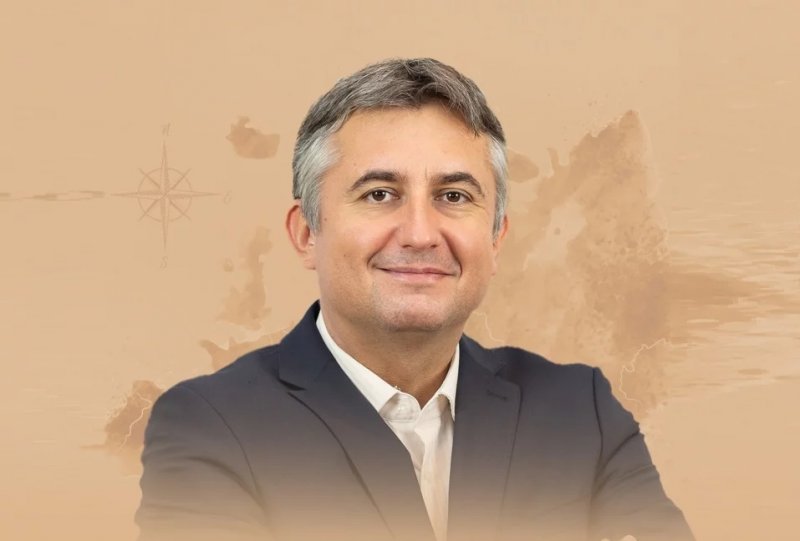
Demkó stressed that Putin’s comments should not be read as a direct military threat. While Putin alluded to a nuclear response in the event of a conflict with Europe, the expert pointed out that European states are NATO allies of the United States, itself a nuclear superpower. “There are also two other nuclear powers within Europe – France and the United Kingdom. So I would not say that Russia would endanger itself in such a conflict,” he noted.
He believes Putin’s remarks reflect growing frustration with Europe and serve a clear political purpose. The comments will now circulate widely across Europe, Demkó said, and many will interpret them as Russia threatening Europeans with nuclear annihilation. Yet he emphasized that the country left out of Putin’s message — the United States — remains central and cannot be ignored.
Demkó also argued that Europe bears part of the responsibility for escalating rhetoric. He said some European politicians continue to operate under unrealistic assumptions about the possible outcomes of the war in Ukraine, in contrast to what he described as the more pragmatic approach of the United States. “Statements claiming Russia is preparing an attack, that Russia can be defeated in Ukraine, or even that Russia could be divided after a defeat still appear in Europe. We should not be surprised that the Russians don't take it lightly,” he said.
The expert reiterated that Russia currently holds the advantage on the battlefield and that no foreseeable developments are likely to reverse this. For this reason, he argued, both Russia and Europe must adopt greater strategic caution and patience. “We have to avoid any escalation. I don’t see it coming, but the words also matter. They are not a real threat yet,” Demkó stated.
He stressed that all sides should prioritize securing a ceasefire in Ukraine as the first step toward any future peace agreement. While acknowledging that such a peace might not feel “just,” he argued that it could still be preferable to a prolonged war. “Even an unjust peace can be better than a just war if the war is lost by those who were attacked,” he concluded.
European Parliament geopolitical analyst and policy strategist Marián Ďuriš told News.Az that statements like those made by Russian President Vladimir Putin are “quite complex” and must be understood within the logic of current geopolitical circumstances.
Ďuriš noted that Europe is witnessing an active military conflict alongside discreet peace negotiations in the background — negotiations in which the main actors are the United States and the Russian Federation, not Europe. “The military conflict is not developing positively for Ukraine,” he said, explaining that Ukrainian forces are facing exhaustion, ammunition shortages, and delayed deliveries of foreign military aid. Russia, meanwhile, retains “significant material and manpower advantages,” allowing it to sustain pressure across multiple fronts.
According to Ďuriš, Europe’s limited role in peace talks stems from “reckless, ideological decisions in both economic and foreign policy, mainly executed by the European Commission.” Only a small number of national leaders are meaningfully engaged, he added.
Commenting on Putin’s latest remarks, Ďuriš stressed that global and regional powers typically pursue their interests with a force proportional to their geopolitical capabilities. “We have seen dozens of such cases over the past decades,” he said. Much of this rhetoric — regardless of the actor — serves as strategic signaling intended to influence negotiations, shape other players’ behavior, guide analytical assessments, and affect public opinion.
Ďuriš cautioned that many information channels may overestimate the significance of Putin’s words but insisted they should be viewed “rationally and with one’s feet on the ground.” He underlined that communication and mutual understanding remain essential. “That is the task of diplomats – to work better and more effectively, and not succumb to the fashionable trend of ideological interpretations and approaches,” he concluded.


Similar news