Yandex metrika counter
Why is Taiwan becoming the most dangerous flashpoint between China and the U.S.?
Source: Xinhua

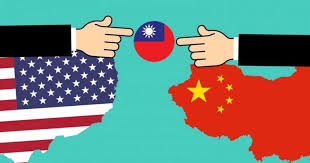
Taiwan has become the most dangerous and strategically sensitive issue in relations between China and United States, with growing fears that tensions surrounding the island could eventually trigger the world’s most consequential geopolitical conflict.

Over recent years, military activity around Taiwan increased dramatically as Beijing intensified pressure on the island while Washington strengthened political and military support.

Chinese military exercises, American naval operations, arms sales, semiconductor competition, and rising nationalist rhetoric on all sides transformed Taiwan into the central flashpoint in the broader U.S.-China rivalry.

For China, Taiwan represents a core sovereignty issue tied directly to national identity, territorial integrity, and the political legitimacy of the Chinese Communist Party.

For the United States, Taiwan plays a critical role in Indo Pacific security, regional alliances, semiconductor supply chains, and the global balance of power.

Many analysts increasingly warn that the Taiwan issue represents the most likely scenario for direct military confrontation between the world’s two largest powers.

At the same time, Taiwan itself occupies a highly complicated position.

The island operates as a democratic self governed entity with its own political system, military, economy, and foreign relations, yet Beijing insists it remains part of China.

Most Taiwanese citizens support maintaining the current status quo rather than immediate unification or formal independence.

The result is an extremely fragile geopolitical situation involving military deterrence, strategic ambiguity, economic interdependence, and rising nationalism.

How the Taiwan issue evolves may ultimately shape the future of Asia and the global international order.

Why is Taiwan so important to China?

For Beijing, Taiwan is far more than a foreign policy issue.

Chinese leaders consider Taiwan an inseparable part of China historically and politically.

The Chinese government argues the island must eventually be reunified with the mainland, peacefully if possible but by force if necessary.

This position became one of the most sensitive and emotionally charged issues in Chinese politics.

The Chinese Communist Party presents reunification as part of national rejuvenation after what Beijing describes as historical humiliation by foreign powers during the nineteenth and twentieth centuries.

Allowing Taiwan to remain permanently separate would therefore carry major political and symbolic implications for Chinese leadership.

President Xi Jinping repeatedly emphasized that reunification cannot be postponed indefinitely.

As a result, Taiwan became directly connected to Chinese nationalism, regime legitimacy, and long term strategic ambition.

Why does Taiwan matter so much to the United States?

The United States views Taiwan as strategically important for several reasons.

First, Taiwan occupies a highly significant geographic position in the western Pacific near major shipping lanes and regional military routes.

Second, the island plays a critical role in the broader Indo Pacific balance of power involving China, Japan, South Korea, and American alliances across Asia.

Third, Taiwan dominates global semiconductor manufacturing through companies such as TSMC.

Advanced semiconductors produced in Taiwan are essential for smartphones, artificial intelligence, military systems, automobiles, and modern electronics worldwide.

American policymakers increasingly argue that allowing China to gain control over Taiwan could significantly alter the regional balance of power and threaten technological supply chains.

The United States therefore provides military support and maintains close unofficial relations with Taipei despite officially recognizing Beijing diplomatically.

What is the “One China” policy?

The “One China” policy forms the diplomatic foundation of U.S.-China relations.

Under this framework, the United States officially recognizes the government in Beijing as the sole legal government of China while acknowledging the Chinese position that Taiwan is part of China.

However, Washington does not explicitly endorse Beijing’s sovereignty claim over Taiwan.

Instead, the United States maintains unofficial relations with Taiwan including arms sales, economic cooperation, and political engagement.

This carefully ambiguous approach allowed both Washington and Beijing to maintain diplomatic relations for decades while avoiding immediate confrontation over Taiwan.

However, growing tensions increasingly strain this delicate balance.

Why is strategic ambiguity important?

The United States traditionally followed a policy known as “strategic ambiguity” regarding Taiwan.

This means Washington deliberately avoided clearly stating whether American forces would directly defend Taiwan in the event of Chinese military action.

The goal was to deter both sides simultaneously.

China would remain uncertain about potential U.S. military intervention, while Taiwan would also avoid assuming unconditional American backing for formal independence.

In recent years, however, some American officials and analysts argued that ambiguity may no longer sufficiently deter China.

Debates therefore intensified regarding whether Washington should adopt clearer security commitments toward Taiwan.

Beijing strongly opposes any moves suggesting formal military alliance or diplomatic recognition of Taiwan as an independent state.

Why are military tensions increasing?

Military tensions increased dramatically because both sides increasingly view the strategic environment as becoming more dangerous.

China rapidly modernized its military including naval expansion, missile systems, cyber capabilities, and air force development.

Chinese military aircraft and naval vessels now operate around Taiwan far more frequently than in previous decades.

Large scale military exercises near the island became increasingly common.

Meanwhile, the United States expanded military cooperation with regional allies including Japan, Australia, and the Philippines.

Washington also approved additional arms sales to Taiwan and increased military presence across the Indo Pacific.

Both sides accuse each other of destabilizing the region.

As military activity intensifies, risks of accidents or miscalculation also increase.

Why are semiconductors making Taiwan even more important?

Taiwan’s semiconductor industry transformed the island into one of the world’s most strategically important economic centers.

TSMC produces many of the world’s most advanced chips essential for artificial intelligence, data centers, military systems, smartphones, and modern electronics.

Global dependence on Taiwanese semiconductors became a major geopolitical concern.

Many governments fear that conflict around Taiwan could devastate global supply chains and trigger economic crisis.

The semiconductor issue also intensified U.S.-China technological rivalry.

Washington imposed export controls limiting China’s access to advanced chips and semiconductor manufacturing equipment.

China meanwhile accelerated efforts to develop domestic semiconductor capabilities.

Taiwan therefore sits at the center of both geopolitical and technological competition simultaneously.

How do Taiwanese people view the situation?

Public opinion in Taiwan is highly complex.

Most people support maintaining the current status quo rather than immediate unification with China or formal declaration of independence.

Taiwan developed a distinct democratic political identity over recent decades.

Many residents increasingly identify primarily as Taiwanese rather than Chinese.

At the same time, most citizens also wish to avoid war and maintain stability.

Taiwan’s political parties differ regarding relations with Beijing.

Some favor closer engagement with China, while others emphasize stronger Taiwanese identity and international partnerships.

The population therefore generally seeks security, prosperity, and preservation of democratic governance while avoiding direct military confrontation.

Why is nationalism making tensions worse?

Nationalism strongly influences political calculations on all sides.

In China, Taiwan is often framed as a sacred national issue tied to sovereignty and historical justice.

Public opinion strongly supports reunification.

In Taiwan, younger generations increasingly identify with separate Taiwanese identity and democratic values.

In the United States, growing bipartisan concern about China’s rise increased support for Taiwan politically and strategically.

Nationalist sentiment can make compromise more difficult because leaders face domestic pressure not to appear weak.

As rhetoric intensifies, diplomatic flexibility sometimes decreases.

Could China actually invade Taiwan?

China possesses growing military capabilities that many analysts believe could eventually support large scale operations against Taiwan.

However, an invasion would remain extremely risky and complex.

Taiwan is separated from mainland China by the Taiwan Strait, creating major logistical and military challenges.

Any conflict could involve enormous casualties, economic disruption, and potential international intervention.

The United States has never explicitly guaranteed military intervention, but many experts believe Washington would likely become involved in some capacity.

Japan and regional allies could also be affected.

Because Taiwan is central to global semiconductor production, conflict would likely trigger worldwide economic consequences.

As a result, many analysts believe all sides still prefer deterrence and avoidance of war despite rising tensions.

Why is the Indo Pacific so strategically important?

The Indo Pacific became the center of global geopolitical competition largely because of China’s rise.

The region contains major shipping lanes, advanced economies, military alliances, and critical trade routes.

The United States increasingly views maintaining influence in the Indo Pacific as essential for preserving global leadership.

China meanwhile seeks greater regional influence and security near its coastline.

Taiwan sits directly at the center of this strategic geography.

Control over Taiwan could significantly affect naval access, military positioning, and regional power balances.

As a result, Taiwan’s future became inseparable from broader Indo Pacific competition.

How are U.S. alliances connected to Taiwan?

American allies across Asia closely monitor Taiwan tensions because conflict would likely affect the entire region.

Japan especially considers Taiwan’s security highly important because of geographic proximity and shipping routes.

The United States strengthened security cooperation with Japan, Australia, South Korea, and the Philippines partly in response to China’s growing military influence.

New frameworks such as AUKUS also reflect broader strategic competition in the Indo Pacific.

China views some of these partnerships as containment efforts directed against Beijing.

How does China pressure Taiwan without war?

China increasingly uses so called “gray zone” tactics falling below the threshold of open war.

These include military flights near Taiwan, naval patrols, cyber operations, economic pressure, diplomatic isolation, and disinformation campaigns.

Beijing also pressures countries and international organizations not to recognize Taiwan diplomatically.

The goal is partly to weaken Taiwan psychologically and politically while demonstrating Chinese power without triggering direct conflict.

Taiwan meanwhile strengthens defense preparations and international partnerships in response.

Why is technology central to the conflict?

Technology became deeply connected to Taiwan tensions because semiconductors, artificial intelligence, cyber warfare, and digital infrastructure increasingly influence global power.

The U.S.-China tech rivalry intensified competition over chip manufacturing and advanced computing.

Taiwan’s semiconductor dominance therefore carries enormous strategic value.

Governments increasingly view technological leadership as directly connected to national security and military power.

As a result, Taiwan became both a geopolitical and technological flashpoint simultaneously.

Could diplomacy still prevent conflict?

Yes.

Despite rising tensions, all sides still maintain strong incentives to avoid war.

China prioritizes long term economic development and stability.

The United States seeks to prevent catastrophic military confrontation between nuclear powers.

Taiwan wants security and preservation of democratic governance without destruction.

Diplomatic engagement, crisis communication, and deterrence therefore remain critically important.

However, the margin for error may be shrinking as military activity and political mistrust continue increasing.

What does the future look like?

Taiwan will likely remain the most dangerous and strategically important issue in U.S.-China relations for the foreseeable future.

Military competition, technological rivalry, nationalism, and geopolitical distrust are all intensifying simultaneously.

At the same time, all parties recognize the catastrophic consequences a war would bring economically and militarily.

The future may therefore depend on whether deterrence, diplomacy, and strategic caution can successfully prevent escalation.

How the Taiwan issue evolves may ultimately determine not only the future of East Asia but also the stability of the entire global order in the twenty first century.


News.Az 

By Faig Mahmudov

Similar news

Archive

Prev Next
Su Mo Tu We Th Fr Sa
  1 2 3 4 5 6
7 8 9 10 11 12 13
14 15 16 17 18 19 20
21 22 23 24 25 26 27
28 29 30 31