Louisiana Senate passes bill to scrap majority-Black congressional district


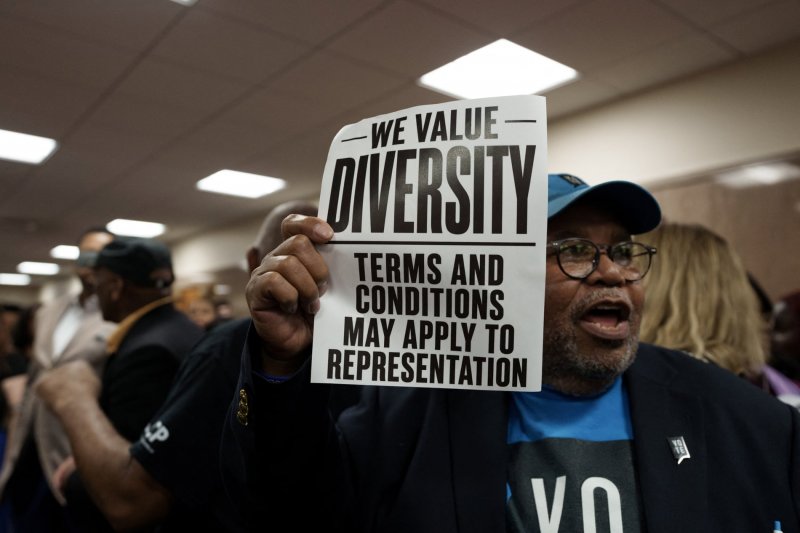
The Louisiana State Senate has voted 27–10 to pass a controversial new congressional map that eliminates one of the state's two majority-Black House districts. If the redrawn boundaries clear the State House, the map is highly anticipated to secure a dominant 5–1 congressional majority for Louisiana Republicans.
The legislative push follows a recent U.S. Supreme Court decision in Louisiana v. Callais, which centered on the state's electoral lines and significantly weakened the Voting Rights Act (VRA). The fallout from the ruling has been immediate, sparking a broader trend across several Southern states to call special legislative sessions aimed at redrawing maps to dilute Black voting power. Following the judicial decision, Republican Governor Jeff Landry took the unprecedented step of suspending the state's ongoing House primary elections—an aggressive move that has drawn fierce criticism, especially since over 45,000 absentee ballots had already been cast, News.Az reports, citing The Guardian.
The newly proposed map heavily mirrors the 2022 boundaries that previously locked in a 5–1 Republican advantage. The changes would drastically reshape District 6—currently held by Democrat Cleo Fields—by dismantling its 250-mile, majority-Black configuration stretching from Shreveport down to Baton Rouge, turning it into a predominantly white, Republican-leaning suburban district. Meanwhile, District 2, represented by Democrat Troy Carter, would remain the state's sole majority-Black district, anchoring New Orleans and parts of Baton Rouge.
RECOMMENDED STORIES
The legislation, Senate Bill 121, now moves to the State House, where lawmakers face a strict June 1 deadline to finalize the map. Concurrently, the legislature approved a bill shifting the upcoming election to an open primary on November 3, placing all candidates on a single ballot regardless of party. While Democratic lawmakers have passionately condemned the redistricting as a racially motivated regression, they lack the legislative leverage to block the measure due to the Republican party holding veto-proof supermajorities in both chambers.
By Aysel Mammadzada


Similar news