Shrinking habitats put global plant species at risk


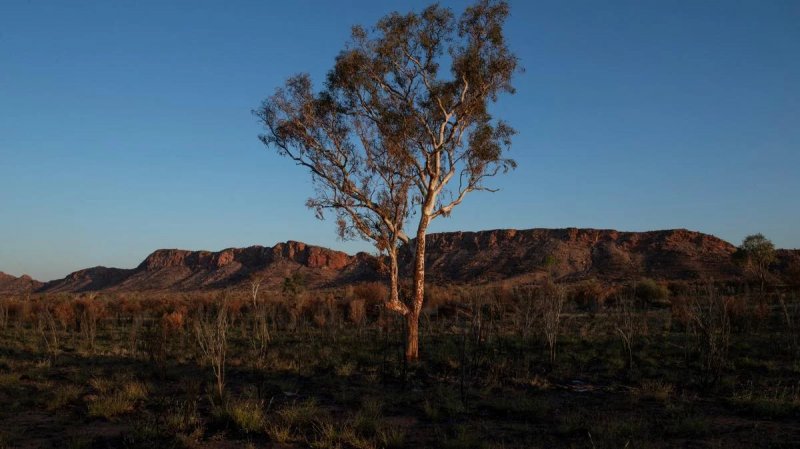
Scientists warn that some of the plants that define familiar landscapes may not survive by the end of the century, as climate change increasingly drives species loss by altering and often reducing the habitats they depend on.
Researchers modelled future ranges for numerous species of vascular plants, a category that accounts for almost all the world's plants - those with water- and nutrient-carrying tissues. They looked at more than 67,000 species, meaning about 18% of the world's known vascular plants, News.Az reports, citing Miami Herald.
RECOMMENDED STORIES
They found that 7% to 16% could lose more than 90% of their range, placing them at high risk of extinction. Examples include Catalina ironwood, or island ironwood, a rare endemic California tree, bluish spike-moss from a plant lineage dating back more than 400 million years, and roughly one third of Eucalyptus species, one of Australia's most recognizable plant groups.
The researchers came to their estimates after examining millions of records on plant locations as well as greenhouse-gas emissions scenarios for 2081-2100.
A plant's habitat is not simply a place on a map, but the full array of conditions it needs: temperature, rainfall, soils, land use and landscape features such as shade.
"One way to picture this is to imagine plants trying to follow a moving 'climate envelope.' As temperatures warm, many species can shift northward or uphill to stay cool enough. But temperature is only part of the story," Junna Wang, a Yale University postdoctoral researcher, and Xiaoli Dong, a professor of environmental science and policy at the University of California, Davis, said in joint comments to Reuters.
Wang and Dong helped lead the study published in the journal Science.
In many places, the study indicated, climate change is shrinking these combinations, leaving fewer areas where all the conditions that a species needs still exist together.
For plants, movement, or dispersal, usually happens across generations, via seeds or spores carried by wind, water, animals or gravity. Yet when the researchers compared realistic movement with a scenario in which plants could reach any newly suitable habitat, extinction rates were very similar.
"If slow movement were the main problem, then allowing unlimited dispersal should dramatically reduce extinction risk. But that is not what we found," Wang and Dong said. That matters for conservation. "If dispersal limitation were the main driver, then strategies like assisted migration - physically helping species move to new areas - could solve much of the problem. But if climate change is reducing the amount of suitable habitat overall, then simply helping species move may not be enough," they added.
By Ulviyya Salmanli


Similar news