Spanish, French, and American passengers infected with hantavirus


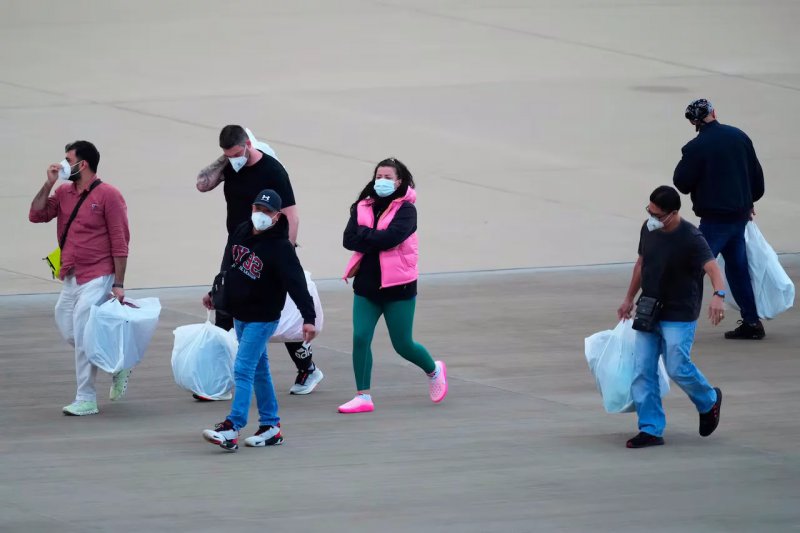
Passengers from a cruise ship affected by a deadly hantavirus outbreak were flown home on Monday to over 20 countries and placed under quarantine, including a Spaniard, a French woman, and an American who tested positive.
The passengers began flying home aboard military and government planes Sunday after the vessel anchored in the Canary Islands. Personnel in full-body protective gear and breathing masks had escorted the travellers from the MV Hondius to shore in Tenerife in an effort that continued Monday, News.Az reports, citing CBC.
RECOMMENDED STORIES
By Monday afternoon, Oceanwide Expeditions confirmed that all guests and a limited number of crew members had been successfully transferred from Hondius to waiting aircraft. In all, it said 35 crew and 87 guests were being repatriated to their home countries, while 25 crew members and two medical professionals remained on board to accompany the ship back to the Netherlands.
Three cruise ship passengers have died, and the World Health Organization (WHO) said on Monday there were now seven confirmed cases of the Andes strain of hantavirus, and two other suspected cases — one who died before being tested, and one on Tristan da Cunha, a remote South Atlantic island where there were no tests available.
Health authorities say the risk to the broader public is low from the first-ever hantavirus outbreak on a cruise ship. While there is no cure or vaccine for hantavirus, the WHO says early detection and treatment improves survival rates.
The ship's captain, Jan Dobrogowski, issued a video message Monday praising passengers and crew for their perseverance and calling for respect for their privacy.
Captain of hantavirus-hit ship thanks guests and crew for 'quiet strength' and kindness
Jan Dobrogowski, captain of the MV Hondius, released a video message on Monday thanking both his passengers and his crew for the support and care they demonstrated for one another as the cruise ship was hit with cases of the Andes hantavirus. Dobrogowski, who offered condolences to those who died, asked for privacy as they work to get passengers safely home."I've witnessed your caring, your unity and quiet strength amongst everybody onboard — guests and crew alike — and I must commend my crew for the courage and the selfless resolve that they showed time and again in the most difficult moments," he said in a Monday video message.
"I could not imagine sailing through these circumstances with a better group of people, guests and crew alike."
New cases in 3 passengers
One Spaniard who is quarantining in Madrid after being evacuated from the ship in Tenerife tested positive for hantavirus, the Health Ministry said on Monday.
The remaining 13 Spaniards quarantining at the same military hospital tested negative for the virus, the ministry said in a statement
The patient presented no symptoms and was in a good condition, it added. Additional tests were being done and a definitive result would be known in the coming hours.
A French woman also tested positive for hantavirus, and her health worsened in the hospital overnight, French Health Minister Stephanie Rist said Monday. The woman was among five French passengers repatriated Sunday to Paris and developed symptoms on the flight, Rist told public broadcaster France-Inter.
One of 18 passengers evacuated from the ship and flown to Nebraska also tested positive for the hantavirus but is not showing any symptoms, while another had mild symptoms, U.S. health officials said late Sunday.
After landing in Nebraska early Monday, the American passengers were being taken to the University of Nebraska Medical Center, which has a federally funded quarantine facility. Once there, they were being assessed to determine whether they have been in close contact with any symptomatic people and whether they were at risk of spreading the virus.
"The passenger who is going to the Biocontainment Unit tested positive for the virus but does not have symptoms," said Kayla Thomas, a spokesperson for the Nebraska Medicine network that will help care for the passengers.
Man being treated in South Africa improving
The university medical centre also has a special unit for treating people with highly infectious diseases that was used early in the pandemic for COVID-19 patients and previously for Ebola patients.
A Dutch plane carried passengers that were previously going to be evacuated on a plane sent by Australia, Spain's Health Minister Mónica García said.
South African health authorities said on Monday that the condition of a British man admitted to a hospital in Johannesburg and being treated for hantavirus was gradually improving. He was evacuated from the ship on April 27 after becoming ill.
The Hondius left the southern Argentine port of Ushuaia on April 1 and a Dutch passenger died on board April 11. It wasn't until early May that the WHO said it was reacting to a suspected hantavirus outbreak on the ship, which by that time was off the West African island nation of Cape Verde.
Canadians land in Victoria
Four Canadians who disembarked landed Sunday in B.C., where they will continue their quarantine.
Online plane tracking platform FlightAware says the aircraft carrying the Canadians arrived at the airport in Victoria from Saguenay-Bagotville Airport in Quebec.
They are to isolate in B.C. because they have connections with the province, said B.C's health officer, Dr. Bonnie Henry.
WHO director general Tedros Adhanom Ghebreyesus has stressed that the general public should not be worried about the outbreak. "This is not another COVID. And the risk to the public is low. So they shouldn't be scared, and they shouldn't panic," he said Sunday.
Hantavirus usually spreads from rodent droppings and is not easily transmitted between people. But the Andes strain detected in the cruise ship outbreak may be able to spread between people in rare cases. Symptoms usually show between one and eight weeks after exposure.
The WHO is recommending that passengers' home countries "have active monitoring and follow-up, which means daily health checks, either at home or in a specialized facility," said Maria Van Kerkhove, the WHO's director of epidemic and pandemic preparedness.
By Ulviyya Salmanli


Similar news