Support from allies and Armenia's military plans bring third Karabakh war closer


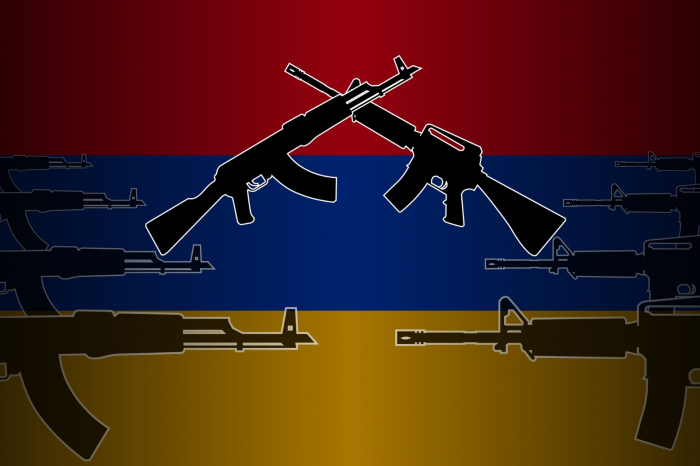
Armenia, seemingly genuinely believing in the support of its foreign allies, has become emboldened and is actively increasing its military potential. Despite the devastating defeat and significant losses in the 2020 war and border clashes with Azerbaijan, the Armenian leadership has not abandoned its revanchist plans. On the contrary, it has embarked on large-scale rearmament, investing significant resources in acquiring modern weapons. However, these reckless actions may lead to the direst consequences for Armenia.
Recently, French Armed Forces Minister Sébastien Lecornu announced on the social network X that a contract had been signed between Yerevan and Paris for the supply of CAESAR self-propelled artillery systems (SPGs). "We continue to strengthen our defense relations with Armenia. We had a warm and productive conversation with my counterpart Suren Papikyan. A new important milestone is the signing of a contract for the acquisition of CAESAR guns," the French minister said. This cooperation underscores the close ties between the two countries and strengthens Armenia's military power.According to open source reports, Armenia will purchase 36 SPGs, with the estimated contract amounting to around 180 million euros. But Yerevan's interest in purchasing French weapons was not limited to the CAESAR SPGs. In June 2023, Emmanuel Dupuy, director of the Institute for Forecasting and Security in Europe (IPSE), announced that France would supply Armenia with 50 VAB MK3 armored personnel carriers. At that time, the possibility of Armenia purchasing Bastion and Sherpa armored vehicles produced by the French company Arquus was also discussed. In December last year, it was officially announced that the first 24 Bastion armored vehicles were delivered to Armenia. These deals show Yerevan's determination to strengthen its army and prepare for possible confrontations.
At the end of October last year, Papikyan and Lecornu met in Paris to discuss new opportunities for developing cooperation. As a result, Yerevan acquired three GM200 radars produced by Thales Group and signed a memorandum of understanding for the supply of French short-range air defense systems Mistral in the future. This agreement highlights Armenia's further plans to strengthen its air defense.
The purchase of CAESAR SPGs from France is just one step in Armenia's path to militarization. Yerevan has also signed multimillion-dollar contracts for the supply of various weapons from India. Recently, Armenia signed a contract with New Delhi worth about $245 million, including the purchase of Pinaka multiple rocket launch systems, anti-tank missile systems, and ammunition. This indicates Armenia's desire to diversify its sources of weapons and strengthen its military capabilities.
In August 2023, Armenia received the first batch of Indian towed artillery systems (ATAGS), with the contract providing for the supply of another 84 howitzers worth $155.5 million. Additionally, Armenia is interested in purchasing Indian Akash air defense systems, the cost of which could reach up to $720 million. There were also reports of plans to acquire Indian TAPAS-BH-201 (Rustom-II) strike drones and anti-drone systems. These purchases demonstrate Yerevan's extensive efforts to modernize its army and prepare for potential hostilities.
All these facts indicate that Armenia is actively preparing for another war. Moreover, it is the initiator of this war. In January this year, Azerbaijani President Ilham Aliyev emphasized in an interview with local television channels: "We are closely monitoring all attempts at military construction in Armenia, both on their own and with the help of their partners. Therefore, I have openly stated that if we see even the slightest threat to our security, this threat will be immediately neutralized." This statement clearly indicates Azerbaijan's determination to defend its territorial integrity.
President Aliyev made it clear that Azerbaijan is firmly committed to protecting its sovereignty. In May this year, at a meeting with residents of Shusha, Aliyev once again warned the hotheads in Yerevan: "If we again see that revanchists in Armenia are raising their heads, that France is giving Armenia lethal weapons, if we see that this weaponry has reached a critical level, then let no one blame us. Everyone knows what we are capable of, what our army is capable of, and how firm our resolve is. No one can stand up to us." These words confirm Azerbaijan's readiness to respond to any threats from Armenia.
Armenia is not only trying to disrupt peace negotiations and stage military provocations but also continues its destructive activities on the political front. Azerbaijan has repeatedly stated the need to amend the Armenian constitution to eliminate any territorial claims to its neighbors. However, Yerevan ignores Baku's fair demands, refusing to make constitutional changes, thus demonstrating its revanchist nature. This behavior undermines regional stability and hinders the peaceful resolution of the conflict.
Firstly, Armenia has not abandoned its territorial claims against Azerbaijan and Turkey. This shows Yerevan's intention to further destabilize the region. Secondly, Armenia is actively arming itself and preparing for revenge. The purchase of weapons from France and India, seeking new patrons, expanding the EU's spy mission in the country, and the intention to deploy a French military base all indicate that a third Karabakh war is almost inevitable. Pashinyan seems to have forgotten the lessons of the recent past. But the "Iron Fist" has become even stronger, and its power will once again be fully felt by Armenia's military-political leadership and army.
By following revanchist plans and actively increasing its military potential, Armenia risks facing serious consequences. The support of allies and the purchase of weapons could lead to an escalation of the conflict, which could be catastrophic for the country. Peace negotiations and diplomatic efforts remain the only sensible and sustainable solution for long-term stability in the South Caucasus.
P.S. Peace negotiations and diplomatic efforts remain the only sensible and sustainable solution for long-term stability in the South Caucasus. History has repeatedly shown that conflicts based on revanchist ambitions and foreign support only lead to further violence and suffering. Instead of militarization and preparation for war, Armenia should focus on peaceful dialogue and cooperation with its neighbors to ensure prosperity and security for its people and the entire region. A third Karabakh war would be a great tragedy for Armenia...
(If you possess specialized knowledge and wish to contribute, please reach out to us at opinions@news.az).


Similar news