World Bank approves $372m loan for Georgia rail and road upgrades


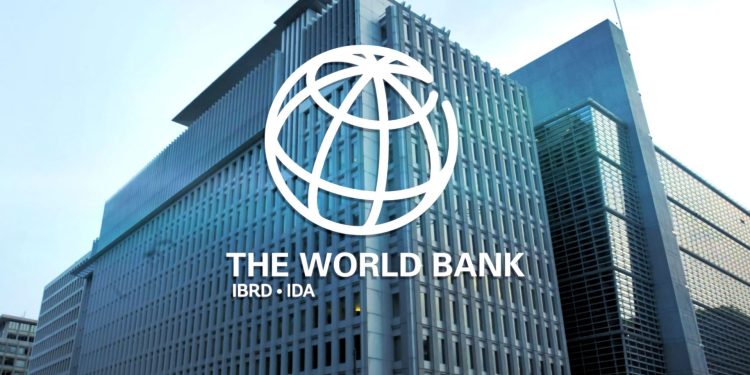
The World Bank has approved a $372 million loan for Georgia to upgrade its rail and road infrastructure as part of the Trans-Caspian International Transport Route, known as the Middle Corridor, which links Europe and Asia while bypassing Russia.
The decision by the bank’s board unlocks broader financing for the TC-GATE project (Trans-Caspian Transport Corridor – Gateway to Europe and Asia, and Transport Enhancement), with a total cost exceeding $750 million. In addition to World Bank funding, Georgia is expected to secure $182 million from the Asian Infrastructure Investment Bank and $175 million from the Asian Development Bank, News.Az reports, citing News Georgia.
“These investments will help Georgia fully realise its potential as a key transit hub between Europe and Asia, while meeting growing demand for the Trans-Caspian Transport Corridor driven by shifts in global trade flows and the need to diversify supply chains,” said World Bank Regional Director for the South Caucasus Roland Pryce.
RECOMMENDED STORIES
The Middle Corridor is a multimodal route running through the Caspian Sea, the South Caucasus and Türkiye. Interest in the route has increased significantly since Russia’s full-scale invasion of Ukraine and the disruption of traditional trade routes, with European countries seeking alternatives that avoid Russian territory.
Georgian Finance Minister Lasha Khutsishvili described the project as supporting “growing international trade flows and diversification of supply chains”.
“With this new project, Georgia is strengthening its role as a reliable and competitive link between Europe and Asia. Together with international partners, we aim to build a modern transport network that will serve the region for decades,” he said.
The funding will be allocated across three main areas: rail modernisation, road construction in the eastern Kakheti region, and transport sector reforms.
The railway component includes the purchase of new energy-efficient electric locomotives to replace ageing rolling stock, improving locomotive availability to 95%, increasing revenues by around 20%, and reducing net emissions by more than 2.3 million tonnes.
Road works will focus on two four-lane sections of the Badiuri–Chalaubani–Bakurtsikhe route, as well as a new road linking the cities of Gurjaani and Telavi. Officials say the upgrades will cut travel time between Telavi and the Black Sea port of Poti by around 43 minutes.
Reforms include the introduction of intelligent transport systems, the creation of a National Road Management Centre, and support for women entrepreneurs in Kakheti.
According to News Georgia, the Georgian Dream government has increasingly framed large-scale transport and logistics projects as central to its international positioning, as relations with the United States and the European Union remain strained over concerns about democratic backsliding and ties with Russia.
In April, Foreign Minister Maka Botchorishvili said: “No one can replace Georgia’s function and importance. It is ironic when the European Union speaks about connectivity but does not invite the main country through which that connectivity is realised. In this case, only Europe loses.”


Similar news