Tesla's Full Self-Driving faces tough EU scrutiny


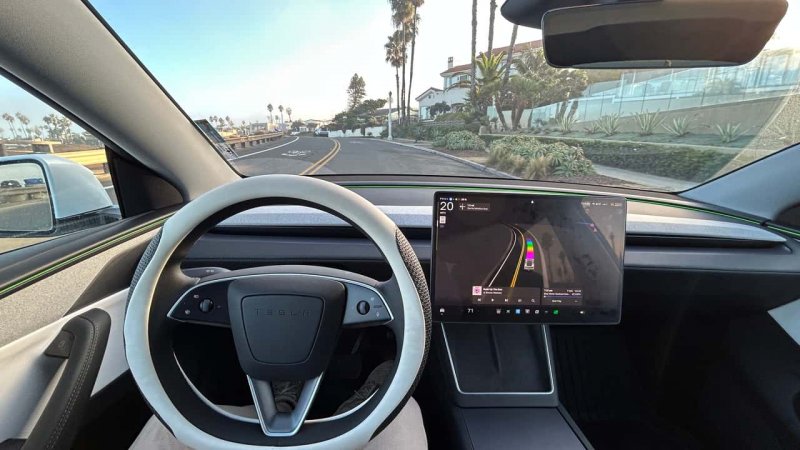
Tesla is facing growing skepticism from European regulators over its automated-driving technology, despite CEO Elon Musk’s confidence that approval across the European Union is imminent, News.Az reports, citing Reuters.
Musk has expressed optimism that the EU will soon authorize Tesla’s “Full Self-Driving” (FSD) system, but internal emails from regulators in several European countries reveal significant concerns about the technology and its safety claims.
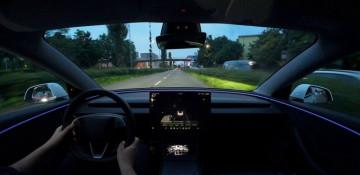
Tesla’s “FSD (Supervised)” system received approval from the Dutch road authority RDW in April. The regulator is now seeking EU-wide authorization, with a key committee discussion scheduled for Tuesday.
“We expect to be approved in a lot of other countries,” Musk told analysts during an April 22 conference call, adding that Tesla plans to pursue approval for fully driverless robotaxis in Europe afterward.
RECOMMENDED STORIES
The company has much at stake, as it aims to recover market share in Europe after losing ground over the past two years. Tesla offers FSD as a subscription service, allowing vehicles to operate autonomously under certain conditions, although drivers must remain fully attentive at all times.
However, previously undisclosed email exchanges between regulators in the Netherlands, Sweden, Finland, Denmark, and Norway show a range of concerns that could complicate Tesla’s push for broader approval.
Among the issues raised are the system’s tendency to exceed speed limits, its performance on icy roads, and whether drivers can bypass safeguards designed to prevent mobile phone use while driving. The emails were obtained by Reuters through public records requests.
Regulators also criticized Tesla’s approach of encouraging vehicle owners to pressure authorities into approving the system.
During Tuesday’s committee session, Dutch officials are expected to explain their decision to approve FSD and advocate for its adoption by other EU member states.
Tesla did not respond to requests for comment.
For the system to gain EU approval, representatives from at least 55 percent of member states, accounting for 65 percent of the bloc’s population, must vote in favor. No vote is scheduled this week, with the next meetings expected in July and October.
The emails also reveal that a Tesla policy manager contacted Swedish authorities just four days after the Netherlands announced its approval on April 10, even before regulators had reviewed technical documentation.
Tesla similarly reached out to Estonia and Finland, urging them to recognize the Dutch decision, according to the correspondence.
Officials in Sweden, Finland, and Estonia told Reuters they would wait for the outcome of Tuesday’s committee discussion before making any decisions.
Some Wall Street analysts anticipate a broad rollout of FSD across Europe within months. Tesla has emphasized that approval is critical to boosting regional sales, which fell by 27 percent in 2025 amid protests linked to Musk’s political activities.
In a confidential presentation shared with regulators, Tesla projected “EU-wide” approval in the second or third quarter of this year.
Michael Ashley Schulman, a partner at Cerity Partners, said that approval could enhance Tesla’s profitability and help it compete with Chinese automakers.
Still, concerns remain. Swedish Transport Agency investigator Hans Nordin wrote in an April 15 email that he was “quite surprised” the system allows speeding, suggesting such behavior should not be permitted.
Jukka Juhola, a Finnish transport official, questioned Tesla’s demonstrations of FSD in winter conditions, asking whether the system would allow hands-free driving on icy roads at speeds of 80 km/h. Nordic regulators also raised questions about how the technology would respond to hazards such as moose on roadways.
Another concern involves Tesla’s branding. Regulators debated whether the term “Full Self-Driving (Supervised)” could mislead consumers into believing the system is fully autonomous.
In a January email, Nordin questioned whether the name might give drivers a “misleading impression” of the system’s capabilities.
Despite these concerns, some regulators acknowledged positive aspects of the technology. Danish official Frank Schack Rasmussen noted in an October email that Tesla vehicles performed well in complex rush-hour traffic in Copenhagen, while a Dutch regulator highlighted strong performance around the Arc de Triomphe in Paris.
Anders Eriksson, a Swedish Transport Agency investigator, told Reuters that Sweden remains generally supportive of automated driving technology, provided it complies with regulatory standards.
By Nijat Babayev


Similar news