The "dark" failure of Metsamor NPP in 1982


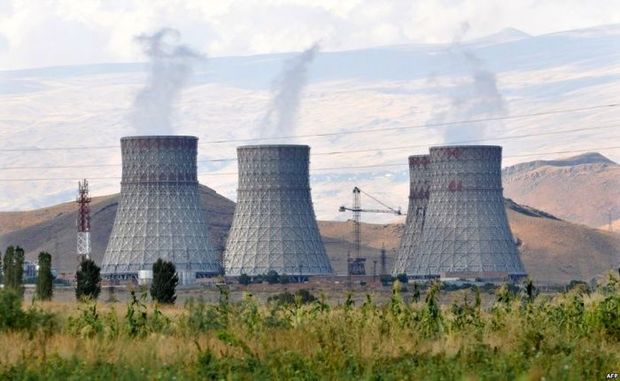
News.Az reprints from Lragir.am the article titled "The 'dark' failure of Metsamor NPP in 1982" by Vagram Tokmadjan.
The first power unit of the Armenian nuclear power plant was commissioned in December 1976, the second (currently in operation) in January 1980.
Academician Andranik Petrosyants played an exceptional role in the design and construction work. He insisted and ensured that only a WWER-400 reactor instead of RBMK (a high-capacity channel reactor), proposed by Moscow, was installed at the Armenian NPP. The fact is that Moscow, most likely, was more interested in the capacity of the nuclear power plant than its safety. And the persistence of the academician became fatal for the residents of Armenia, Lragir.am reports.
Accident
Fire broke out at the ANPP in 1982. The head of the department for the protection of nuclear power plants of the Main Directorate of Fire Protection of the Ministry of Internal Affairs of the Soviet Union, Colonel Mikhailov, arrived in Yerevan nearly 10 days before the arrival. Inspections, courses, practical exercises were conducted. Mikhailov made a report on 20 pages about the work of Armenian firefighters, in which there were very few positive reviews.
And just at the time when Mikhailov was seen off, on October 15, 1982, at 09:58, the communication station of the militarized fire unit of the power plant received a signal about a fire flared in two separate places in the cable tunnels of the 2nd block (1 block was in mandatory annual scheduled maintenance) and at the pumping station of an automatic fire extinguishing system located at a distance of 400 meters. The fire broke out in the 16th mine of the nuclear power plant; the cables that came out of it were drawn to the reactor. All the efforts of the personnel of the nuke plant's fire protection department that left for the scene for the launch of an automatic fire-extinguishing system and the identification of the main fire site were unsuccessful. The nuclear station was deenergized.
The fire quickly and practically freely spread through the numerous high voltage cable insulators that were inside the cable tunnel, and the threat of a terrible catastrophe turned into reality.
In the first hours after the accident, the situation even worsened. The efforts of firefighters and operational staff were unsuccessful. New foci of fire appeared, small and large explosions could be heard at different sites.
At 12:45 it became clear that the control of the reactor is completely lost. The tension reached an extreme. The control panel could only work in a gas mask. The station was deprived of both external and internal power supply. The cooling system went out of order, a dangerous accumulation of hydrogen was recorded. Due to a damaged protection system, any control became impossible, while the nuclear reaction inside continued. The temperature in the reactor began to rise, which could lead to an explosion.
At the same time, fire units from Yerevan and the surrounding areas arrived at the fire site. Works on firefighting last for seven hours. And the general works, as a result of which the fire was completely extinguished, and the reactor brought to rest, extended for three days.
110 employees of the fire service participated in the works. On many sites they had to break the walls in order to get close to the fires. The total damage amounted to about RUR 1 mln (at the prices of those years). The generators, turbines, the transformer, the pumps of the mechanical department, the most important 20-meter cable lines went out of order. And even in the absence of all these vital instruments, specialists managed to save the nuclear power plant and prevent the reactor from exploding.
Propaganda
Later, some Russian sources tried to present the situation in an inverted form, saying that during the fire all the Armenian employees ran away, and only the specialists of the task force who hurried to the rescue from the Kol Peninsula of Russia managed to save the reactor at the site. These statements are not true. Russian firefighters, of course, arrived, but came later when it became necessary to investigate the causes of the accident and launch the second power unit.
The mass media were silent about the incident, it was kept secret from the general public. The USSR encountered such a trial for the first time. The USSR authorities refused to award the title of Hero of the USSR to the firefighters who participated in putting out the fire. One of the participants, the head of one of the laboratories Vilen Arzumanyan, died of radiation in several months. The same fate was waiting for firefighters who found themselves in dangerous areas.
Only after Brezhnev's death, in 1983, 14 firefighters were awarded the medal "For Courage", four more were awarded various government awards.
And after the Chernobyl disaster, when the authorities finally realized what could have ended the accident at Metsamor NPP, the Kremlin decided to award seven firefighters the title of Hero of the USSR ... And all seven by that time had died from the received irradiation.
News.Az


Similar news