The future of Ukraine: What will be the outcome of the Russia-West confrontation?


Editor's note: Alexander Rahr, German political scientist, chairman of the Eurasian Society (Berlin). The article expresses the personal opinion of the author and may not coincide with the view of News.Az.
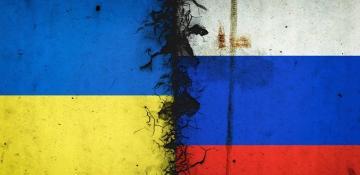
Modern relations between Russia and the West are characterized by deep contradictions that affect key aspects of European security and the global order. Amid escalating geopolitical tensions, it becomes evident that differing perceptions of power and influence not only shape current conflicts but also define the future of international diplomacy. Western countries strive to strengthen their positions by excluding Russia from the European security architecture and redirecting its focus towards Asia. At the same time, Russia, considering itself a great power, insists on the recognition of its sphere of influence, including Ukraine. These fundamental disagreements cause intractable frictions and conflicts that continue to complicate already tense relations between the parties.The contentious issues between Russia and the West primarily concern the architecture of European security. The West aims to exclude Russia from this structure and push it towards Asia, while Russia, as a great power, demands recognition of its sphere of influence, including Ukraine. These disagreements form the basis of deep and unresolved tensions in relations between the parties.
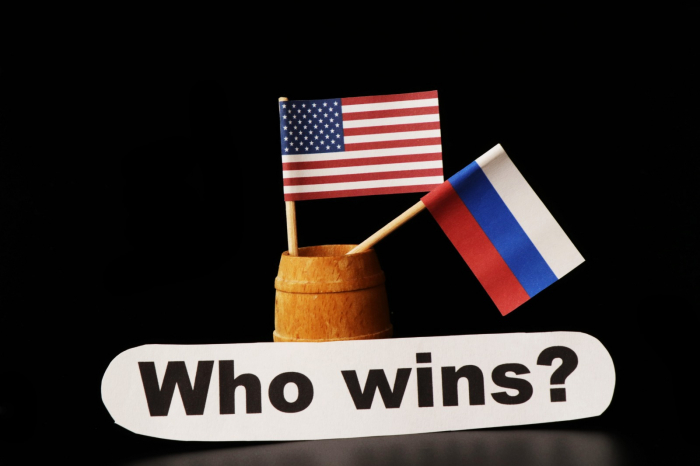
The key problem lies in the differing perceptions of power and influence. The European Union seeks to build a realm of liberal values on the continent, viewing Russia, which rejects Western democratic models, as an enemy. Conversely, Russia cannot accept NATO's expansion to its borders, as it contradicts its national interests. The West sees the dissolution of the Soviet Union in 1991 as the end of a historical period, while Russia considers itself the rightful successor of the Soviet Union.
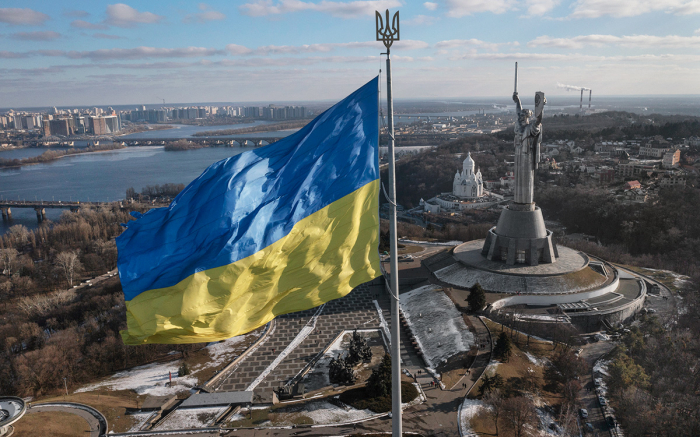
Putin's proposal to hand over four eastern Ukrainian regions to Russia will never be accepted by the West. Similarly, Russia will not comply with the West's demand to fully withdraw its troops from Ukrainian territory. Nonetheless, peace negotiations will likely begin, in my opinion, at China's initiative by the end of this year. A full-scale war between NATO and Russia will not happen. The Americans will prevent it, and without America, other European powers will not engage in direct confrontation with the Russian army. A compromise will be reached: the Ukrainian territories that Russia currently considers part of Russia and where the Russian army is present will go to Moscow. Ukraine will be compensated by the West for the loss of part of its territory with membership in the European Union, but not in NATO. The West will ease sanctions against Russia if Moscow agrees to participate in the economic reconstruction of Ukraine.
The U.S. and the European Union are desperately fighting to preserve the old, unipolar world, while Russia, China, and other BRICS countries are seriously starting to build a multipolar world. Unfortunately, the multipolar world will be built through confrontation rather than diplomacy. The peaceful phase of human development, which we observed after World War II, has sadly ended. Globalization has also failed, largely due to Western sanctions against their enemies and competitors. The world will again be divided into different blocs.
The West will continue to rely on the global power of the U.S. and NATO's military strength. NATO will extend its influence into Southeast Asia and will oppress Russia, just as it does on the European continent. Russia will find itself at the center of forming a new Eurasian security architecture that will counterbalance Europe and pro-American countries in Asia. An interesting question is which powerful force will emerge in Africa and the Middle East. It could be militant Islamism, but serious competition between China, Russia, and the United States for control over this region cannot be ruled out.
Discussions on European security will begin in earnest once the Ukrainian conflict is resolved. The West still hopes for Ukraine to win the conflict with Russia, after which Russia will be completely disregarded. If Russia wins, it will be a serious blow to NATO and the EU, and serious talks will start in the West about whether to return to the Cold War and oppose Russia in every way, or to seek common ground on security issues with the Russian Federation.
(If you possess specialized knowledge and wish to contribute, please reach out to us at opinions@news.az).


Similar news